
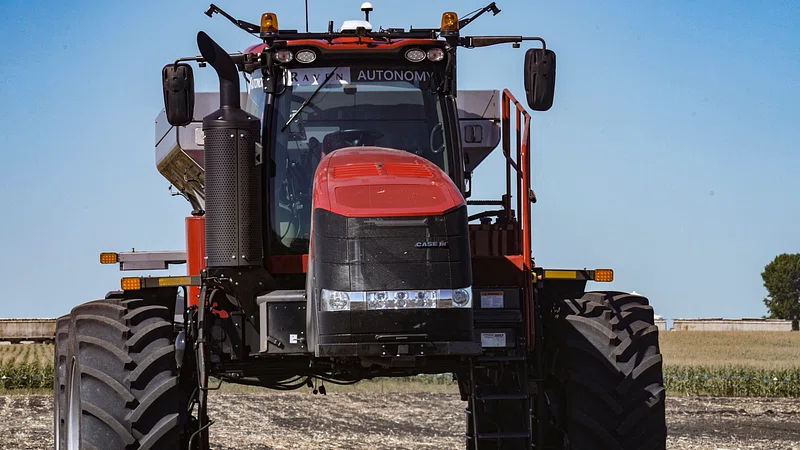
As labor availability continues to tighten across agriculture, farmers are increasingly asking whether autonomous machinery can realistically compete with traditional labor in Midwest row crop operations. A recent study published in Science Direct, and reported on by The Daily Scoop, examines that question by comparing the cost of autonomy with the true cost of hired labor on large corn and soybean farms.
The study analyzed when autonomous systems begin to make economic sense relative to human operators. Researchers found that autonomy becomes cost-competitive when labor costs reach roughly $44 per hour. At that point, autonomous machinery begins to show a financial advantage, especially for repetitive and time-sensitive field operations.
While that hourly figure may seem high at first glance, it reflects more than just wages. The study accounts for the full cost of labor, including benefits, training, turnover, overtime, and the growing difficulty of finding reliable operators when work needs to be done. Labor availability, not just labor price, is a major factor shaping farm decisions.
Reliability Matters as Much as Cost
For many Midwest row crop operations, the risk is not simply paying more for labor, but not having enough people available during critical windows. Planting and harvest delays can quickly outweigh higher hourly costs. The study notes that farms can no longer assume skilled operators will always be available when conditions are right.
Autonomous machinery changes that equation by reducing dependence on a limited labor pool. Machines can operate for longer hours and maintain consistent performance, allowing farms to better capitalize on narrow weather windows.
How Autonomy Changes Labor Needs
Autonomy does not eliminate people from the operation, but it reshapes their role. Instead of one operator per machine, a single employee can monitor multiple units or focus on higher-value responsibilities such as logistics, maintenance, or decision-making. This shift lowers labor pressure without sacrificing productivity.
The consistency of autonomous systems also brings efficiency gains. Precision steering, controlled speeds, and repeatable performance can improve field efficiency while reducing fatigue-related errors that occur during long workdays.
Not a One Size Fits All Solution
The study makes clear that autonomy is not yet the best choice for every operation. High upfront costs and technology readiness remain hurdles, particularly for smaller farms or those with stable labor access. In many cases, conventional machinery paired with human operators remains more economical today.
However, the economics are trending in favor of autonomy. As labor costs continue to rise and technology improves, the break-even point is likely to fall. Farms facing chronic labor shortages are best positioned to benefit from early adoption.
Technology and the Future of Farm Labor
The broader takeaway from the study is that autonomy represents a structural response to a long-term labor challenge. Agriculture faces an aging workforce, fewer young entrants, and increasing competition for workers across rural economies.
Autonomous machinery offers a way to stabilize operations in the face of those realities. By reducing reliance on scarce labor for time-sensitive fieldwork, technology helps protect yields, control costs, and bring predictability back into farm planning.
Rather than replacing farm labor entirely, autonomy points toward a future where people and machines work differently together. That shift may prove essential to keeping Midwest row crop operations productive, competitive, and resilient in the years ahead.


Leave a Reply