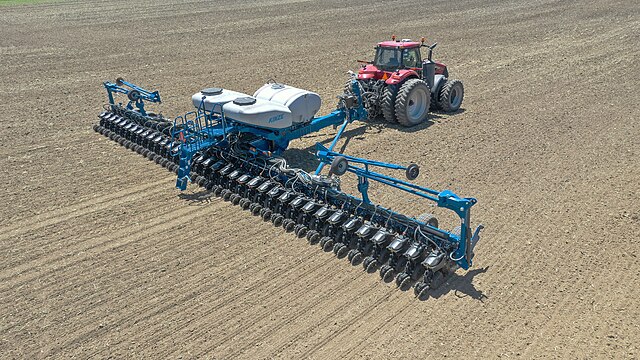
Farmers shopping for a used planter this season are finding that the search is getting harder, not easier. Inventory has tightened considerably compared to recent years, especially for late-model planters that are ready to go to the field. A recent article from Successful Farming points out that used planter availability continues to shrink, largely because growers are holding onto machines that have been upgraded with newer technology and higher-value components.
That tightening supply is colliding with rising demand from farmers who still need to secure a planter for the upcoming season. As a result, the market has become more competitive, more expensive, and far more complicated than simply comparing year, make, and model.
How Planters Are Being Customized and Upgraded
One of the biggest drivers behind the shrinking used planter inventory is the amount of customization happening. Many farmers are choosing to upgrade existing planters rather than trade them in for new ones. Electric drive systems have become a common addition, replacing traditional mechanical drives and giving operators more precise control over individual rows.
Precision upgrades are also playing a major role. Advanced seed metering, row-by-row shutoffs, active downforce, GPS guidance, and in-cab monitoring systems are now being retrofitted onto planters of all ages. Variable-rate planting systems allow growers to adjust populations on the fly based on soil type and field conditions, improving efficiency and yield potential.
These upgrades often represent significant investments, and once they are installed, owners are less inclined to sell. When they do sell, those upgraded machines tend to command strong prices and move quickly, further tightening the available supply.
Why Two Identical Planters Are No Longer Comparable
All of this customization has made it increasingly difficult to compare two used planters that look identical on paper. Two planters of the same year, make, and model can have dramatically different capabilities depending on what has been added to them over time.
One unit might still be largely mechanical with limited electronics, while another may be outfitted with electric drives, precision meters, upgraded downforce systems, and full data integration. From a performance standpoint, those two machines are worlds apart, yet traditional listings often fail to capture the full picture.
This makes pricing more subjective and comparison shopping more time-consuming. Buyers need to dig deeper into the details of each machine rather than relying on base specifications alone. Sellers, meanwhile, are seeing strong interest in well-equipped planters, especially as fewer high-quality units hit the market.
The Urgency to Find the Right Planter Now
For farmers who still need a planter for this season, time is becoming a critical factor. Historically, the best used planters tend to trade hands between late fall and early spring. As planting season approaches, choices narrow quickly and buyers are often forced to compromise on features, condition, or price.
With inventories already tight and upgraded machines moving fast, waiting too long can mean missing out entirely. The current market rewards preparation and decisiveness. Knowing which technologies matter most, understanding how upgrades affect value, and being ready to move when the right machine appears can make the difference between planting on time and scrambling at the last minute.
The used planter market is no longer simple, but it reflects how much modern farmers value precision, efficiency, and performance. As technology continues to reshape equipment, finding the right used planter will require more diligence and urgency than ever before.

Leave a Reply