
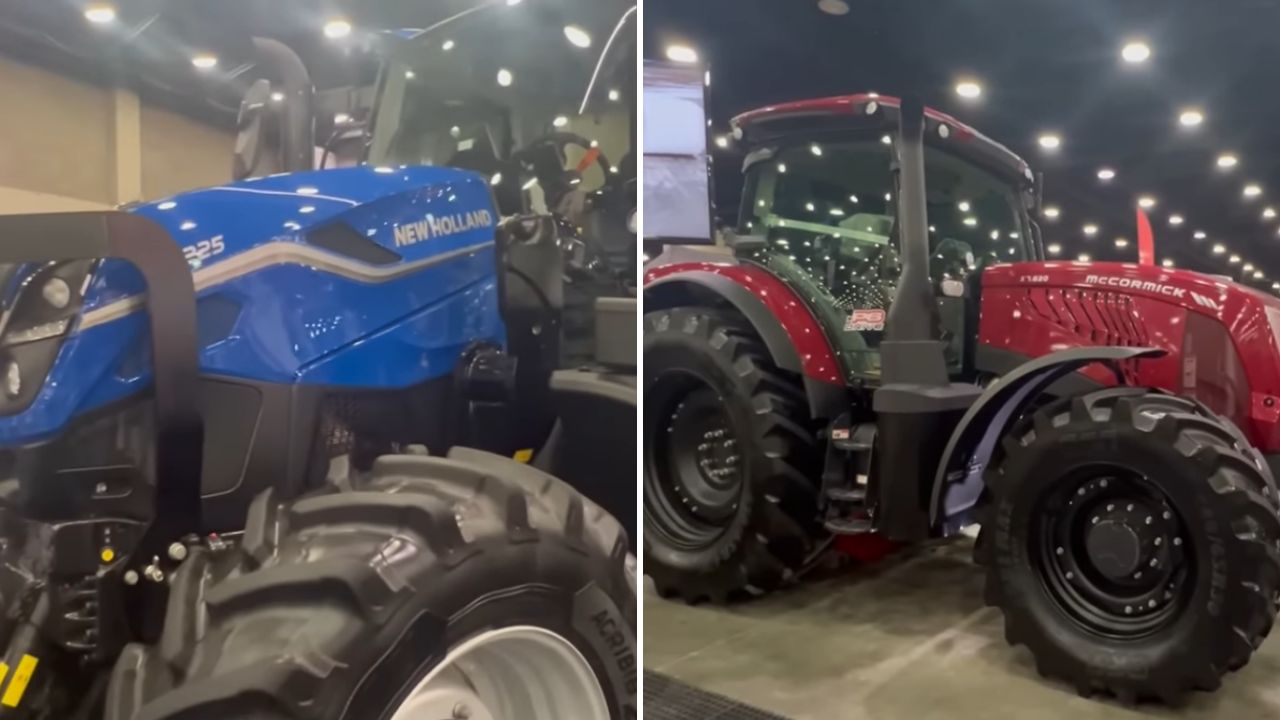
Big things are happening in the world of farm machinery, and this time it is not just about horsepower, hydraulics, or high-speed planting. At the 2026 National Farm Machinery Show in Louisville, two major tractor brands revealed something far more visual but perhaps just as significant. Both New Holland and McCormick are updating their signature colors.
At first glance, paint might seem like a minor detail. In reality, it is one of the most powerful brand signals in agriculture.
Why Tractor Color Matters
Color in farm equipment is not simply an aesthetic choice. It represents decades of loyalty, identity, and emotional attachment. When a farmer sees John Deere green, International red, or New Holland blue, there is instant recognition. Those colors carry history.
In the video embedded at the end of this post, Tractor Mike explains that in more than 30 years in the ag equipment industry, he has seen how strongly farmers connect to brand color. It is part of the bond between operator and machine.
He also shares a cautionary tale about the White Tractor Company and its American series, which attempted to honor heritage brands by offering multiple color options, including Oliver green, Minneapolis Moline yellow, Cockshutt red, and White silver. While the idea sounded good on paper, the experiment reportedly cost millions and contributed to the company’s eventual sale to AGCO. The lesson is that changing color is not something manufacturers take lightly.
That is why the announcements from Louisville are such a big deal.
New Holland Moves to Dynamic Blue
The biggest shock at the show came from New Holland. The company is officially transitioning from its long-standing Sky Blue to a new shade called Dynamic Blue. The new color is more vibrant and modern. It stands out more boldly in the field and delivers what the presenter described as a more premium feel. It is a subtle, but noticeable evolution of the brand’s identity.
The changes do not stop at the hood panels.
New Holland is also moving from pearl white rims to silver rims. This is not only a cosmetic shift. It has practical implications for manufacturing and inventory, as New Holland and Case IH tractors are often produced in the same factories. Standardizing rim finishes improves inventory control and production efficiency.
In addition, New Holland has transitioned its North American hay tool lineup from red to yellow. This aligns the North American color scheme with the European market, creating global brand consistency across product lines.
Taken together, these updates represent a coordinated branding effort rather than a simple paint refresh.
McCormick Goes Darker and Richer
McCormick is also making a significant change. Known for its bright red tractors, the company is moving to a darker, richer red pigment for its main tractor line.
In the video, it is explained that this update is not just about appearance. Lighter red pigments are prone to fading under prolonged sun exposure. Over time, that fade can make machines look older than they are. The darker red is expected to weather better, helping tractors maintain a newer appearance for longer.
For farmers and dealers, resale value and visual appeal matter. A tractor that holds its color holds its image.
It is worth noting that this change applies to McCormick’s primary tractor lineup. Compact tractors manufactured by TYM will continue using their current color schemes for now.
More Than Paint
Color changes often signal something deeper. They can accompany broader product refreshes, model updates, or strategic repositioning. In this case, the presenter makes it clear that this is only the beginning. Beyond the paint, there are model updates and mechanical improvements coming from several manufacturers this year.
For brands with decades of heritage, altering color is a bold move. It signals confidence and a willingness to evolve while protecting core identity.
For farmers, it means that the machines lining dealership lots may look slightly different this year. For collectors and brand loyalists, it marks another chapter in the visual history of agriculture.
Watch the full video below for the complete breakdown and commentary from the show floor.


Leave a Reply