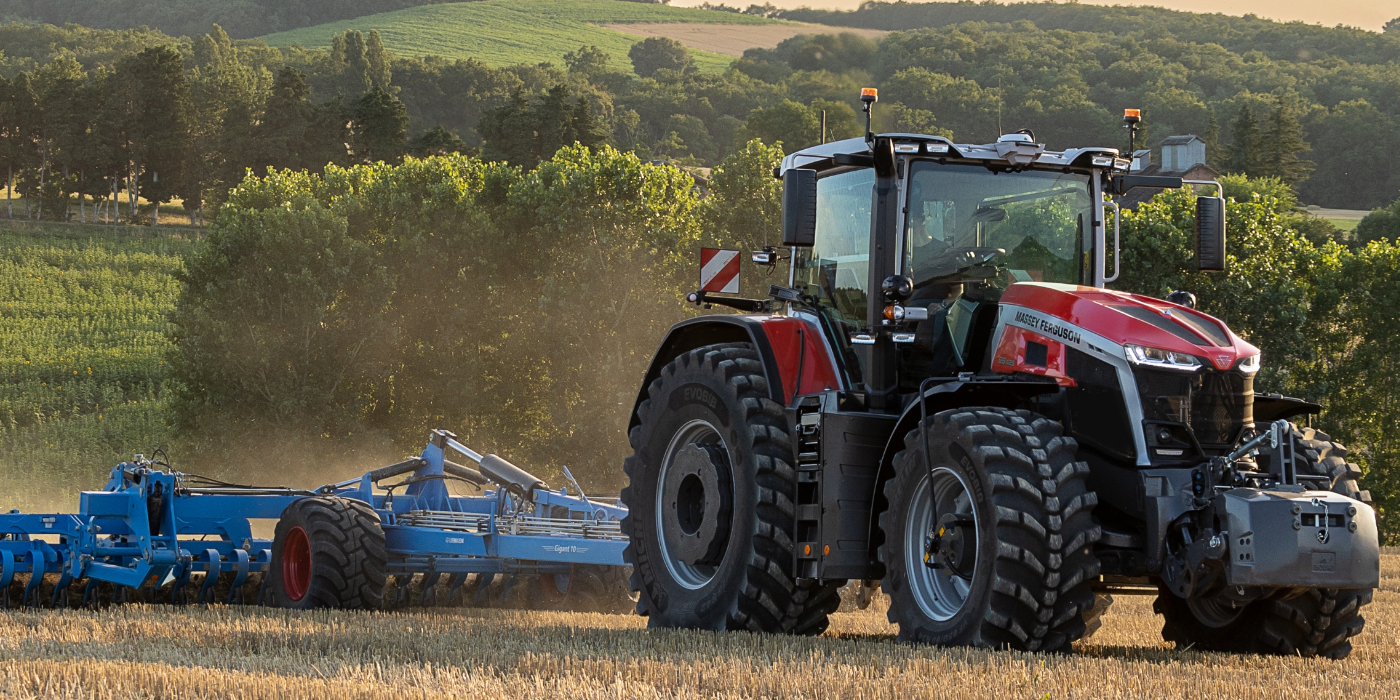
Massey Ferguson has taken a major step forward in smart farming technology with its recent update to the MF 9S Series tractors by incorporating Tractor Implement Management, commonly known as TIM. Announced recently at Commodity Classic, this upgrade allows compatible implements and tractors to work together in a far more coordinated and automated way than before. This is a significant advancement in precision agriculture that helps farmers boost efficiency and achieve more consistent results in the field.
What Is Tractor Implement Management and How It Works
Tractor Implement Management is an ISOBUS-based system that allows implements equipped with TIM technology to communicate directly with the tractor. With TIM enabled, the implement can take control of key tractor functions such as forward speed and hydraulic outputs so that the tractor and implement operate in harmony without constant manual adjustment from the operator. In simple terms, the implement tells the tractor what it needs to perform its task optimally, and the tractor automatically responds with the appropriate speed, engine load, and hydraulic flow.
The system shifts the focus from simple connectivity to outcome-driven automation. Instead of the operator constantly adjusting speed or settings to respond to changing crop conditions, windrows, or terrain, TIM automatically adjusts based on the implement’s real-time demands. The result is more uniform performance and less variability across the field.
Real World Benefits for Farmers
Field demonstrations have shown clear performance gains when TIM is paired with compatible equipment. When an MF 9S tractor was matched with a Hesston by Massey Ferguson LB2200 large square baler, TIM operation produced far more consistent bale formation. Variability in flake count per bale was significantly reduced, helping create more uniform packages. Bale weight also increased while maintaining consistent bale dimensions.
For forage producers, that means more predictable product quality and improved efficiency in transportation and storage. More consistent bale weights can translate into better trailer utilization and fewer handling issues. Across a full season, those improvements can add up quickly.
Another major benefit is reduced operator strain and variability. By automating speed and hydraulic adjustments, TIM helps less experienced operators achieve performance levels that would otherwise require years of seat time. This can be especially valuable during peak seasons when skilled labor is stretched thin and multiple operators may rotate through the same machine.
Efficiency and Cost Control
The MF 9S Series was already built around efficiency, comfort, and productivity. With TIM integration, the tractor platform becomes even more focused on reducing cost per acre and cost per hour. By ensuring the tractor only works as hard as the implement requires, fuel use can be optimized and unnecessary wear reduced.
In an environment where input costs remain high and weather windows are tight, technologies that reduce variability and improve consistency offer real financial value. TIM is is about producing measurable improvements in output quality, fuel efficiency, and labor management.
A Broader Step Toward Smart Integration
The integration of Tractor Implement Management into the 9S Series signals Massey Ferguson’s commitment to deeper machine-to-machine communication. Rather than treating the tractor and implement as separate pieces of equipment, TIM connects them into a unified working system.
For farmers who demand precision and consistency, especially in forage, planting, and other high-performance applications, this level of integration represents the next stage in practical automation. As more implements become TIM compatible, the potential for efficiency gains across entire operations will continue to expand.
Massey Ferguson’s move with the 9S Series shows that intelligent automation is no longer a concept for the future. It is available now, and it is designed to deliver measurable benefits in the field.


Leave a Reply