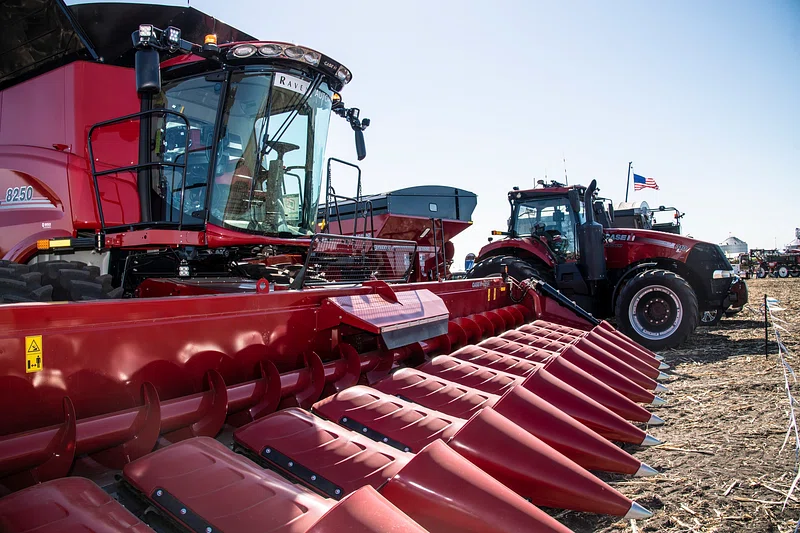
Walk through any farm show in 2026 and it becomes clear pretty quickly that automation is showing up everywhere.
Guidance and yield maps were just the beginning. Today’s machines steer themselves, adjust on the fly, and in some cases operate without anyone in the cab. The shift has moved beyond assistance and into decision-making.
This technology has moved beyond the concept stage, as it is now in use in the field and becoming standard on new equipment.
The Machines Are Getting Smarter
Modern equipment is handling more of the workload that previously relied on operator judgment.
Combines now monitor crop flow, grain loss, and field conditions in real time, adjusting speed and settings as they go. Cameras, sensors, and data systems work together to maintain consistent performance across the field.
Sprayers have taken a big step forward as well. With machine vision, they can identify weeds and apply product only where needed. That reduces input costs and improves efficiency in a way that was not realistic a few years ago.
Tractors are evolving into platforms that support these systems. Many new models are built with autonomy in mind from day one, giving owners the option to expand capabilities over time. Some companies are also developing retrofit systems that bring automation to existing machines, which lowers the barrier to entry.
Why This Is Happening
The push toward automation is tied closely to labor and efficiency.
Finding skilled operators has become more difficult, and labor costs continue to rise. At the same time, fieldwork windows remain tight and unforgiving. Technology offers a way to keep machines running longer hours with greater consistency while reducing reliance on additional help.
For some operations, the ability to oversee multiple machines or manage work remotely creates a clear advantage.
Not Everyone Is Sold
The response from farmers has been mixed.
Some see clear benefits in consistency, efficiency, and scalability. Others take a more cautious approach.
Cost is one of the biggest concerns. These systems require a significant upfront investment, and the ongoing costs tied to software, connectivity, and maintenance add another layer.
Reliability also comes up often. Many farmers still prefer equipment that they can diagnose and repair themselves. Pre-DEF tractors continue to hold value for that reason. They are straightforward, have fewer components that can fail, and can often be serviced without specialized tools or software.
That leads to a broader concern about complexity. As machines become more advanced, they can also become more difficult to manage when something goes wrong.
Two Directions at the Same Time
The industry is moving forward, but not in a single lane.
There is strong momentum behind automation, with manufacturers investing heavily in autonomous capability and advanced systems. At the same time, there is a steady demand for equipment that focuses on durability, simplicity, and ease of service.
Manufacturers appear to recognize this balance. Some are pushing the limits of what technology can do, while others are focusing on tools that improve performance without adding unnecessary complexity.
Where It Goes From Here
Automation will continue to expand. Machines will handle more tasks, and managing multiple pieces of equipment from a single interface will become more common.
Adoption will vary from farm to farm. Some operations will move quickly, while others will take a more measured approach and adopt only what proves useful.
In the end, the goal remains the same. Farmers need equipment that performs reliably and gets the job done when it matters. Advanced technology can help achieve that, but for many, dependability and simplicity still carry just as much weight as innovation


Leave a Reply