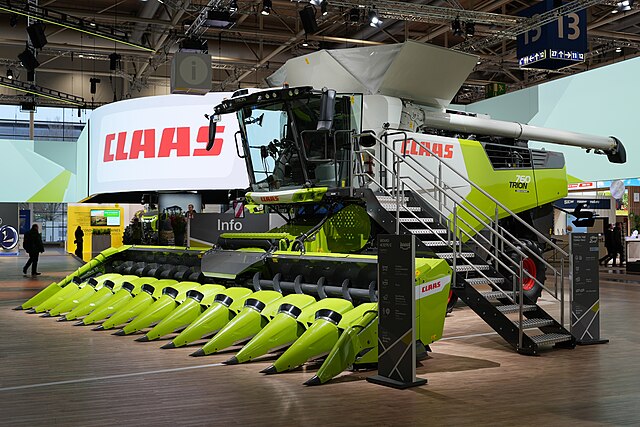
CLAAS is making a focused push into the Northern Plains, announcing new dealership locations in Aberdeen, South Dakota and Minot, North Dakota through its partnership with genAG, with additional support planned near Bismarck. The move is less about adding locations and more about solving a long-standing issue in the U.S. market: dealer coverage.
For CLAAS, this is a service play. Better parts availability, faster response times, and stronger local support are what ultimately drive equipment decisions, especially during tight planting and harvest windows. Torey Hadland, Vice President of CLAAS of America, called the expansion “an important investment for CLAAS customers and a commitment to agriculture in the Dakotas,” while Christoph Tetzlaff, who oversees dealer development in the Americas, emphasized improving access and making it easier for farmers to do business with the brand.
CLAAS is not new to agriculture. Founded in 1913 in Germany, the company has built a global reputation around harvesting equipment. It is the European leader in combines and a dominant force in forage harvesters, particularly in dairy-heavy regions. In North America, machines like the LEXION combine have earned a strong following for their capacity, efficiency, and durability in tough conditions.
Farmers who run CLAAS equipment tend to point to build quality, performance, and operator comfort. The engineering reputation carries weight, but in the U.S., support has often been the deciding factor. That is where CLAAS has struggled to keep pace with more established domestic dealer networks.
This expansion in the Dakotas reflects a broader shift. CLAAS has been restructuring its North American dealer strategy, investing in facilities, and aligning with partners like genAG that can deliver full-service support across its lineup. The Dakotas are a logical target, with strong wheat, corn, and soybean production creating consistent demand for high-capacity harvesting equipment.
If CLAAS can back up its machines with reliable dealer support in regions like this, it removes one of the biggest barriers to growth in the U.S. market. The product has never really been the question; the network has been.
For farmers, it simply means another serious option backed by stronger local support. And when competition improves, service and outcomes usually follow.

Leave a Reply