
Across farm country, there is no shortage of iron that still earns its keep. Walk into almost any shed and you will find tractors from the 80s, 90s, and early 2000s that still fire up, pull hard, and handle the work they were built for. They are paid for, familiar, and dependable, which is exactly why so many farmers keep them in rotation year after year.
What those machines lack is the kind of everyday convenience that operators have come to expect. Visibility is limited and connectivity is nonexistent. The cab experience has not kept pace with the rest of the world, even as the tractors themselves remain highly capable.
That gap is where CabTech comes in.

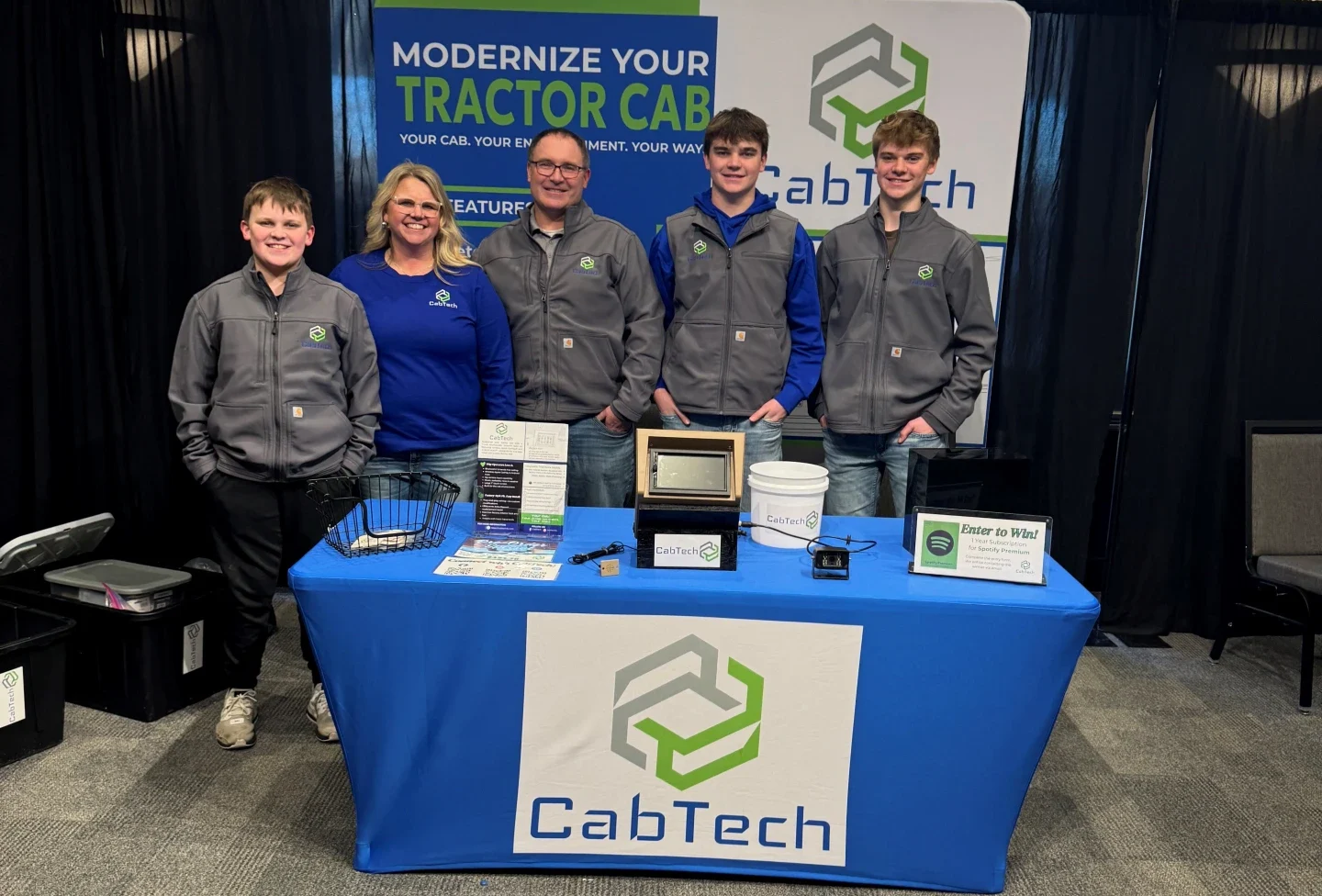
Developed by the Herbert family in Iowa, CabTech is a retrofit kit designed to bring modern functionality into older tractors without changing what makes them valuable. The system allows operators to connect their phones directly in the cab and run up to two camera feeds at once. Whether it is monitoring an implement, watching a grain cart, or covering blind spots, the added visibility changes how these machines are used in the field.
The phone integration adds another layer of practicality. Calls, music, and navigation all become part of the cab environment, which makes long days more manageable and reduces the need for workarounds that farmers have dealt with for years.
Built by people who needed it
CabTech did not start as a product looking for a market. It started as a solution to a problem that showed up during real fieldwork.
That origin matters because it shapes how the product functions. The priorities are clear. It has to be simple. It has to hold up in real conditions. It has to deliver value immediately without requiring a full overhaul of the machine.
This kind of innovation is nothing new in agriculture. Farmers have always modified equipment to better fit their operations. Sometimes that means small adjustments that never leave the farm. Other times, those ideas take shape as products that other farmers recognize and adopt.
CabTech follows that same path. It reflects a practical understanding of how equipment is actually used, along with a willingness to build something better when an obvious gap exists.
Extending the life of equipment that still works
For many operations, older tractors continue to handle a significant share of the workload. Replacing them solely to gain cab technology is a difficult equation to justify.
CabTech offers a different approach by improving the day-to-day experience of running those machines. Better visibility can reduce mistakes and improve efficiency during critical windows. Integrated phone connectivity simplifies communication and keeps operators focused on the task at hand.
These kinds of improvements may seem incremental, but they have a real impact over the course of a season. When planting or harvest is compressed into tight timeframes, small gains in comfort and awareness add up quickly.
A different kind of progress
The machinery industry often highlights the newest and most advanced equipment, and there is no question that technology is pushing agriculture forward. At the same time, a large portion of fieldwork continues to rely on machines that have already proven their value over decades.
Products like CabTech show that progress does not always require starting from scratch. In many cases, it comes from building on what already works and making it better suited for today’s expectations.
That approach resonates with farmers who value reliability and practicality. It respects the investment already made in equipment while offering a meaningful upgrade to how that equipment is used.
The instinct to build
At its core, this story reflects something deeper than a single product. Farmers are constantly solving problems. They adapt, modify, and improve the tools around them because the work demands it.
Every once in a while, one of those solutions reaches beyond the farm where it started. CabTech is one of those cases, born from necessity and shaped by experience.
It is a reminder that some of the most useful ideas in agriculture still come from the people doing the work every day.


Leave a Reply