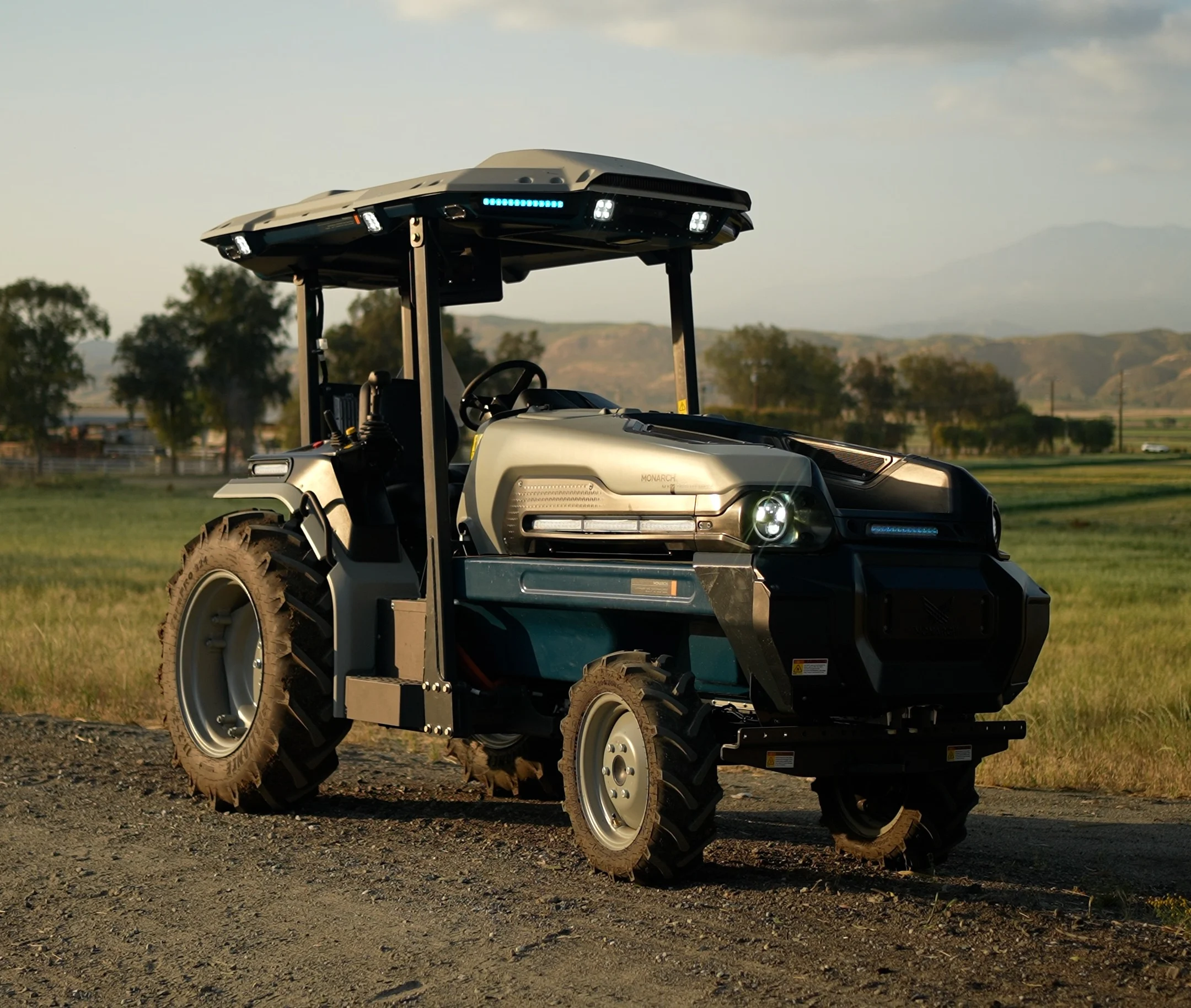
For a moment, Monarch Tractor looked like it had a legitimate shot at redefining farm equipment. Their MK-V promised an electric drivetrain, driver-optional operation, and an AI-powered data platform in one machine. It was designed for vineyards and orchards, where labor pressure and emissions concerns created a natural entry point.
They raised significant capital, drew national attention, and positioned themselves as the future of tractors. Then the cracks started to show, and once they did, everything followed.
When the Product Doesn’t Deliver
The biggest issue was simple. The tractors did not consistently do what they were supposed to do.
Dealers and customers began reporting that the autonomy features did not function reliably. Machines struggled with basic operation in real-world conditions, and some units reportedly could not perform autonomously at all. Operators pointed to issues with hydraulics, navigation, and overall dependability. These were not edge-case complaints. They were fundamental problems that cut directly against the company’s core value proposition.
In agriculture, reputation moves fast, especially among early adopters. Once the narrative shifts from promising to unreliable, it becomes very difficult to recover.
Support Matters More Than Hype
Even promising technology can survive early issues if support is strong. That did not appear to be the case here.
Dealers who invested heavily in inventory struggled to get timely fixes or meaningful assistance. When machines went down, they stayed down. That is a breaking point in this industry. Farmers will tolerate a learning curve, but they will not tolerate downtime without support, especially during critical windows.
Without a reliable service layer, the technology never had a chance to prove itself.
Manufacturing Fell Apart
At the same time, Monarch lost its footing on the production side.
Their manufacturing partnership with Foxconn ended after the company exited the Ohio facility producing the tractors. That left Monarch without a clear path to scale or even maintain consistent output. For a hardware company, that is an existential problem. You cannot build momentum if you cannot build machines.
The Financial Spiral
As these issues stacked up, the financial side deteriorated quickly.
Despite raising over $200 million, Monarch faced rising costs tied to hardware development, manufacturing challenges, and ongoing support issues. Revenue did not scale fast enough to offset those costs. Lawsuits from dealers and customers added pressure and distraction. Internally, layoffs began, and leadership signaled a possible shift away from building tractors altogether.
That kind of pivot is rarely a sign of strength. It usually means the original model is no longer viable.
By early 2026, the situation had largely unraveled. Inventory was being cleared, operations had thinned out, and the company was effectively shutting down.
What Went Wrong
Monarch’s failure was not tied to a single mistake. It was the result of several problems compounding at once.
They attempted to bring electrification, autonomy, and AI to market in a single product before any one of those systems was fully mature. The machines struggled in the field, which eroded trust early. Support did not keep pace with the problems, leaving customers frustrated. Manufacturing instability removed their ability to recover. Financial pressure closed the window.
Each of those issues on its own is manageable. Together, they are fatal.
What the Industry Should Take From This
There are clear lessons here for both startups and established players.
Focus matters. Solving one hard problem well is more viable than solving three at once.
Service infrastructure is not optional. It is as important as the machine itself.
Timelines in agriculture are slower than in software. Farmers adopt technology that proves itself over time, not technology that promises to improve later.
There is also a lesson for investors. Agriculture does not scale on venture timelines, especially when hardware is involved.
Is There Room for a New Tractor Brand?
There is room, but it is limited and requires precision.
New entrants can succeed in narrow segments where incumbents are slower to move, especially in specialty crops or highly repetitive tasks. Partnerships can help bridge gaps in manufacturing and distribution.
Broad competition against companies like John Deere, CNH Industrial, and AGCO is a different challenge entirely. These companies already have deep dealer networks, service capabilities, and customer trust. They are also investing heavily in automation, electrification, and data.
A new brand has to deliver something that works immediately and consistently in the field, not just something that looks good in a demo.
The Bigger Picture
Monarch Tractor pointed toward a real direction for the industry. Electric machines, automation, and data-driven decision making are all part of agriculture’s future.
Their failure does not change that trajectory. It does clarify what it takes to succeed. Farmers will adopt new technology when it proves reliable, economically sound, and fully supported. That standard has not shifted, and any company aiming to reshape farm equipment will have to meet it head on.

Leave a Reply