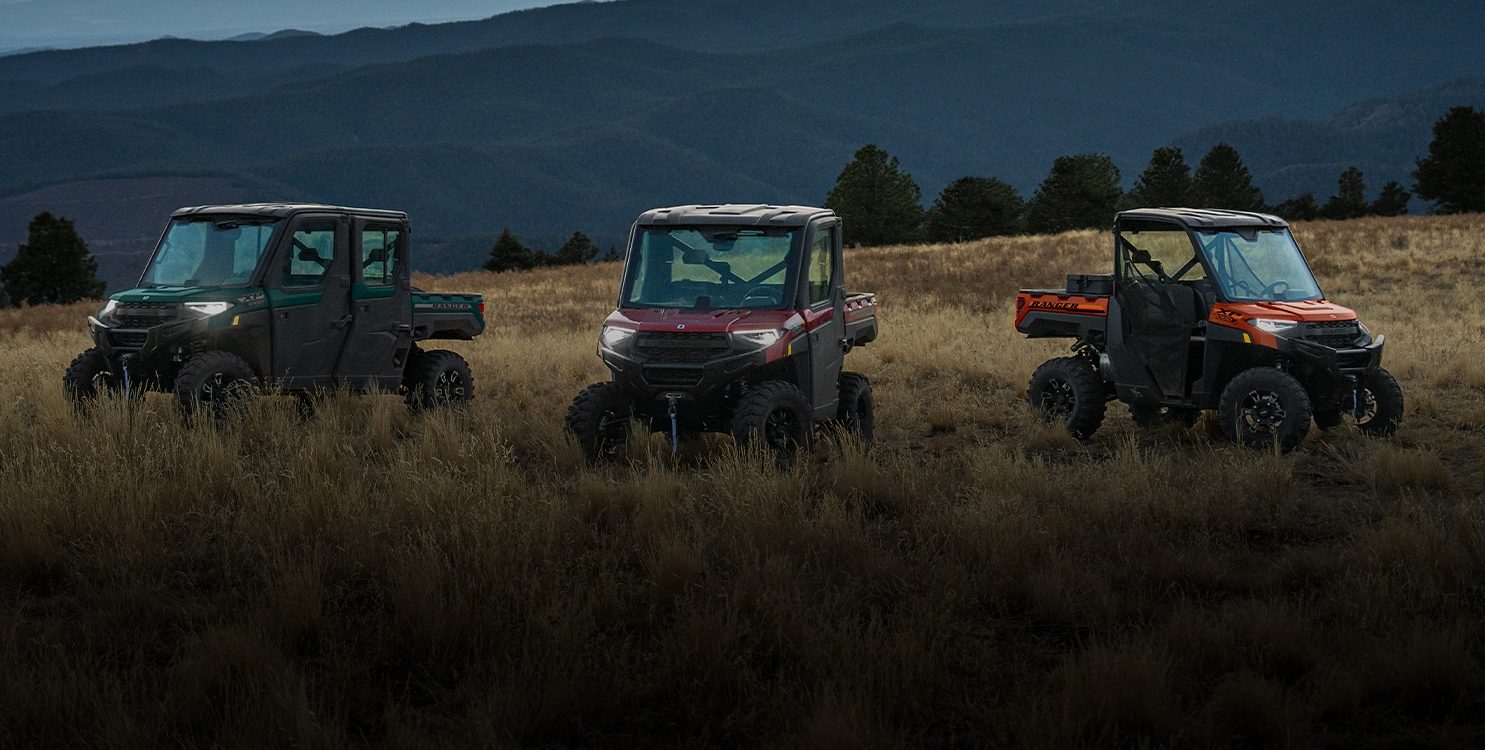
Walk through any dealership lot right now and it is obvious something has changed. The utility side-by-side is no longer a simple runaround machine. Over the last couple of years, manufacturers have pushed hard into comfort, capability, and technology. Farmers have responded by putting more hours on these machines than ever before.
What used to be a tool for checking cows or running parts has turned into something closer to a daily driver on the farm.
Cab comfort is becoming standard equipment
For a long time, a full cab with heat and air conditioning felt like a luxury add-on. That line has moved quickly. Factory cab machines are now showing up across more price points, not just at the very top end.
Models like the Polaris Ranger XP 1000 NorthStar Edition set the tone early with sealed cabs, HVAC, and integrated audio. Now that same idea is working its way into mid-tier machines and even some entry-level offerings with factory heat packages.
The change is easy to understand once you spend a full day in one. Dust stays out. Cold mornings and hot afternoons are manageable. Operators arrive at the next job less worn out. For farms that rely on a side-by-side every day, that comfort turns into productivity.
Heavier duty machines are pushing into tractor territory
The newest wave of machines is built with work in mind first. Larger frames, stronger drivetrains, and better hydraulics are expanding what a UTV can realistically handle.
The Polaris Ranger XD 1500 NorthStar Edition is a good example of where things are headed. Higher towing capacity, bigger beds, and a more substantial feel put it closer to a small tractor or service truck than the light utility rigs of the past.
At the same time, machines like the CFMoto U10 XL Pro Highland are targeting farms that need to move people and equipment together. Six-passenger seating, combined with a functional cargo bed, makes them useful for crews during planting, harvesting, and maintenance work.
Farms are starting to assign these machines real jobs instead of treating them as convenience vehicles.
Screens and connectivity are finding their way into the cab
Technology inside UTVs has taken a noticeable step forward. Touchscreen displays, integrated GPS, and Bluetooth audio are now common features on higher-end machines.
Polaris has leaned heavily into this with its RIDE COMMAND system, offering navigation, ride tracking, and machine information in one place. While much of this was originally aimed at recreational users, the farm application is becoming clearer.
Operators can map property, track routes, and keep better tabs on machine usage. As more equipment on the farm becomes connected, it is not hard to see these systems tying into broader data platforms down the road.
Ride quality and noise are getting real attention
This is one of the quieter improvements, but it matters. Suspension systems have improved, tires are being designed with noise in mind, and cab sealing has gotten better.
The result is a machine that you can spend hours in without feeling beat up. Less vibration, less noise, and a smoother ride make a difference when a UTV is used all day during busy seasons.
For many farms, this shift turns the side-by-side into a legitimate alternative to a pickup for certain tasks.
A wider spread from entry level to premium
Manufacturers are covering more ground than ever before.
On the lower end, compact machines like the Polaris Ranger 500 are bringing new buyers into the market. Smaller farms, acreage owners, and operations that need a simple chore machine have more options at a lower price point.
On the other end, fully equipped cab machines with premium interiors, large displays, and crew seating are pushing into price ranges that would have seemed unlikely a few years ago.
That spread reflects how many different roles these machines now fill.
Work and recreation are starting to overlap
Another emerging category blends work capability with extended range and storage. Machines like the Polaris XPEDITION ADV are designed to carry tools, supplies, and gear over longer distances while keeping the operator comfortable.
For ranches and larger operations, that combination makes sense. The same machine can check fences, haul supplies, and still be used for hunting or other off-farm tasks.
Where this is headed
The direction is clear. UTVs are becoming more capable, more comfortable, and more integrated into daily farm operations. They are taking on jobs that once required a pickup or a small tractor, especially when speed and maneuverability matter.
Dealers and manufacturers are responding to how farmers actually use these machines, not how they were originally marketed. That feedback loop is pushing development faster than most people expected.
The side-by-side has earned its place on the farm. What is changing now is just how much responsibility it can handle.


Leave a Reply