
Through the middle of the 20th century, combine harvesters followed a fairly consistent formula. A transverse cylinder knocked grain loose, and straw walkers carried material across the back of the machine to finish separation. It worked, and it fed generations of farms, but it came with limits. Capacity could only be pushed so far before losses climbed. Maintenance demands added up with every chain, belt, and moving part. As farm sizes increased and harvest windows tightened, those limits became harder to ignore.
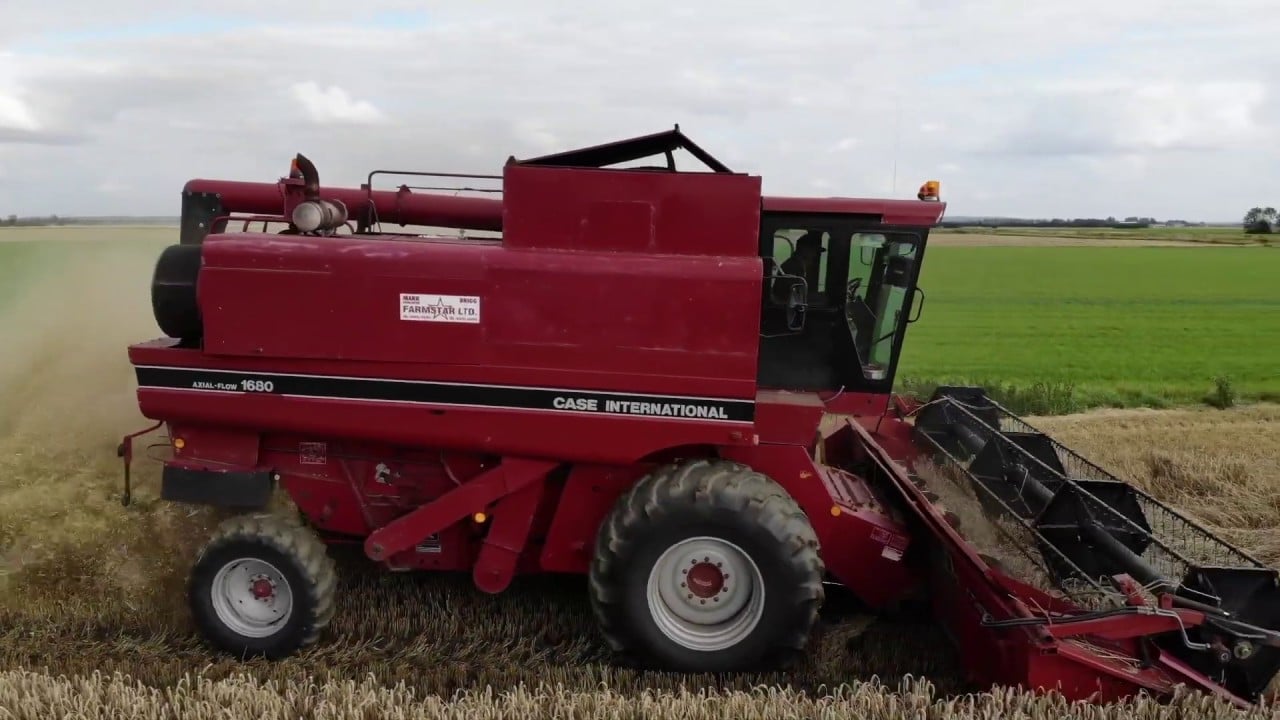
That set the stage for one of the most important shifts in combine design. In 1977, International Harvester introduced the Axial-Flow combine, a machine that replaced the traditional cylinder and walker layout with a single longitudinal rotor. Crop no longer moved across the machine in stages. Instead, it flowed through the combine in a spiral path, where threshing and separation happened continuously from front to back.
A Different Way to Move Crop
The genius of the axial-flow design was not just the rotor itself, but how it simplified the entire process. By feeding crop along the length of the rotor, engineers eliminated the abrupt transitions that defined conventional machines. Material entered, wrapped around the rotor, and gradually gave up its grain as it moved rearward.
This continuous flow delivered several immediate advantages. Grain stayed in contact with threshing elements longer, which improved separation without needing more aggressive action. The crop mat stayed more uniform, reducing bottlenecks and slugging. The machine could handle higher volumes without the same spike in losses that plagued walker machines when pushed too hard.
Operators noticed the difference quickly. Machines ran smoother and grain samples came out cleaner. The combine felt less like it was fighting the crop and more like it was processing it.
Capacity, Simplicity, and Staying Power
As farms grew in the 1980s, the axial-flow concept proved to be exactly what the industry needed. Larger headers and higher horsepower demanded a threshing system that could keep up. The rotor delivered that capacity without requiring a complete redesign every time machines scaled up.
Another key advantage was simplicity. Conventional combines relied on a chain of components that all had to work in sync. The axial-flow design reduced the number of major moving systems, which translated to fewer wear points and less time spent chasing breakdowns during harvest. For farmers, that meant more uptime when it mattered most.
Case IH, formed after the merger of Case and International Harvester, built its identity around this rotor platform. The Axial-Flow line became a cornerstone product, and the concept held its ground even as competitors initially stuck with walker machines.
The Industry Catches Up
Over time, the advantages of rotary separation became too significant to ignore. Manufacturers like John Deere and AGCO began developing their own solutions. Some went fully rotary. Others introduced hybrid designs that combined a conventional threshing cylinder with rotary separation behind it.
This period marked a broader shift in how combines were engineered. Instead of refining the old walker system, companies started rethinking crop flow from the feederhouse to the rear axle. Engineers focused on keeping material moving smoothly, reducing sharp transitions, and maximizing the amount of time grain spent in a controlled threshing environment.
The result was a new generation of machines that could handle more acres per day while maintaining grain quality. Farmers could run longer hours, cover more ground, and push their equipment harder without the same tradeoffs.
What Changed in the Field
The impact of the rotary combine was not limited to the machine itself. It changed how farmers approached harvest. Higher capacity meant fewer machines could cover the same acreage. Cleaner samples reduced the need for rehandling grain. More consistent performance across different crops made it easier to switch from corn to soybeans to wheat without major adjustments.
There was also a confidence factor. Operators could push into tougher conditions knowing the combine had more headroom. That flexibility became increasingly valuable as weather patterns grew less predictable and harvest timing became more critical.
Where It Leaves Us Today
Modern combines have added layers of technology on top of that original rotary concept. Precision agriculture tools, automation, and advanced sensors now guide how machines operate in real time. Rotor designs have been refined, and hybrid systems have become more sophisticated. Capacity has reached levels that would have been hard to imagine in the 1970s.
Even with all that progress, the core idea introduced by the axial-flow combine still defines the category. The way crop moves through the machine, the emphasis on continuous separation, and the focus on efficiency under high throughput all trace back to that original breakthrough.
The rotary combine did more than improve performance. It reset expectations for what a combine could be, and it pushed the entire industry to rethink how harvest gets done.


Leave a Reply