There is a shift underway in hay equipment that feels familiar to anyone who has watched machinery evolve over the past few decades. The same kind of transition that reshaped combines is beginning to show up in haying. Machines are becoming more self-contained, more specialized, and more focused on doing one job extremely well.
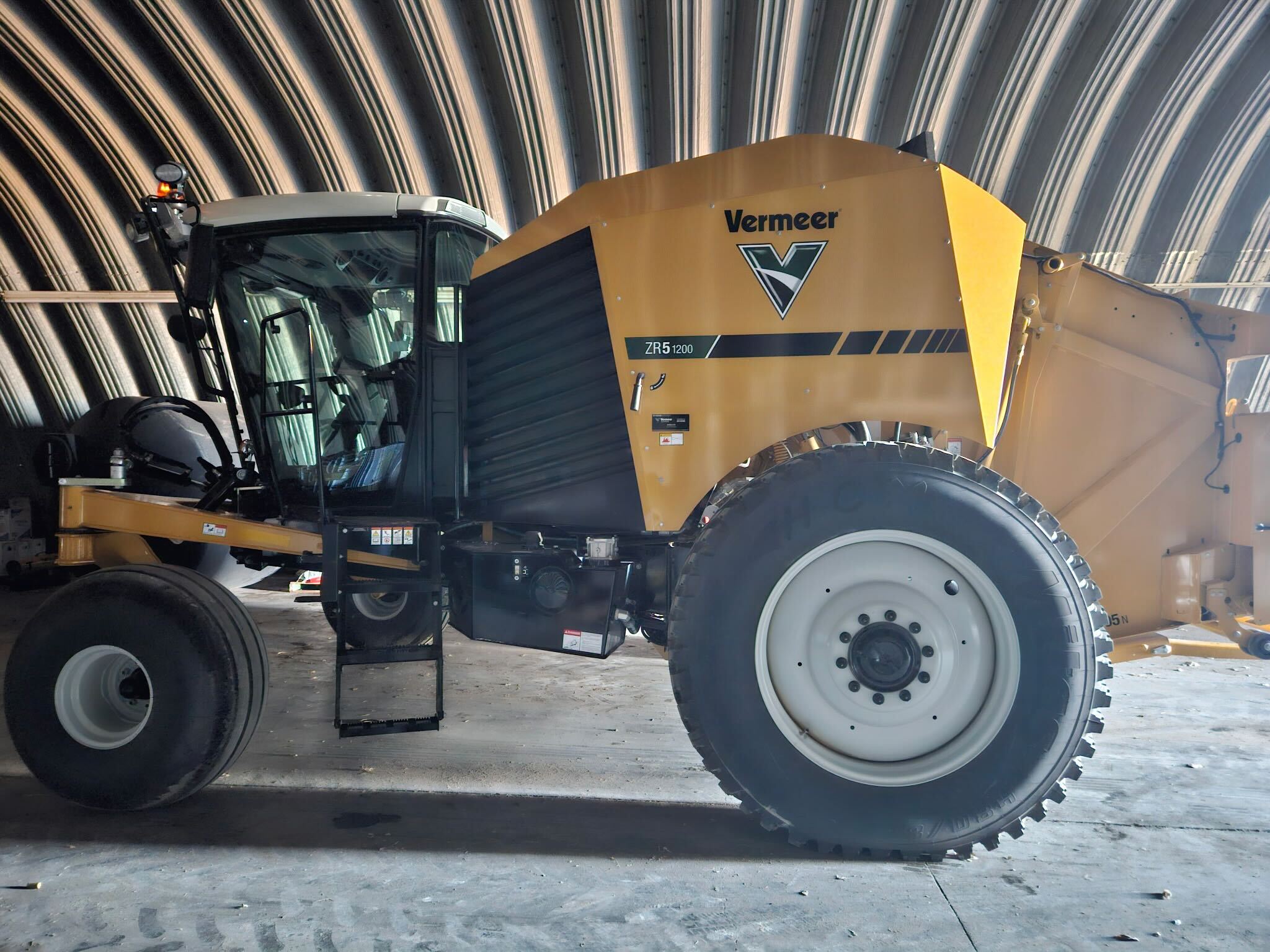
That shift is taking shape with equipment like the Vermeer ZR5-1200 self-propelled baler, including the 2024 unit lined up for the April 28 auction. It represents a different way of thinking about how hay gets put up, and it is gaining attention for good reason.
From Tractor and Baler to One System
For years, hay production has relied on pairing a tractor with a baler. That setup has worked, but it also comes with limitations. Power, visibility, maneuverability, and operator workload are all tied to a machine that was designed to do many different jobs.
The ZR5 changes that structure by combining the power unit, cab, and baler into a single purpose-built system. Everything about the machine is designed around baling. The engine is matched to the workload, the cab is positioned for visibility, and the controls are built around a single task instead of a long list of tractor functions.
This approach simplifies the process in ways that become obvious once the machine is in the field. The operator is no longer managing two separate pieces of equipment working together. Instead, the machine operates as one coordinated unit.
What Changes in the Field
The most noticeable difference shows up in how the machine moves. The zero-turn capability allows operators to stay tight on windrows and handle headlands with far less repositioning. That adds up over the course of a long day, especially in irregular fields where efficiency is usually lost in small increments.
Road speed is another factor that tends to get overlooked. Being able to move quickly between fields reduces downtime and keeps production moving. For custom operators or farms with scattered ground, that can make a meaningful difference over the course of a season.
Automation also plays a major role. The baling cycle becomes more consistent because the machine handles key steps in sequence. Forming the bale, tying, ejecting, and returning to the windrow can all be handled with minimal input from the operator. That consistency improves bale quality while reducing the mental load of running the machine hour after hour.
Labor and Operator Experience
Labor continues to be one of the biggest pressures in agriculture, and haying is no exception. Long days, tight weather windows, and repetitive work create fatigue that can impact both productivity and results.
The ZR5 addresses that reality with a cab designed specifically for the job. Visibility, ride quality, and control layout are all built around baling rather than general tractor use. Cameras and monitoring systems give operators better awareness without constantly shifting position or attention.
Over the course of a full day, those details matter. A machine that is easier to run and more comfortable to operate helps maintain consistency from the first bale to the last.
The Economics Behind the Shift
A self-propelled baler represents a significant investment, and that naturally raises questions about return. When the entire system is considered, the numbers start to look different.
The tractor is no longer tied up during baling, which allows it to be used elsewhere or reduces the need for additional horsepower in the fleet. The engine is sized specifically for baling, which improves fuel efficiency. Maneuverability reduces wasted time, and automation helps avoid missed windrows and inconsistent bale formation.
All of those factors contribute to cost per bale. In many cases, operators are seeing meaningful reductions once the machine is fully utilized across a season. Efficiency gains tend to show up in small increments, but they compound quickly.
Where This Is Heading
Self-propelled balers are still early in their adoption cycle, but the direction is clear. Equipment is becoming more specialized, more integrated, and more focused on maximizing output per operator.
Hay production is moving toward systems that prioritize efficiency, consistency, and ease of operation. That trend mirrors what has already happened in other segments of agriculture, and it is starting to take hold here as well.
Why This Machine Stands Out
The 2024 Vermeer ZR5-1200 coming up on April 28 is more than another piece of hay equipment. It represents a different approach to a familiar job, one that is built around the realities farmers and operators face today.
For the right buyer, this kind of machine can reshape how hay is handled across an operation. Time, labor, and consistency all come into play, and improvements in those areas tend to have a lasting impact.
As more producers look for ways to do more with less, equipment like this is going to draw increasing attention. The shift is already underway, and machines like the ZR5 are helping define what comes next.
Leave a Reply