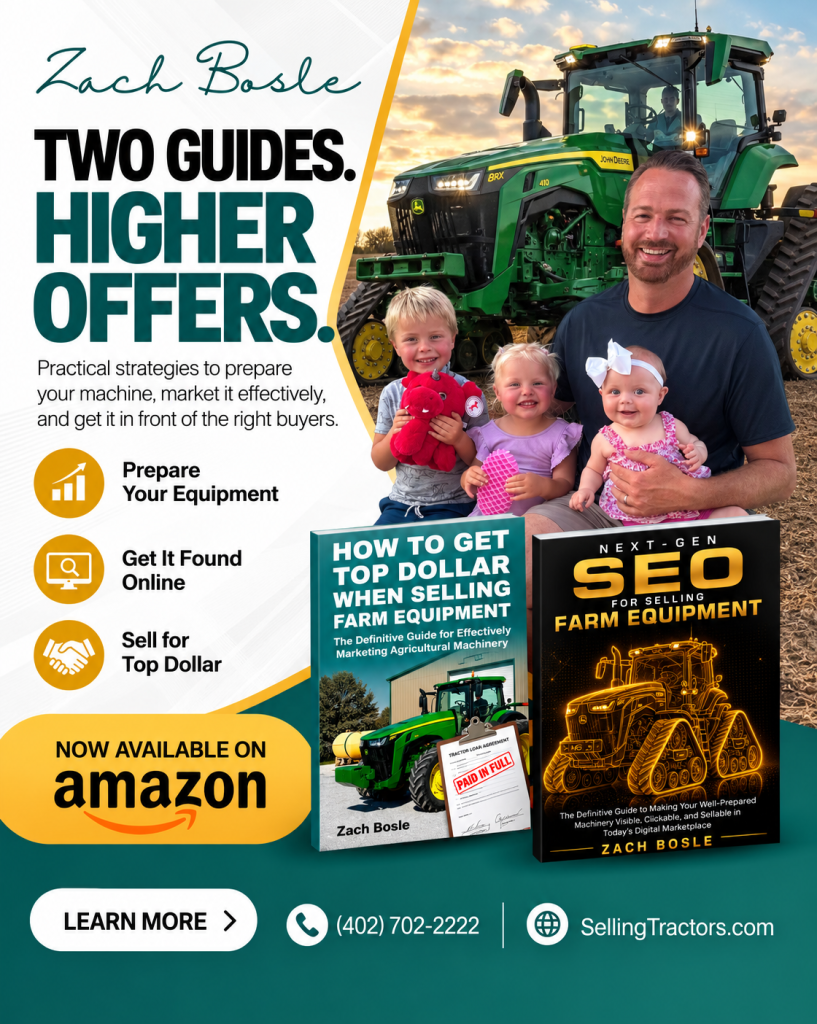
When it comes to selling farm equipment at auction, most sellers focus on the obvious. Clean the machine. Take good photos. Write a solid description. In Zach’s book, How to Get Top Dollar When Selling Farm Equipment, he talks about how important it is to present your equipment the right way, and that part is absolutely true.
But it is not the whole story.
You can do everything right on the presentation side and still come away disappointed if the right buyers never see your listing.
Exposure Is What Creates Results
Auction outcomes are driven by competition. If only a few bidders show up, the price reflects that. If a lot of serious buyers are watching and participating, the number climbs.
That gap usually comes down to exposure.
A well-maintained tractor with great specs does not sell itself just because it is listed online. People have to know it is there. They have to be reminded. They have to feel a reason to jump in and bid.
That does not happen by accident.
Why Results Vary So Much on the Same Platform
A lot of sellers assume that picking a large auction platform solves the problem. In reality, platforms are just tools. What really drives performance is what happens behind the scenes.
On platforms that rely on independent auctioneers, the marketing responsibility often falls on the auctioneer. Some take that seriously, while others do not.
That is why you will see one auction perform extremely well while another, with similar equipment, struggles. Same platform. Different effort.
It is not about luck. It is about how much work goes into getting buyers to pay attention.
When “Listing It” Is Considered Enough
There are still plenty of situations where the process stops after the listing goes live. A few clicks, maybe a quick email blast, and that is it.
Meanwhile, a percentage of the sale is taken regardless of the outcome.
From the seller’s perspective, that should raise questions. If there is no real push to bring in bidders, there is a ceiling on what the equipment can bring.
You cannot expect strong results if the listing is left to sit and hope for traffic.
How We Approach It at Tractor Tuesday
We look at it differently.
Once a listing is live, that is when the work starts. Our goal is to get as many relevant buyers as possible looking at each piece of equipment.
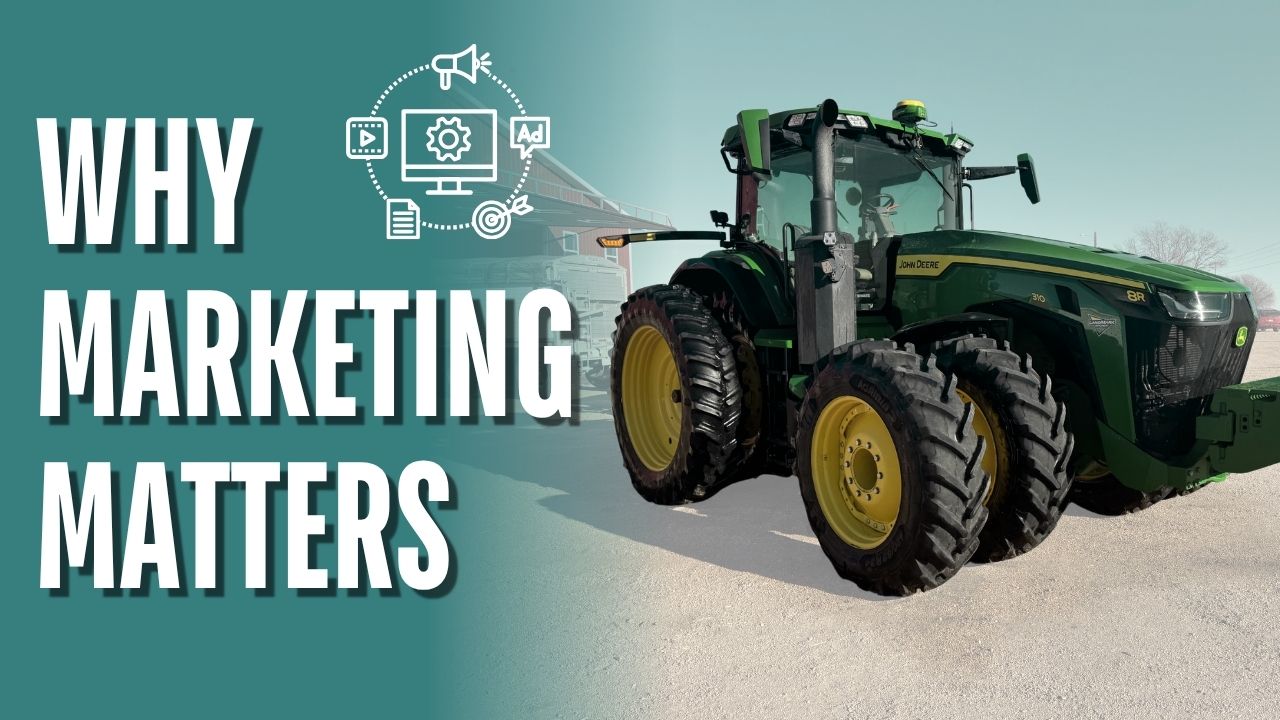
We use direct mail to reach targeted buyers who are likely to be interested. We buy print ads in relevant publications. We send consistent newsletter campaigns to keep listings in front of our audience. We run social media ads that are built specifically around the equipment, not just general branding.
We also put time into video. YouTube gives us another way to highlight machines and connect with buyers who prefer to see equipment in action. On top of that, we invest in broader paid promotion through TV and radio to expand reach beyond just digital channels.
All of that is intentional. It is about creating multiple touchpoints so the right buyers keep seeing the same equipment until they decide to engage.
It is not the cheapest way to operate, but it is the right way if you want sellers to succeed and come back again.
What Sellers Should Be Asking
If you are choosing where to sell, do not just ask about fees or timelines.
Ask how your equipment is actually going to be marketed.
You should get a clear answer. Not a general statement, but a real plan. If the answer feels thin, it probably is.
The Takeaway
Getting equipment ready for sale still matters. That part has not changed.
The key here is how much competition you can create around that equipment, and that depends almost entirely on the effort put into marketing it.
More attention leads to more bidding activity. More bidding activity leads to stronger prices. It is that simple.
When you combine that level of effort with a zero-commission auction model like Tractor Tuesday, the advantage becomes pretty clear.
You keep all of the winning bid, and you have a team working to make sure that number is as strong as possible.
Leave a Reply