
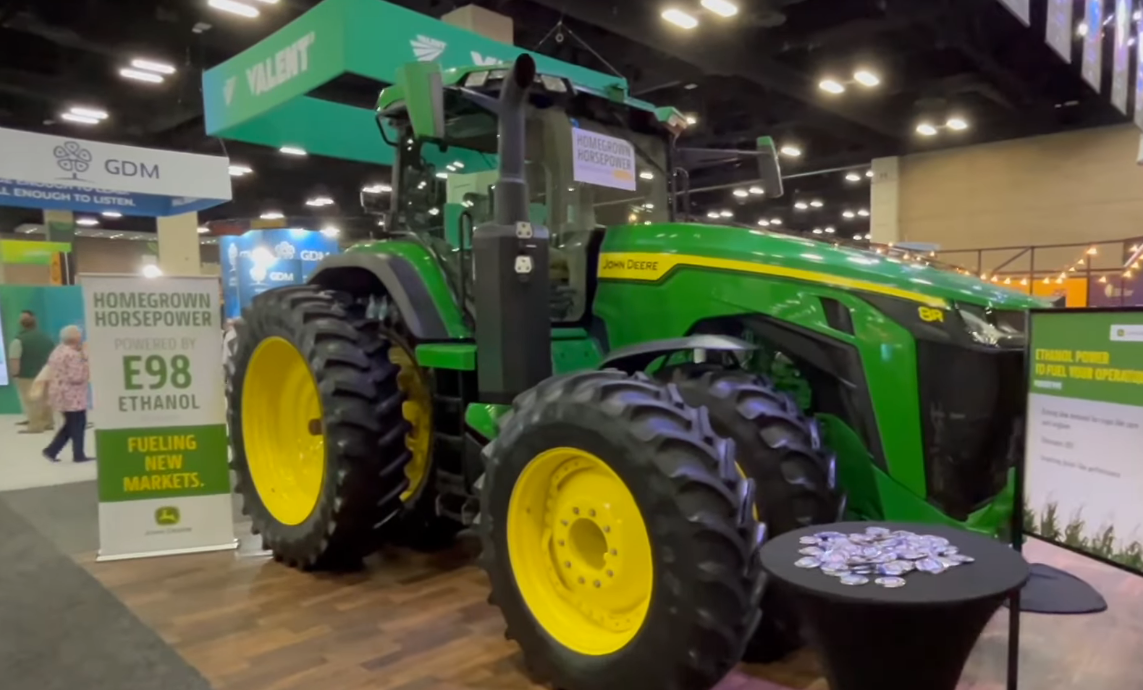
When John Deere rolled out its ethanol-powered 8R prototype, it generated considerable excitement. A tractor that runs on E98, delivers the power farmers expect, and eliminates DEF altogether is going to get attention in a hurry.
Early reactions have backed that up. One industry voice described the machine as delivering “diesel-like performance” without the emissions complexity farmers have grown tired of dealing with. That combination is what makes this different. It’s not asking farmers to sacrifice, but offering a cleaner setup that could actually simplify things.
The idea itself is not new. More than a century ago, Henry Ford built his first car to run on ethanol and believed it would become the fuel of the future. He saw it as something farmers could produce themselves, not something they had to rely on from outside sources. Petroleum ended up winning that battle, but the logic never really went away.
Now agriculture may be circling back to it.
What makes this moment different is that the technology has finally caught up. John Deere isn’t reinventing the tractor from scratch. They are adapting proven engine platforms to run on ethanol using updated combustion approaches that keep power and torque where they need to be. Early testing across the Midwest has shown that it can hold up in real field conditions, which is where ideas like this either gain traction or disappear.
Why Farmers Actually Care
Farmers are not into chasing “green” trends. They are looking for something that works better than what they already have.
This checks some real boxes.
The biggest one is getting rid of DEF. That system has been a constant frustration. It adds cost, downtime, and complexity. Taking it out of the equation without losing performance is a meaningful improvement.
Then there is fuel itself. Ethanol is already produced in massive volumes across the United States. In the right regions, it could offer a more stable and potentially cheaper alternative to diesel. More importantly, it keeps dollars closer to home.
That ties into something bigger. Energy independence is not just a talking point here. If a farm can run on fuel that was grown, processed, and distributed domestically, it changes the equation. It reduces exposure to global oil markets and puts more control back in the hands of farmers.
And there is another angle that is hard to ignore. If tractors begin running on ethanol at scale, that creates a new layer of demand for crops like corn. Instead of just selling into fuel markets, farmers would also be fueling their own operations. It tightens the loop in a way agriculture has not really seen before.
That is why some in the industry are pushing this forward. This is about creating demand right here at home, tying energy directly back to the farm.
So Where Does This Go?
There are still real questions. Infrastructure is a big one. Diesel is everywhere. E98 is not. Cold weather performance and long-term durability will also need to prove themselves over time.
But the fact that John Deere is testing this in the field, not just displaying it at shows, says a lot. John Deere isn’t putting this out just to generate headlines, but to forge a new path forward.
The broader conversation in ag equipment has been dominated by electrification and autonomy. Those are coming, but ethanol offers something that fits more naturally into how farms already operate by building on existing equipment, existing habits, and existing supply chains.
And maybe that is why it feels different. It is not trying to force a new system onto farmers. It is taking something they already produce and turning it into an advantage.
If this moves toward production, it would not just change what tractors run on, but also how farmers think about fuel, markets, and their role in both.
For the first time in a long time, the idea of running a farm on what you grow does not feel like a throwback, but a real possibility.


Leave a Reply