
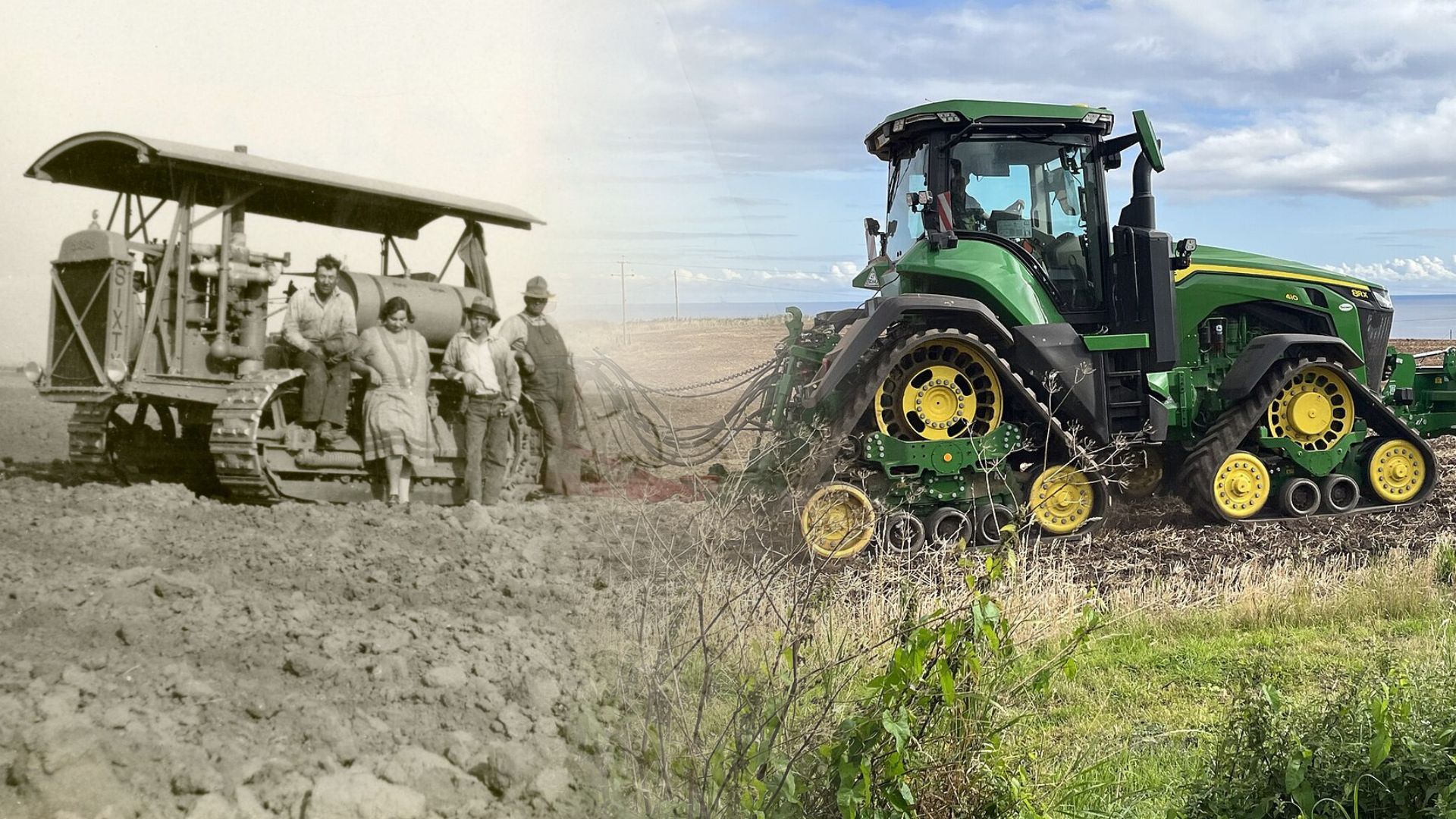
Long before rubber tracks showed up on modern high-horsepower machines, the idea of spreading weight across a larger footprint was already taking shape.
In the early 1900s, farmers faced a simple but frustrating limitation. Heavy equipment sank and wet ground stopped progress. Steel wheels, even with aggressive lugs, could only do so much. That is where tracked propulsion entered the picture.
Holt Manufacturing Company was among the first to make it work in a practical way. Benjamin Holt’s early machines replaced wheels with a continuous chain of steel plates that rolled around a frame. By 1904, they had a working tractor that could move through soft soils where others failed.
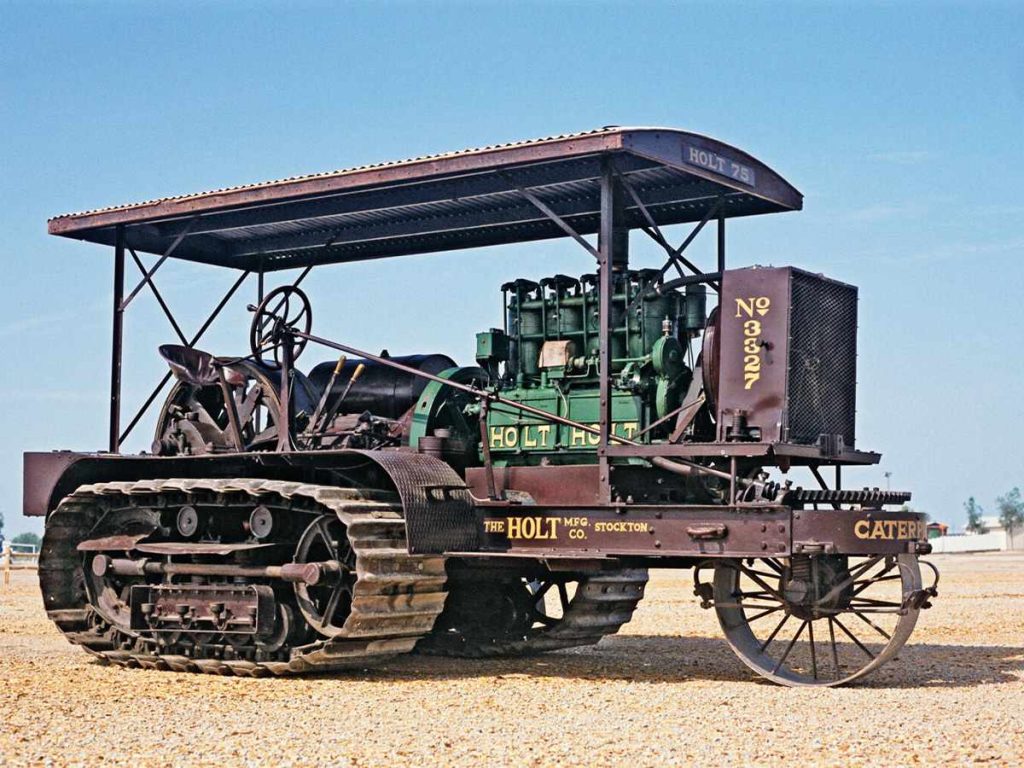
The design looked unusual, but it solved a real problem. A photographer reportedly described the motion as resembling a crawling caterpillar, and the name stuck. That eventually carried forward into Caterpillar Inc. after Holt merged with C.L. Best in 1925.
A Long Stretch as a Niche Tool
For decades, tracked tractors remained on the edges of mainstream agriculture.
Machines from International Harvester and early crawler offerings from John Deere found their place in orchards, vineyards, and land clearing. They were effective in the right conditions, but they came with tradeoffs.
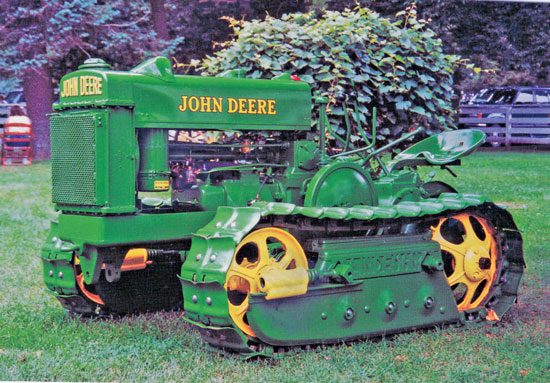
Steel tracks wore quickly and required constant maintenance. Transporting them between fields was difficult. Ride quality was rough. At the same time, tire technology improved rapidly through the mid-20th century. Pneumatic tires offered better speed, comfort, and versatility.
For most farmers, wheels were the better fit. Tracks stayed relevant, but very limited.
1987: The First True Breakthrough
Everything changed in 1987.
That was the year Caterpillar Inc. introduced the Challenger 65. It was not the first tractor to use tracks, but it was the first to make them work at scale in modern farming.
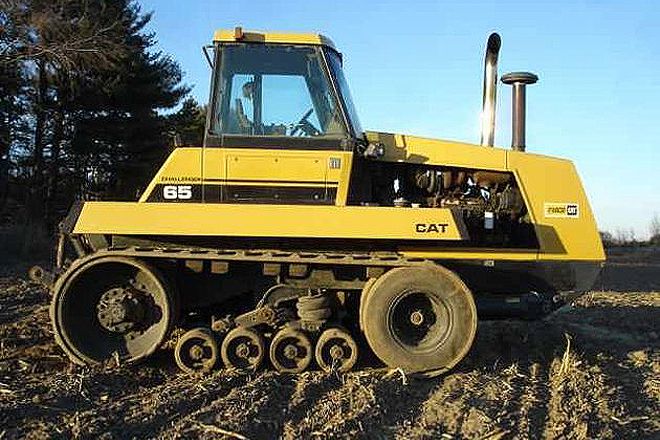
The key difference was rubber.
Instead of steel, the Challenger used a suspended rubber track system. That reduced maintenance, improved ride quality, and made the machine far more practical for everyday use. It also delivered serious horsepower while reducing compaction, something that was becoming more important as equipment got larger.
For the first time, tracks were not just a workaround. They were a competitive advantage.
1996: A New Approach with Quadtrac
The next major step came in 1996, when Case IH introduced the Steiger Quadtrac.
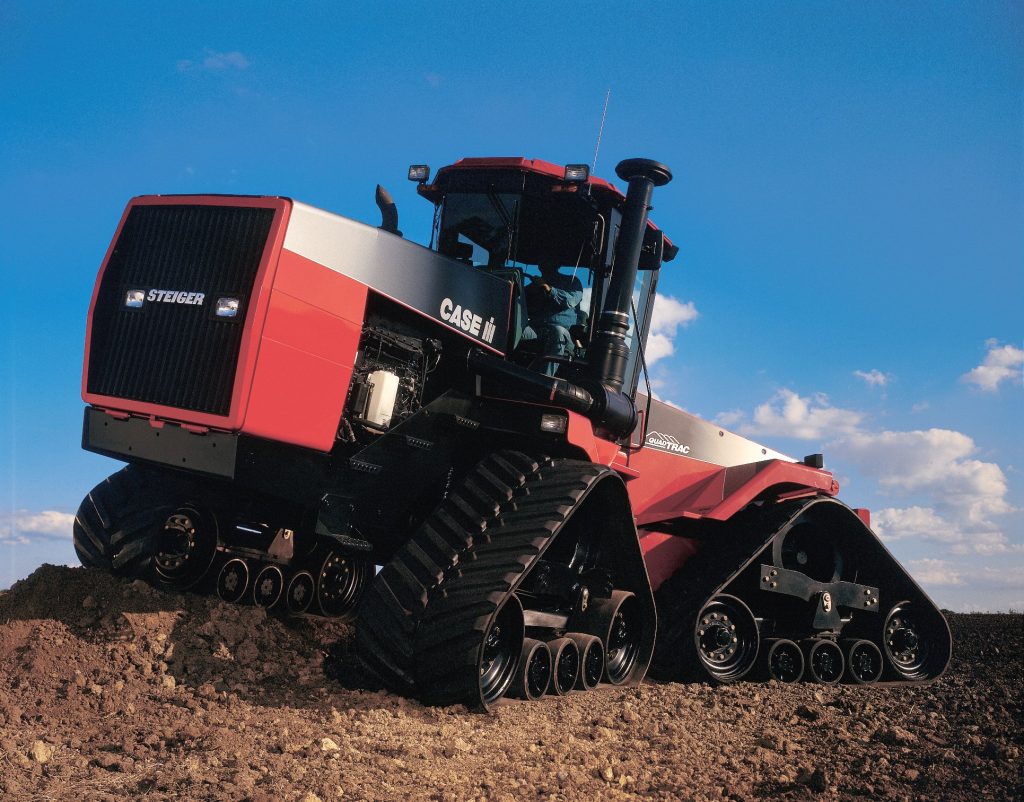
Rather than using two long tracks, the Quadtrac used four independent track assemblies. That design addressed one of the biggest criticisms of earlier track machines. Two track tractors could be aggressive in turns, pushing soil and creating berms. The four track system improved stability and handled turns more cleanly.
It also reinforced the idea that tracks were not just viable but, in some situations, superior.
1997: Tracks Move Into Row Crop Farming
In 1997, John Deere brought tracks into a different part of the market with the launch of the 8000T series.
This was not just a high-horsepower articulated machine, but a row-crop tractor built around tracks. That opened the door for more farms to consider the technology within their existing operations.
It also sent a clear signal that tracks were no longer a niche. They were becoming part of the mainstream lineup.
Why Tracks Took Off
The rise of tracked tractors in recent years is tied closely to how farming has evolved. Operations are larger. Equipment is heavier. Weather windows are tighter. Getting across acres quickly, even in less than ideal conditions, has become critical. Tracks answer those demands.
They provide consistent traction in soft ground. They reduce slippage, which improves efficiency. They allow earlier field access after rain. And they spread weight across a larger surface area, helping manage compaction and protect yield potential.
Modern designs have also removed many of the early compromises. Four track systems, suspended undercarriages, and row crop configurations have made tracks practical across a wider range of applications.
An Old Idea That Found Its Moment
Tracked tractors did not suddenly appear in the 1980s. The concept had been around for nearly a century. What changed was the technology around it, along with the needs of modern farming.
The key milestones tell the story clearly. The Challenger 65 in 1987 proved rubber tracks could work at scale. The Quadtrac in 1996 refined the concept and solved real field issues. The 8000T in 1997 brought tracks into everyday row crop operations.
From there, adoption followed. What started as a solution for mud became a defining feature of modern high horsepower equipment.


Leave a Reply