In a year when farm equipment demand has slowed sharply across North America, CNH just received a reminder that product development and brand identity still matter. The manufacturer behind Case IH, New Holland, and STEYR earned three separate 2026 Red Dot Design Awards, one of the most recognized industrial design honors in the world. The awards highlighted a trio of tractors that blend operator comfort, technology integration, and modern styling at a time when the agricultural equipment market is facing serious pressure.
The recognition comes during a difficult cycle for machinery manufacturers. CNH recently described current North American ag equipment demand as “historically low,” with sales declines hitting larger horsepower tractors particularly hard. Dealers and manufacturers alike are working through cautious farmer spending, tighter margins, elevated input costs, and uncertainty surrounding commodity prices and trade conditions.
Against that backdrop, the Red Dot wins signal that CNH is continuing to invest in machine usability, operator experience, and brand differentiation even during a downturn.
Case IH Puma Wins for Operator-Focused Refinement
The Case IH Puma series was one of the three winning platforms. According to CNH, the redesigned Puma combines updated Case IH family styling with major improvements to the operator environment. The cab received revised interior styling, increased storage, upgraded displays, easier entry and exit, and visibility improvements through a redesigned hood and lighting package.
That focus makes sense given where the Puma fits in the market. The series has long been popular with livestock operations, row crop farms, and mixed-use operations that need a tractor capable of long days across multiple jobs. While horsepower and technology remain important, comfort and usability increasingly influence buying decisions in this segment.
Modern tractor design has become about reducing fatigue as much as improving performance. Better visibility, cleaner controls, integrated lighting, and improved cab layouts directly affect how productive an operator can be during planting, tillage, haying, or transport work.
Case IH has also been steadily modernizing its design language over the last several years, especially after receiving earlier recognition for products like the Quadtrac 715. The Puma award suggests that CNH is pushing that design philosophy deeper into its core tractor lineup rather than reserving it only for flagship machines.
New Holland T7 Brings a New Design Identity
New Holland’s T7 Standard Wheelbase tractor also earned a Red Dot award, with judges recognizing its redesigned proportions, visibility improvements, maneuverability, and operator comfort. The tractor additionally introduces New Holland’s new “Dynamic Blue” color direction, which the company says will gradually expand across its broader equipment portfolio.
That may sound cosmetic on the surface, but visual identity matters more than ever in the global machinery business. Manufacturers increasingly want their equipment to feel technologically advanced, cohesive, and recognizable across product categories. Automotive-style design thinking has steadily moved into agriculture, especially as cabs become more digital and machines become more autonomous and precision-focused.
The T7 line occupies one of the most competitive horsepower segments in agriculture, where producers often compare machines across Deere, Fendt, Massey Ferguson, Case IH, and New Holland. Standing out requires more than horsepower specifications alone.
The redesign also reflects how tractors have evolved into mobile workstations. Visibility, screen integration, control placement, and overall ergonomics now influence purchasing decisions alongside hydraulics and drivetrain specifications.
STEYR Cervus CVT Targets the Premium Segment
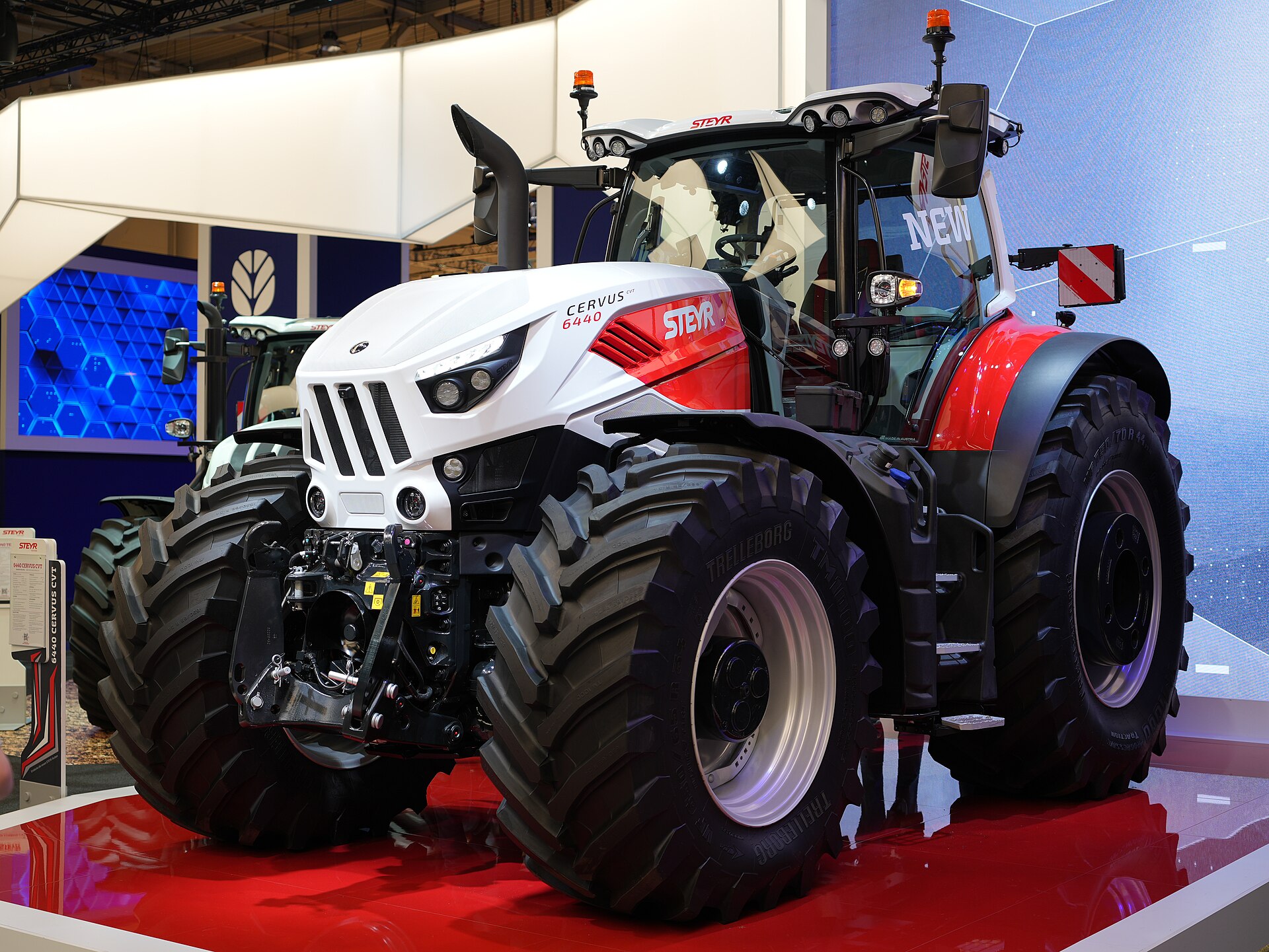
The third Red Dot winner was the STEYR Cervus CVT, a machine designed to push the Austrian brand further into the high horsepower category. CNH described the tractor as combining compact dimensions with high output capability and versatility across multiple applications.
STEYR remains a smaller brand globally compared to Case IH or New Holland, but it has developed a strong reputation in parts of Europe for premium design and operator-focused engineering. The Cervus platform appears intended to strengthen that image while helping the brand compete in the increasingly premium-focused large tractor segment.
Even farmers who never operate a STEYR can often see where future CNH design language and technology trends are heading. Historically, premium European platforms frequently influence features and styling that later appear across broader global product lines.
Why Design Matters During a Downturn
Awards alone do not solve soft demand. Farmers are still delaying purchases, dealer inventories remain under pressure, and manufacturers continue adjusting production levels to match the slower market. CNH executives recently stated they believe the industry is moving through the lowest point of the current cycle.
Still, moments like this matter for manufacturers.
Strong industrial design helps companies maintain momentum during difficult periods. It reinforces dealer confidence, strengthens brand perception, and reminds customers that product development continues even when sales soften. In agriculture especially, where machinery purchases are often delayed rather than abandoned entirely, manufacturers are constantly positioning themselves for the eventual rebound.
There is also growing competition around the total ownership experience. Farmers today expect better lighting, quieter cabs, cleaner interfaces, more intuitive controls, and smarter integration with precision systems. The companies that continue improving those areas during downturns are often positioned well when buying activity returns.
CNH’s triple Red Dot win suggests the company understands that reality. Even in a historically weak equipment market, manufacturers cannot afford to stand still.

Leave a Reply