
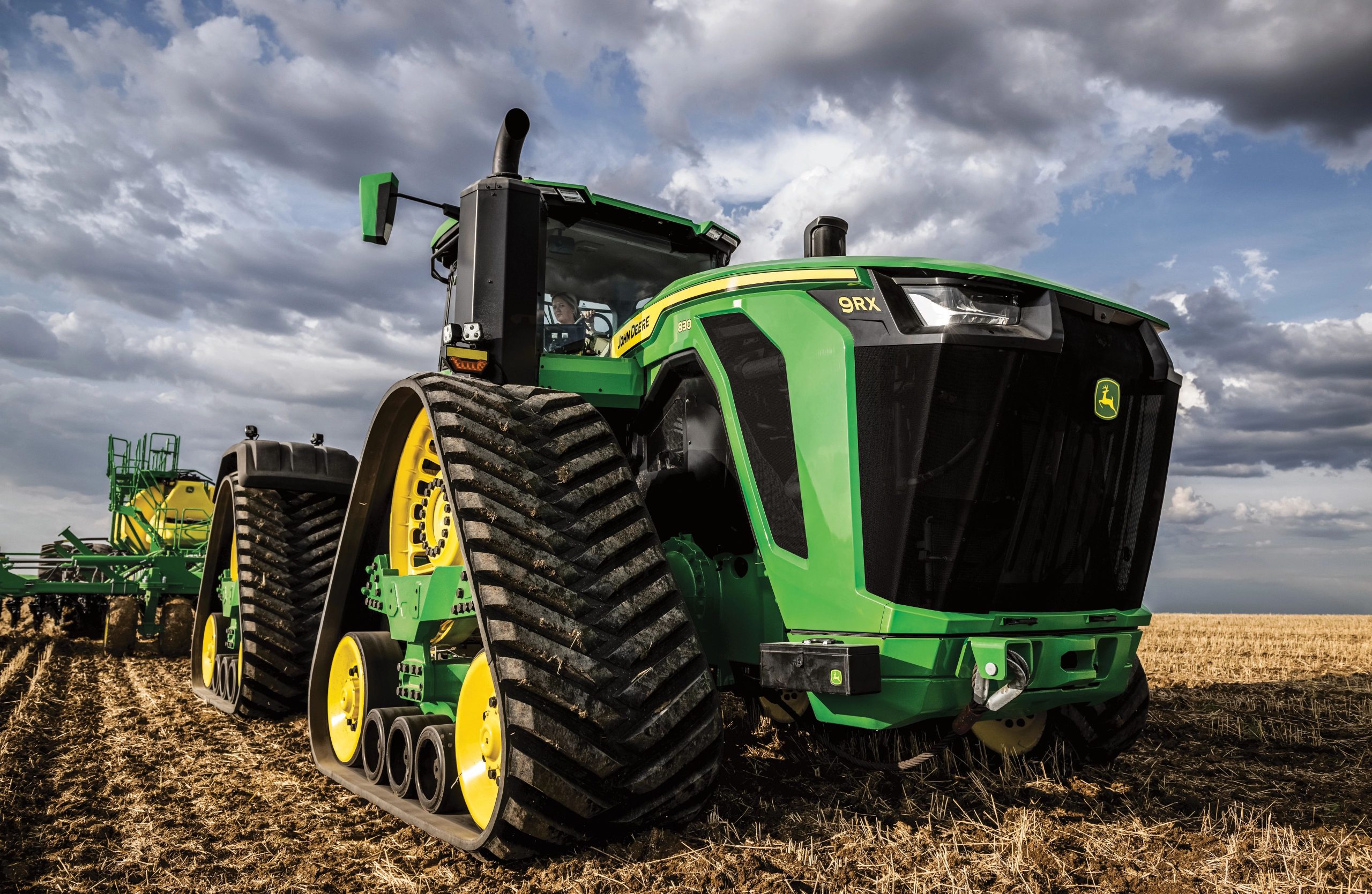
For years, autonomous tractors felt like something that was always just over the horizon. Manufacturers showed concept machines at farm shows, tech companies released futuristic demos, and producers debated whether fully driverless farming would ever truly become practical.
That future may have arrived faster than many expected.
U.S. Sugar has now deployed a fleet of autonomous John Deere tractors across roughly 255,000 acres in Florida, marking one of the largest real-world autonomous farming operations seen in North America to date. Unlike small test programs or controlled demonstrations, these machines are being used at commercial scale in day-to-day agricultural work.
That is a major turning point for agriculture.
From Assisted Steering to Full Autonomy
Modern farm equipment has been moving toward autonomy for years. Auto-steer evolved into turn automation, machine syncing, telematics, and increasingly advanced precision systems. Many late-model tractors already contain much of the hardware needed for autonomous operation, including GPS guidance, sensors, cameras, and remote connectivity.
The difference now is that the operator is no longer sitting in the cab.
The autonomous Deere fleet reportedly includes both 8R and 9R tractors capable of operating around the clock with remote supervision. For large farming operations, the appeal is obvious. Labor shortages continue to affect agriculture across much of the country, especially during long planting and harvest windows where experienced operators are difficult to find.
Autonomous equipment offers the possibility of keeping machines running longer with fewer staffing limitations, particularly for repetitive field tasks.
Why Sugarcane Is an Ideal Starting Point
Sugarcane production provides conditions that are especially favorable for early autonomous adoption. Large fields, repetitive operations, and predictable traffic patterns create a more controlled environment than many other types of farming.
That does not mean autonomy will stay limited to sugar operations.
Tillage, cultivation, mowing, grain cart support, and even planting are increasingly viewed as realistic targets for autonomous systems in row crop agriculture. Once the technology proves itself economically and operationally, adoption could spread quickly into other regions and crops.
Agricultural technology often moves slowly until it suddenly accelerates. Auto-steer and precision planting systems were once viewed as luxury features. Today, they are common across farms of nearly every size.
Autonomy may follow a similar path.
What Happens to Farm Labor?
One of the biggest questions surrounding autonomous machinery is what it means for farm workers.
Supporters argue that autonomy is a response to an existing labor shortage rather than an effort to eliminate jobs outright. Large operations across agriculture already struggle to find enough qualified operators during peak seasons.
At the same time, many producers worry that autonomous machinery could eventually reduce demand for equipment operators while accelerating consolidation toward larger farming operations with the financial ability to adopt advanced technology first.
The reality will likely fall somewhere in the middle.
Even autonomous fleets still require people for maintenance, transportation, fueling, monitoring, diagnostics, and repairs. In many cases, the role of the farm employee may shift from operating a single machine to supervising multiple autonomous units at once.
Agricultural jobs are becoming increasingly technical, and this trend is likely to continue.
Will Smaller Farms Be Able to Compete?
Right now, autonomous machinery is clearly aimed at large-scale operations. The technology remains expensive, highly advanced, and easier to justify across massive acreages.
However, agricultural technology has a history of gradually becoming more accessible over time. GPS guidance, section control, yield mapping, and telematics were once viewed as tools mainly for large operations before spreading throughout the industry.
Smaller farms may eventually gain access to autonomy through retrofit systems, subscription-based services, custom operators, or scaled-down autonomous solutions built into mid-sized equipment.
Still, there is little question that larger farms are positioned to move first.
The Future Is Already Here
For many farmers, autonomous machinery still feels futuristic. But the sight of driverless tractors operating commercial acreage is no longer hypothetical. It is already happening.
Whether producers view that future with excitement, caution, or skepticism, autonomy is clearly moving beyond the testing phase and into real agricultural production. The next several years may determine just how quickly autonomous machinery spreads across American farming.
One thing is becoming increasingly difficult to deny. The era of autonomous agriculture has officially begun.


Leave a Reply