Electric tractors often trigger the same reaction from farmers. Skepticism comes first, followed by practical questions. How long will it run? What happens in cold weather? What does charging look like during a busy season?
Those concerns are understandable. Agriculture depends on reliability, and few industries punish downtime more severely. That reality is one reason electric tractors have struggled to gain serious attention outside of trade shows and concept announcements.
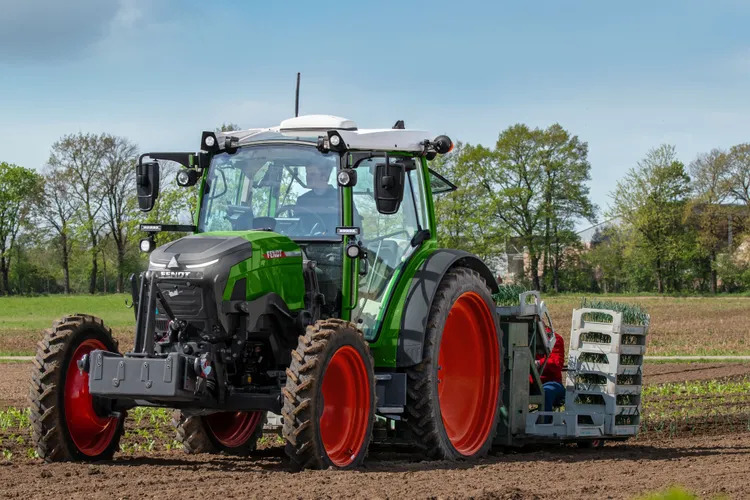
The interesting thing about the Fendt e100 is that it may be approaching electrification differently.
Fendt Is Not Trying to Replace a 400 Horsepower Tractor
Much of the skepticism around electric equipment comes from imagining batteries replacing large row crop tractors. Pulling heavy tillage equipment, planting thousands of acres, and running long harvest days remain difficult challenges for current battery technology.
Fendt appears to be taking another route.
The e100 was designed primarily for vineyards, orchards, specialty crops, municipalities, greenhouses, livestock farms, and property maintenance work. These environments often involve shorter operating windows, lighter loads, and work close to a charging location.
That distinction matters because electrification may not arrive everywhere at once. It may begin with jobs where electric power already makes sense.
The Specs Suggest a Different Strategy
The Fendt e100 Vario features a 100 kWh battery system and produces up to roughly 90 horsepower at peak output. Depending on workload, runtime can stretch several hours before recharging becomes necessary.
Viewed through the lens of broad-acre grain farming, those numbers may seem limiting.
Viewed through the lens of feeding cattle, loader work, greenhouse operations, or municipal maintenance, the conversation changes. Many compact tractor tasks happen intermittently and close to home, making overnight charging more realistic.
Not Every Tractor Job Requires Maximum Runtime
Modern farms rely on a wide range of machines, and not all spend twelve hours under heavy load.
A tractor used around a dairy may perform loader work throughout the day with breaks between tasks. Orchard operations value maneuverability and lower noise. Greenhouses benefit from equipment that does not produce exhaust fumes indoors.
These are not minor use cases. Compact tractors perform countless repetitive jobs where battery-powered equipment could eventually become practical.
Electric Tractors Are No Longer Just Concepts
The Fendt e100 has been in development for years, but discussion around the tractor changed in 2026 as rollout began in parts of North America.
Availability is currently focused in portions of the U.S., particularly the Pacific Northwest, with Canada expected to follow. Canadian producers will also get a closer look as the e100 appears at Ag in Motion, one of Western Canada’s largest outdoor farm shows.
That does not mean battery-powered equipment is about to reshape broad-acre farming overnight. It does suggest manufacturers believe enough demand already exists in specialty crops, municipalities, and livestock operations to justify expansion.
Why the Fendt e100 Could Matter More Than Expected
The importance of the Fendt e100 may have less to do with horsepower and more to do with realism.
Rather than attempting to replace every diesel tractor on the farm, it appears designed around jobs that already exist and environments where electric power may offer legitimate benefits today.
Whether batteries eventually power large row crop equipment remains uncertain. Compact and specialty tractors, however, may become the place where agriculture quietly begins another transition.
If that happens, machines like the Fendt e100 may someday be viewed less as experiments and more as early signs of where part of the industry was headed.

Leave a Reply