
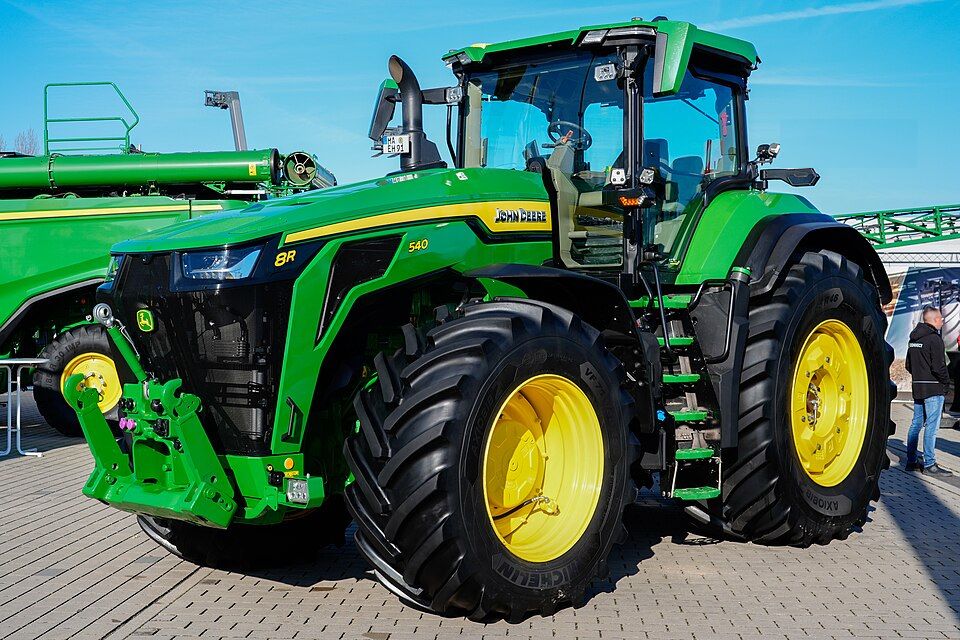
When John Deere introduces updates to one of its flagship tractor lines, it’s easy to look first for bigger engines, more hydraulic capacity, or higher lift ratings. This time, however, the company went in a different direction.
The Model Year 2027 updates for the 8 Series tractors, spanning 250 to 410 horsepower, are largely centered around the operator. Deere has added new steering technology, expanded planter integration, redesigned cab controls, improved comfort features, and longer warranty coverage. None of these changes dramatically alter what an 8R can pull through the field, but together they point toward a broader trend in premium row-crop tractors.
The next competitive advantage isn’t necessarily more horsepower. It’s making long days in the seat easier, more comfortable, and more productive.
A More Customizable Operator Experience
One of the biggest changes is a redesigned operator environment.
At the center of the update is a new configurable CommandARM layout that allows operators to tailor many of the tractor’s controls to their own preferences. Deere is also introducing three transmission drive lever options: CommandX, CommandX Plus, and CommandX Pro. Each builds on the previous by adding additional programmable controls while maintaining a familiar operating strategy across the lineup.
The cab also gains a new Convenience Display that provides quick access to HVAC controls, radio settings, seat adjustments, and other commonly used functions without digging through multiple screens. The goal is to reduce distractions while keeping important controls within easy reach.
For operators who spend 12 to 16 hours planting or working ground, those seemingly small improvements can make a meaningful difference over the course of a season.
Comfort Receives Plenty of Attention
John Deere also devoted considerable attention to physical comfort inside the cab.
New features include an integrated wireless phone charger, electrically adjustable CommandARM positioning, a full-length armrest cushion adjustment, improved seatback ventilation for increased airflow, and a soft-close assisted cab door. These additions won’t add another acre per hour to field performance, but they can reduce fatigue during long days when planting, spraying, or tillage windows are tight.
It’s a noticeable shift in priorities. Tractor manufacturers have spent decades competing over horsepower figures and hydraulic specifications. While those numbers still matter, modern row-crop tractors have become sophisticated workstations where operator comfort increasingly influences overall productivity.
Reactive Command Steering Makes Its Way to the 8R
Perhaps the most interesting functional update is the availability of Reactive Command Steering on select 8R wheel models.
The system automatically returns the steering wheel to center after completing a turn, reducing the amount of correction required from the operator. Deere also allows users to choose between three steering feedback settings so the steering feel can be matched to personal preference or the specific job being performed.
While that may sound like a relatively minor feature, operators who spend hundreds of hours transporting equipment or making repeated headland turns may appreciate the reduction in steering effort. It’s another example of Deere refining the driving experience rather than simply adding raw capability.
More Integration With Modern Planters
The updates extend beyond the cab as well.
For tractors equipped with Deere’s Electric Variable Transmission (EVT), new 56-volt power offboarding allows electrically driven planters to connect using a single harness instead of multiple hydraulic and electrical connections. As electric-drive planting systems continue gaining popularity, simplifying those hookups could save time during setup while reducing the complexity of connecting implements.
John Deere has also expanded Hitch Active Downforce for the new 8R and 8RX tractors. The system actively adjusts hitch downforce to help maintain more consistent planter depth across changing field conditions, whether using integral or drawn planters. Consistent seed placement remains one of the biggest contributors to uniform emergence, making this more than just another convenience feature.
These updates reinforce an industry trend that has become increasingly clear over the past several years. Tractors are evolving into integrated power and control platforms that work seamlessly with increasingly sophisticated implements rather than simply pulling them.
A Longer Standard Warranty
Another noteworthy addition is Deere’s decision to include a three-year or 1,500-hour limited PowerGard extended warranty as standard equipment across the 250 to 410 horsepower 8 Series lineup. Additional warranty options remain available for customers wanting longer coverage.
For equipment purchases that often approach or exceed half a million dollars depending on configuration, warranty coverage has become an increasingly important part of the ownership decision. Longer standard coverage may also help strengthen resale values and reduce uncertainty for buyers planning to trade machines after several seasons.
The Bigger Picture
None of these updates will completely change what an 8 Series tractor is capable of doing in the field. The horsepower range remains the same, and Deere isn’t introducing an entirely new platform.
Instead, the company is refining how operators interact with the machine every single day.
As guidance systems, automation, electric planter technology, and precision agriculture continue to mature, manufacturers appear to be competing less on headline horsepower numbers and more on usability. The tractor is becoming as much a technology platform as it is a source of pulling power.
John Deere’s latest 8 Series updates suggest the company believes that future buying decisions will increasingly come down to operator experience. For farmers who spend countless hours in the cab each season, that may prove to be one of the most important upgrades of all.

Leave a Reply