
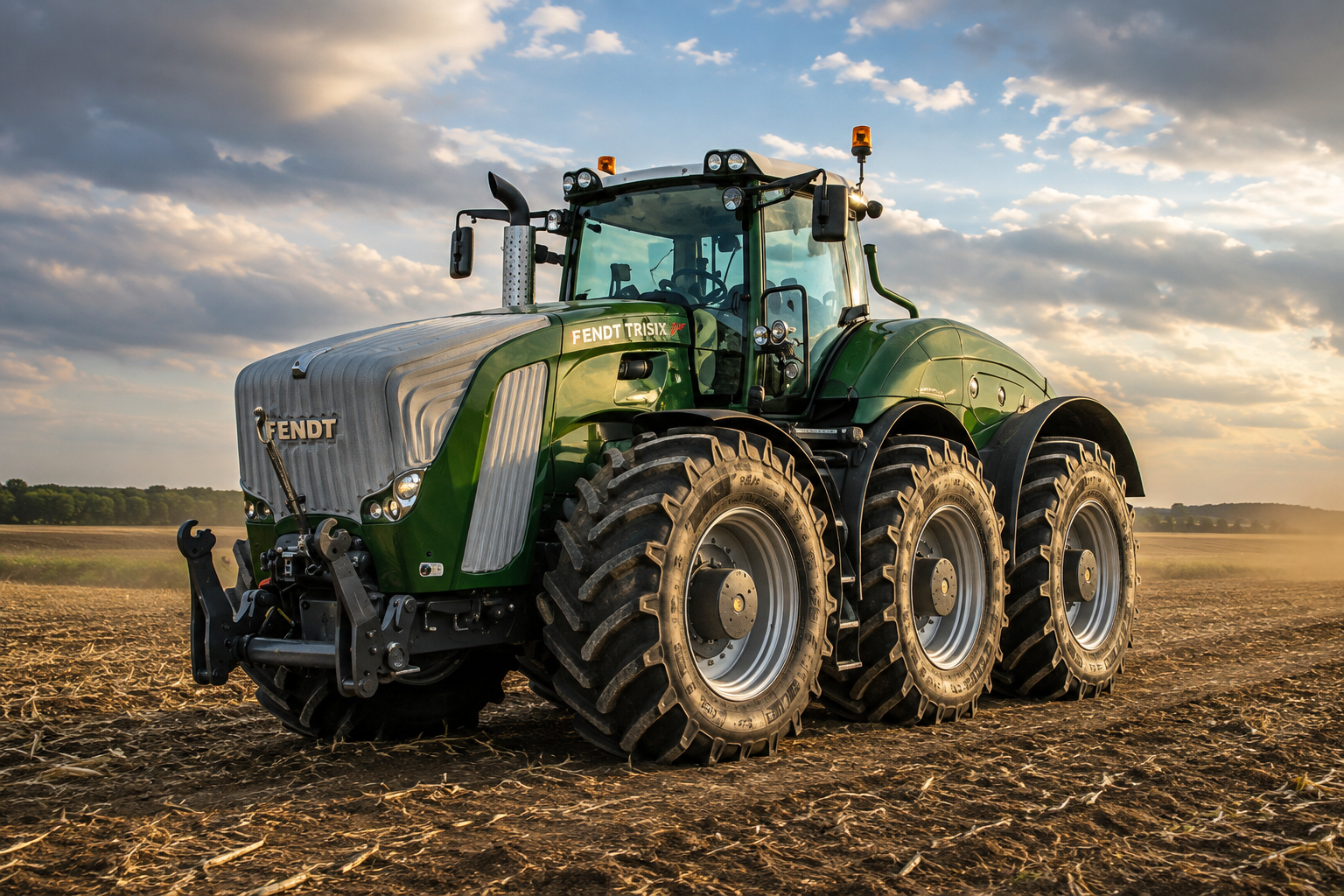
When Fendt unveiled the TRISIX Vario at Agritechnica in 2007, it immediately became one of the most talked-about machines at the show. With three axles, six driven wheels, and more than 500 horsepower, it looked unlike any production tractor farmers had ever seen. It was bold, futuristic, and stood apart from anything else on exhibit.
For most visitors, the TRISIX was simply seen an incredible concept tractor that would never see the light of day again. In fact, that’s exactly what happened. The six-wheeled machine never entered production, never appeared in dealership inventories, and never found its way onto farms around the world. Yet nearly twenty years later, people are still talking about it.
Part of the renewed interest comes from a recent retrospective by Maquinac, which revisited the remarkable history of the TRISIX and its influence on Fendt’s engineering philosophy. Around the same time, DTN published a column asking whether today’s tractors will become tomorrow’s classics. Together, those stories raise an interesting question of their own. What if one of the most influential tractors of the past two decades was never sold to a single farmer?
A Prototype With a Purpose
Concept vehicles are nothing new. Automakers have used them for decades to explore new technologies, test radical designs, and challenge conventional thinking before committing to production. Agricultural equipment manufacturers operate much the same way, even if those prototypes are seen by far fewer people.
The TRISIX wasn’t built because Fendt expected thousands of orders. It was built because engineers were facing a new generation of challenges. Horsepower was climbing rapidly, implements were getting larger, and manufacturers needed better ways to transfer that power to the ground without sacrificing maneuverability or dramatically increasing soil compaction.
Instead of accepting the limitations of conventional tractor design, Fendt decided to ask a different question. What if there was another way?
Why Six Wheels?
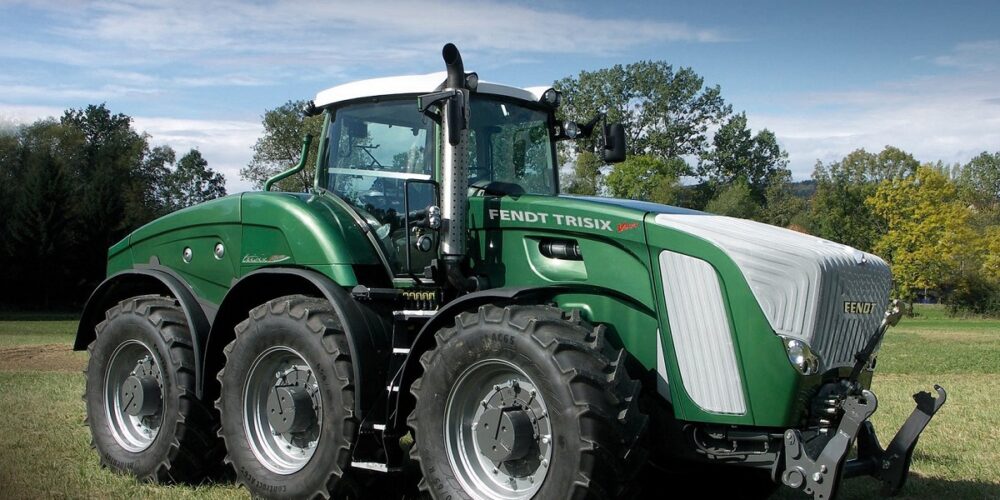
The most obvious feature of the TRISIX was also its defining characteristic. By adding a third axle, Fendt spread the tractor’s weight across six driven wheels, creating a larger contact patch while maintaining the flexibility of a wheeled machine. The concept offered the potential for improved traction and weight distribution without immediately moving to a tracked platform.
That unusual configuration wasn’t intended as a styling exercise. According to Fendt, the project served as a technology demonstrator for new drivetrain concepts capable of handling unprecedented levels of power. Every component, from the powertrain to the steering system, became an opportunity to test ideas that might eventually find their way into production tractors.
Whether six wheels represented the future wasn’t really the point. The prototype existed to answer engineering questions that couldn’t be fully explored on a computer screen or in a laboratory.
The Legacy Was Bigger Than the Tractor
As Maquinac notes in its retrospective, the TRISIX ultimately became more significant for what it taught Fendt’s engineers than for the machine itself. Although the prototype never reached production, many of the concepts explored during the project helped shape later developments within the company’s high-horsepower lineup.
The six-wheel layout didn’t survive, but the engineering lessons did. Fendt continued refining drivetrain technology, power management, and torque distribution before introducing innovations like VarioDrive in later flagship tractors. By the time the Fendt 1000 Vario arrived years later, the company had incorporated knowledge gained through projects like the TRISIX, even if the finished tractor looked nothing like its six-wheeled predecessor.
That’s often how innovation works. Farmers see the finished product sitting on a dealership lot, but years of experimentation usually come first. Some ideas are abandoned, others are refined, and occasionally a machine that never reaches production ends up influencing an entire generation of equipment.
Which of Today’s Machines Will Matter Most?
That makes the TRISIX surprisingly relevant in 2026. Manufacturers are investing heavily in autonomous tractors, artificial intelligence, electric drivetrains, hydrogen power, and other emerging technologies. Some of those projects will undoubtedly reach production, while others may disappear before farmers ever have the chance to buy them.
DTN recently explored whether today’s tractors will become tomorrow’s classics. It’s an interesting discussion, but the TRISIX suggests another way to look at the question. Instead of asking which production tractors collectors will celebrate decades from now, perhaps we should also ask which experimental machines will influence the future without ever becoming production models themselves.
History suggests the answers may not always be the same.


Leave a Reply