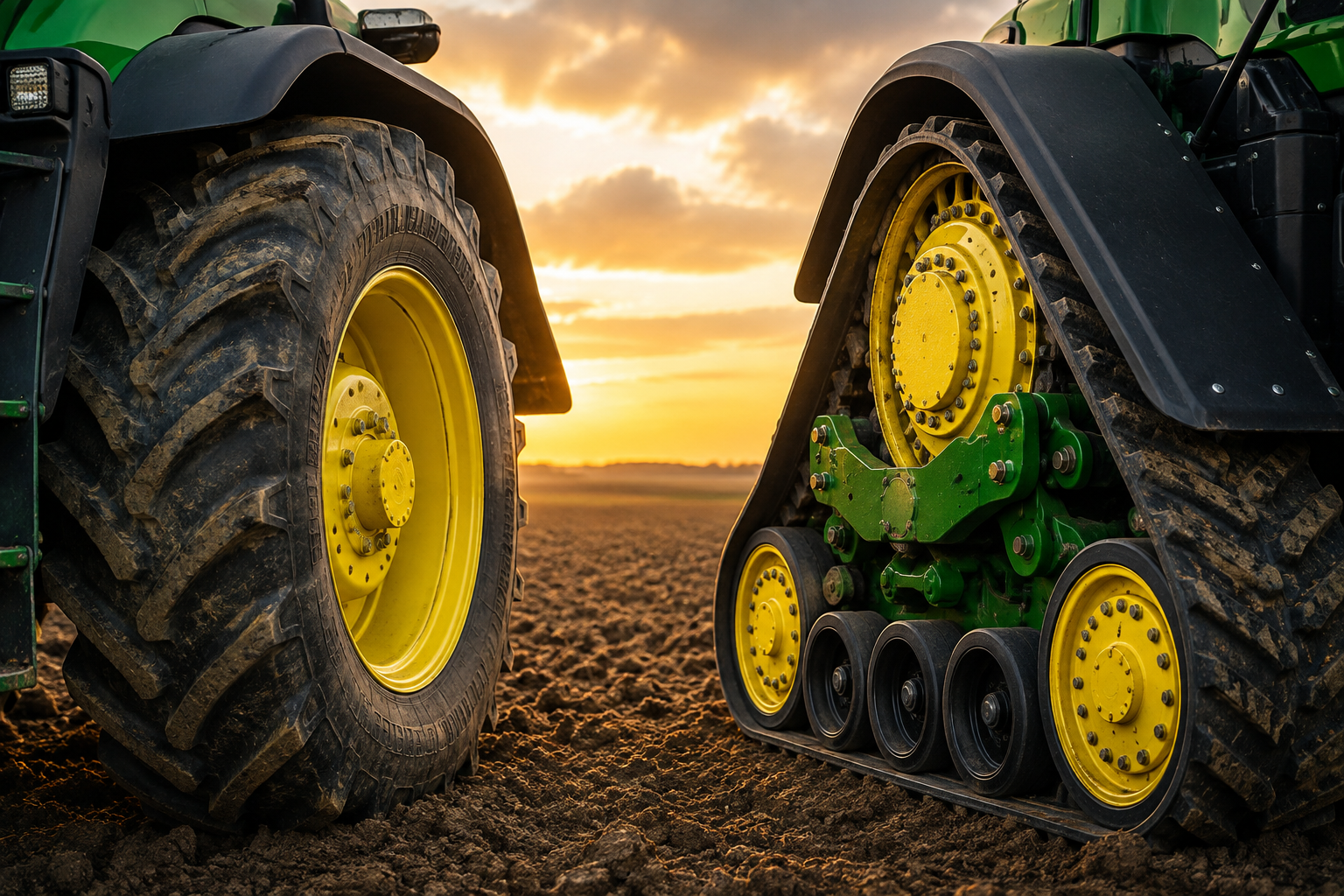
For much of the past two decades, the answer seemed obvious. If you were buying a high-horsepower tractor for heavy tillage, planting, or air seeding, tracks were widely considered the premium option. They offered better flotation, reduced wheel slip, and lower surface pressure, making them especially attractive as tractors and implements continued to grow in size.
But while tracked tractors have continued to evolve, so have tires. Modern IF (Increased Flexion) and VF (Very High Flexion) tires, along with central tire inflation systems (CTIS), have dramatically improved what a wheeled tractor can accomplish. The result is that the tracks-versus-tires debate is no longer as one-sided as it once was.
Why Tracks Earned Their Reputation
The biggest advantage of tracks has always been their footprint. By spreading a tractor’s weight across a longer contact area, tracks reduce ground pressure and often provide better flotation in soft soils. That larger footprint also helps transfer engine power to the ground, reducing slip during heavy draft work.
Those benefits become particularly valuable during wet springs or when pulling large tillage tools and air seeders. For many large grain operations, tracks remain the benchmark for maximizing traction while minimizing rutting.
That doesn’t mean tracks eliminate compaction. Soil scientists have long pointed out that axle weight still affects deeper soil layers, regardless of whether the machine rides on belts or tires. A heavy tractor remains a heavy tractor.
Why Modern Tires Deserve Another Look
The biggest change has come from advances in tire technology. IF and VF tires can carry heavy loads at lower inflation pressures than conventional radials, allowing them to create a larger footprint without sacrificing load capacity.
When combined with proper ballast and inflation, those tires can improve traction, reduce wheel slip, and lower pressure at the soil surface. Add a central tire inflation system, and operators can switch between higher road pressures and lower field pressures without leaving the cab.
That’s a significant advantage. In the past, many tractors spent the entire day running road pressures because adjusting each tire manually wasn’t practical. Today’s systems make it much easier to optimize tire performance for changing conditions.
It’s Not Just Tracks vs. Tires
One mistake in many comparisons is assuming every wheeled tractor is set up correctly.
A tracked tractor compared with an overinflated wheeled tractor on conventional tires will almost always come out ahead. Compare that same tracked machine with a properly ballasted tractor equipped with VF tires and CTIS, and the difference may be much smaller than many people expect.
That’s why the debate isn’t simply tracks versus tires anymore. It’s tracks versus modern tire technology used the way it was designed.
Where Each Still Has the Edge
Tracks remain the preferred choice for many operations that spend hundreds of hours each year pulling heavy implements across large acreages. They excel in high-draft applications, offer excellent flotation, and generally require less attention to inflation or ballast adjustments.
Wheels, however, continue to offer advantages of their own. They typically provide a smoother ride on the road, involve fewer undercarriage components to maintain, and give operators greater flexibility for farms that use one tractor for several different jobs throughout the year.
For many producers, the decision comes down to how the tractor will spend most of its life. A machine dedicated to heavy tillage may justify tracks. A tractor splitting time between fieldwork, transport, and other tasks may benefit more from today’s advanced tire technology.
The Bottom Line
Modern tires haven’t made tracks obsolete, but they have made the choice far less obvious than it was a generation ago.
Tracks still offer meaningful advantages in demanding field conditions, particularly where traction and flotation are critical. At the same time, IF and VF tires, combined with central tire inflation systems and proper ballast, have closed much of the performance gap while preserving the versatility that has always made wheeled tractors popular.
The real question is no longer whether tracks are better than tires. It’s whether your operation needs everything tracks offer, or whether today’s tire technology already delivers everything you need.


Leave a Reply