
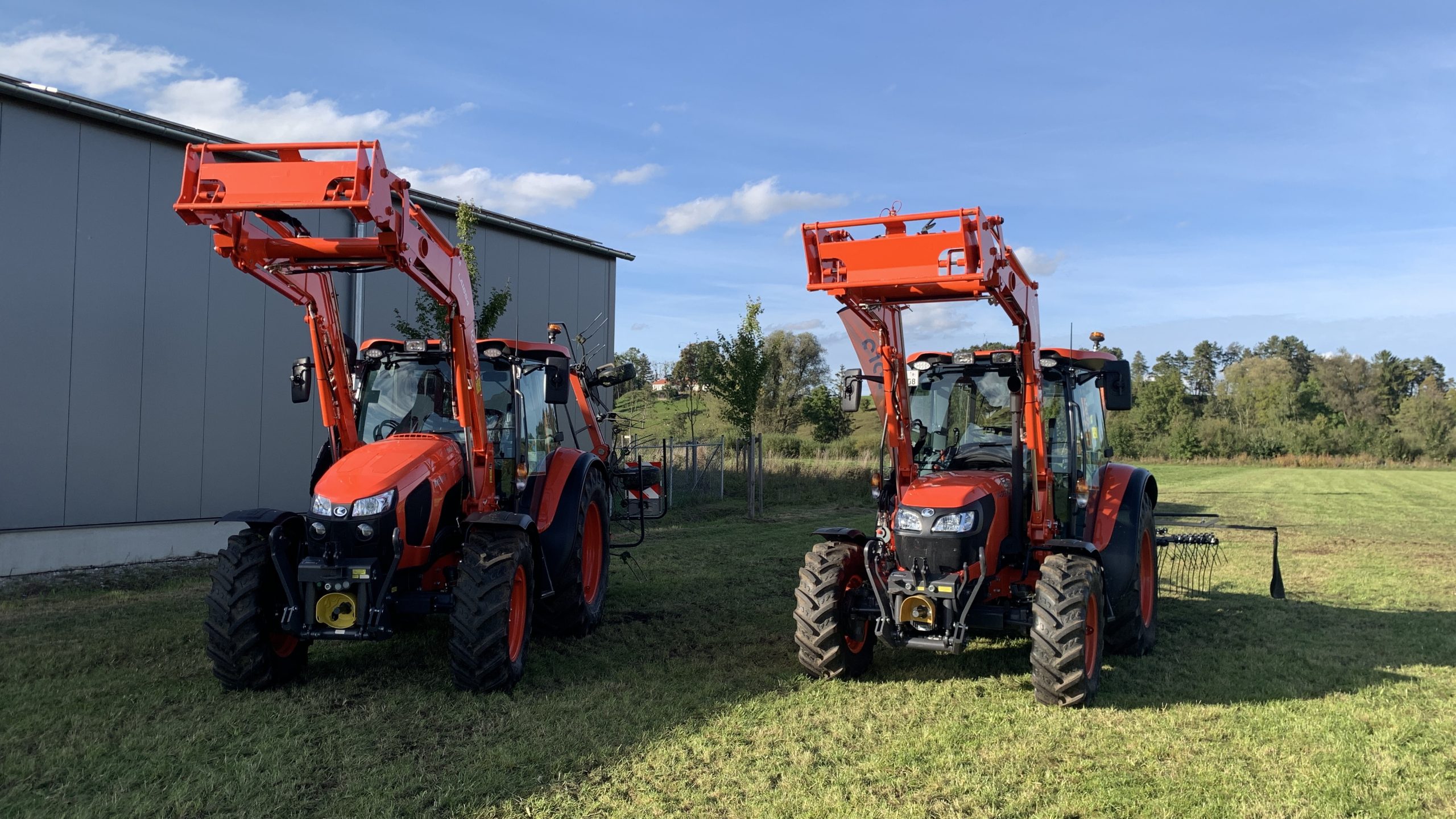
When Americans think about the biggest tractor brands, John Deere and Case IH tend to dominate the conversation, particularly across major farming regions. Yet measured by tractors sold, Kubota says it has been the top-selling tractor brand in the United States for 20 consecutive years.
Kubota recently announced that it led U.S. tractor unit sales from 2005 through 2025, citing Equipment Data Associates UCC transaction data. The ranking includes Utility Tractor, Utility Loader, Utility Tractor Loader Backhoe and four-wheel-drive agricultural tractor categories, which helps explain how Kubota has built such an impressive streak.
The American tractor market is much bigger than row-crop farming. Over the past two decades, compact and utility tractors have become a massive business serving livestock producers, acreage owners, landscapers, municipalities, construction companies and smaller farms.
The Small Tractor Market Is Anything but Small
According to historical Association of Equipment Manufacturers sales data reported by Farm Equipment, U.S. sales of tractors under 40 horsepower totaled roughly 127,000 units in 2005. At the pandemic-era peak in 2021, sales climbed above 214,000 units before retreating to around 156,000 in 2023.
Those numbers put Kubota’s achievement into perspective. A manufacturer does not have to dominate the market for 300- or 500-horsepower tractors to sell the most tractors overall because there are simply far more smaller machines changing hands each year.
Kubota was also positioned for that market long before its current sales streak began. The company entered the U.S. tractor business in 1969 with the 21-horsepower L200 and built much of its reputation around smaller diesel tractors. It later expanded heavily into compact and utility tractors, loaders, mowers and construction equipment as demand for those machines grew.
Today, a compact tractor might be purchased by a farmer feeding livestock, an acreage owner maintaining 20 acres, a landscaping company or a municipality. Those customers may need loaders, mowers, backhoes and other attachments, giving Kubota access to a much broader market than traditional production agriculture alone.
Kubota has supported that reach with an extensive dealer network. The company says it now has more than 1,100 authorized dealers in the United States, giving customers a large retail and service footprint for equipment where local dealer relationships can play an important role in purchasing and ownership.
The Biggest Tractors Aren’t the Biggest Market
That may be the most interesting lesson in Kubota’s 20-year run. Agricultural machinery coverage naturally gravitates toward huge combines, high-horsepower tractors and increasingly sophisticated machines carrying six-figure price tags, but unit sales reveal a different side of the equipment business.
A 25-horsepower compact tractor and a 500-horsepower row-crop tractor each count as one unit. Their prices and applications could hardly be more different, but the enormous volume of compact and utility machines gives manufacturers with strong positions in those categories a major advantage in overall sales rankings.
Kubota has also used that foundation to move farther into traditional agriculture. Its lineup now extends well beyond the compact tractors on which its U.S. reputation was built, including larger M7 and M8 agricultural tractors and equipment aimed at commercial farming operations.
Twenty years of strong sales have also created a substantial population of Kubota tractors in the used market. Machines from multiple generations are now being traded, sold privately and appearing at dealerships and auctions, particularly in the compact and utility categories where the company has historically been strongest.
A Different Picture of the Tractor Business
Kubota’s streak ultimately says as much about the American tractor market as it does about Kubota. The image of American agriculture may still be a massive tractor pulling a planter across thousands of acres, but the tractor business also includes smaller machines working on farms, acreages, construction sites and properties across the country.
Kubota positioned itself in that market decades ago and continued expanding as the customer base grew around it. Twenty consecutive years at the top of U.S. tractor unit sales suggests the strategy worked remarkably well, while providing a reminder that the biggest tractors aren’t necessarily where the biggest number of tractor buyers can be found.


Leave a Reply