
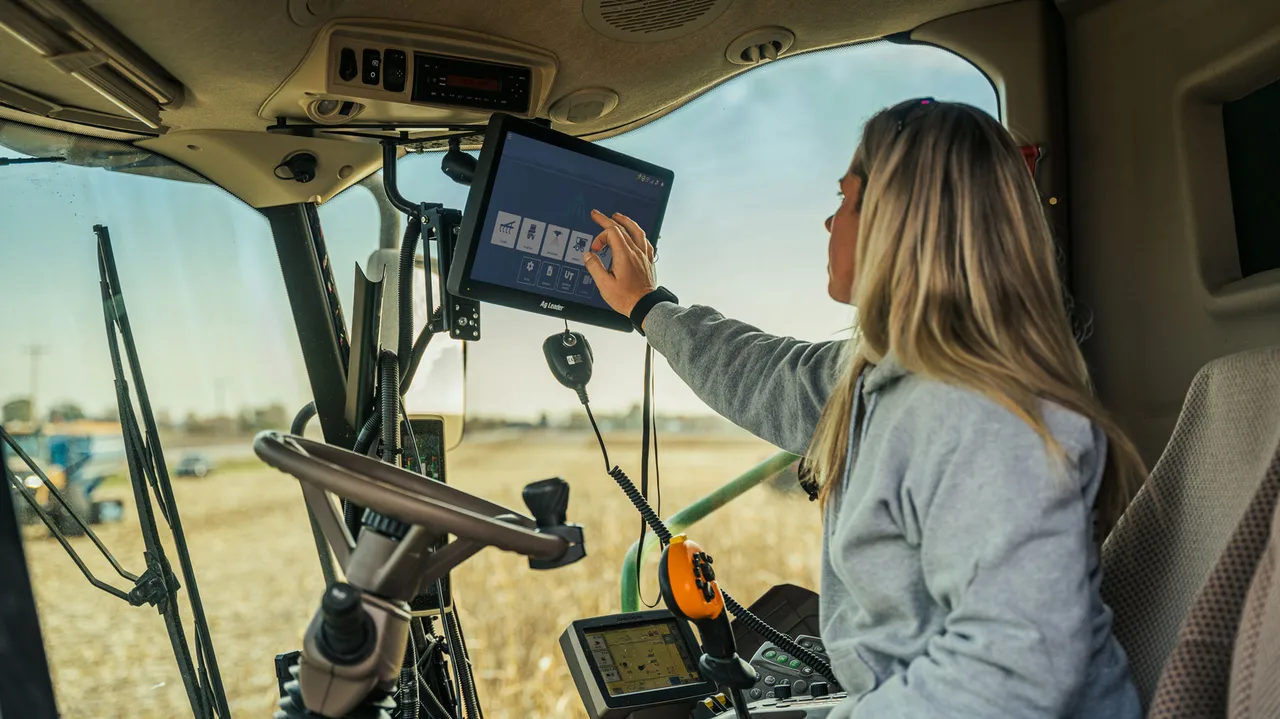
Farmers don’t necessarily replace an entire equipment fleet at once. A combine may be one brand, the grain cart tractor another, and the displays and guidance systems in their cabs may span several generations.
That can complicate agriculture’s push toward more connected and automated equipment. Ag Leader is taking a somewhat different approach, developing technology that can bring more automation to the mixed fleets many farmers already own.
In a recent Farm4Profit interview from the 2026 Farm Progress Show, Ag Leader Product Specialist Luke Bunkers explained how the company is connecting combines, grain carts, displays and farm data with a straightforward objective: keep harvest moving.
Connecting Equipment Without Replacing Everything
Ag Leader’s InCommand Go displays are an important part of that strategy. The newer displays incorporate cellular connectivity, reducing the need to connect through a separate hotspot before moving information between the machine and AgFiniti.
That connectivity can be used for more than harvest. Files and prescriptions can move between the cloud and the display, while AgFiniti can provide remote support and other connected features. Ag Leader also offers connections with other platforms, including John Deere Operations Center and CNH Industrial’s cloud systems.
Perhaps more important for farmers with existing equipment is Ag Leader’s emphasis on compatibility. Bunkers said the company has retrofit options for equipment of different brands and ages, and newer InCommand displays can continue working alongside previous-generation InCommand 1200 and 800 displays.
“You don’t have to have the latest and greatest,” was essentially the point of the discussion. For a farm with machinery accumulated over years rather than purchased as one matched fleet, that could make automation considerably more accessible.
Making the Grain Cart Smarter
CartACE may be the clearest example of what Ag Leader is trying to accomplish.
The system shares information between the combine and grain cart and can automatically create a guidance path based on where the combine has already traveled. The tractor can then steer along that path while unloading on the go, allowing the grain cart operator to concentrate on positioning the cart under the auger rather than steering.
Information can move the other direction, too. In the Farm4Profit interview, Bunkers explained that a grain cart operator working with multiple combines can see their grain tank levels. Instead of relying entirely on radio calls or trying to judge which combine needs the cart next, the operator has that information in front of them.
Farm4Profit’s Corey Hillebo said his operation initially questioned whether CartACE was necessary. After using it for a couple of years, he said the grain cart operator notices immediately when it isn’t available.
Automating the Little Things That Slow Harvest Down
Ag Leader is also applying automation directly to the combine. Z-Row Guidance can use existing row sensors on supported corn heads with Ag Leader steering equipment, allowing the combine to automatically follow the rows without requiring another dedicated display. Ag Leader even provides configurations for combines using its steering and Z-Row systems without an Ag Leader harvest monitoring system.
Meanwhile, connected machines can feed harvest information back through AgFiniti. Yield, moisture, maps, machine locations and other information can be monitored while the operation is underway.
That creates some less obvious opportunities for efficiency. If a truck is stuck in line at the elevator, for example, an operator may be able to see its location and change where the combine is working rather than filling up at the far end of the field and then waiting for transportation to return.
Those minutes matter when combines, tractors, grain carts, trucks and employees are all working against the same clock.
A Different Road Toward Autonomy
Agricultural autonomy is often demonstrated with a new tractor or combine capable of doing something the previous generation couldn’t. Ag Leader’s approach shows another path: automate individual jobs within equipment farmers already own and gradually connect more of the operation.
Bunkers acknowledged that progression when the Farm4Profit conversation turned toward autonomy. Before an entire harvest operation can become autonomous, many of the smaller tasks surrounding the operator have to be automated first.
For farmers, that may ultimately be the more immediate story. The next step toward an automated harvest doesn’t necessarily require replacing every red, green, yellow or blue machine in the shed.
It might start by getting the machines already there to work together a little better.
Watch the full Farm4Profit interview with Ag Leader’s Luke Bunkers below for more on InCommand Go, AgFiniti, Z-Row Guidance, CartACE and connected harvest automation.

Leave a Reply