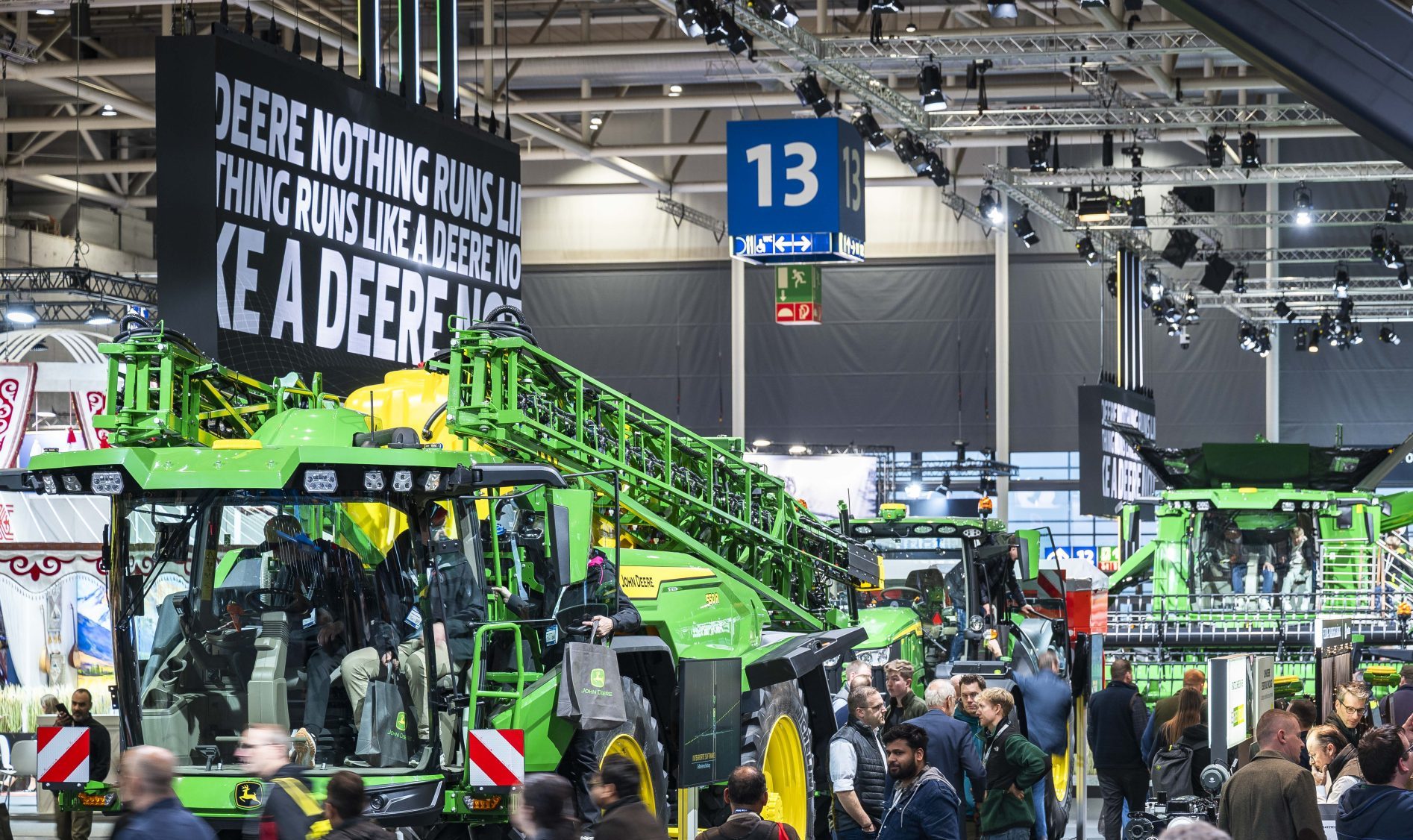
John Deere arrived at Agritechnica this year with one of the most ambitious lineups it has ever brought to the show. The company is presenting its newest generation of tractors, harvesters and precision tools while also showcasing a long term strategy rooted in electrification, autonomy and connected farming systems. Instead of highlighting machines as isolated products, John Deere is framing them as pieces of a wider production system built around data, automation and productivity.
Electrification and Alternative Drive Development
One of the most talked about debuts is John Deere’s fully battery electric tractor prototype, known internally as the E Power model. This machine produces roughly 130 horsepower and uses multiple high capacity battery packs supplied by Kreisel. What makes this introduction particularly important is that the tractor is not a traditional diesel platform converted to electric. It is a clean sheet design created specifically for electric power.
Alongside the prototype, John Deere is emphasizing a multi path strategy to alternative drives. Renewable diesel, biofuels and electric systems will all play a role depending on farm size, region and regulatory requirements. For European farmers who are facing increasingly strict emissions targets, these options are becoming more relevant every year.
New Forage, Baling and Spraying Equipment
For forage producers, John Deere is bringing the new F8 and F9 series forage harvesters to Europe. These models deliver more than 1000 horsepower, redesigned operator environments and updated automation tools. They are built for high output dairy and livestock operations that need maximum throughput during tight harvest windows.

The new Kemper 400Pro header is also making its European debut. The header is designed for multi crop flexibility and includes a ComfortRide and Comfort Protect system. It can switch automatically from road mode to harvest mode in around thirty seconds, which allows contractors to move quickly between jobs.
John Deere is also introducing the next generation of round balers. Both fixed and variable chamber models feature stronger drivelines and greater throughput. Some combination balers now offer in-machine bale weighing, a feature that contractors and larger forage operators have been requesting for years. All of the new balers integrate directly with the John Deere Operations Center for tracking and documentation.
For row crop and small grains producers, John Deere is showing the 500R Series sprayer. It features advanced boom control, individual nozzle management, a pressurized Category 4 cab and updated operator controls. These updates reflect the growing demand for more precise, more environmentally efficient spraying systems across Europe.
Autonomy and the Updated 9RX Platform
John Deere is also highlighting major updates to the 9RX articulated tracked tractor family. Models from 640 to 830 horsepower feature a new four-track platform that increases ground contact while reducing compaction. This generation is also built to support John Deere’s second-generation autonomy package.

The updated autonomy system uses sixteen integrated cameras to provide full visibility and real-time operational awareness. Working depth and implement feedback are calculated continuously, allowing the tractor to maintain accuracy over long distances. The system connects directly to AutoTrac, JDLink and the G5 display platform to form a unified precision farming workflow.
The company is making it clear that the future of these machines is tied to connected operations. Data from tractors, harvesters and sprayers will flow into the Operations Center, where farmers can use it for planning, documentation and optimization.
What This Means for Farmers
Agritechnica visitors this year are seeing more than a collection of new machines. They are seeing the direction John Deere intends to take agriculture in both Europe and America. The updated forage harvesters and sprayers promise immediate productivity gains for large operators. The electric tractor prototype signals the beginning of serious electrification efforts. The advancements in autonomy show that high-level automation is moving quickly from concept to practical field use.
Not every farm will adopt these technologies immediately, but John Deere’s message is that the groundwork being laid today will support the next decade of farming. Data capture, connected systems, and flexible power solutions will shape the future of machinery investment.
Conclusion
John Deere’s 2025 Agritechnica lineup reflects a company preparing for a new era of agriculture. Higher performance, deeper connectivity and cleaner power sources are the central themes this year. For farmers watching the next wave of machinery development, these introductions provide a clear view into where the industry is heading. Tractor Tuesday will continue following these technologies as they reach the field and begin influencing equipment values and farm operations across the Midwest and beyond.

Leave a Reply