
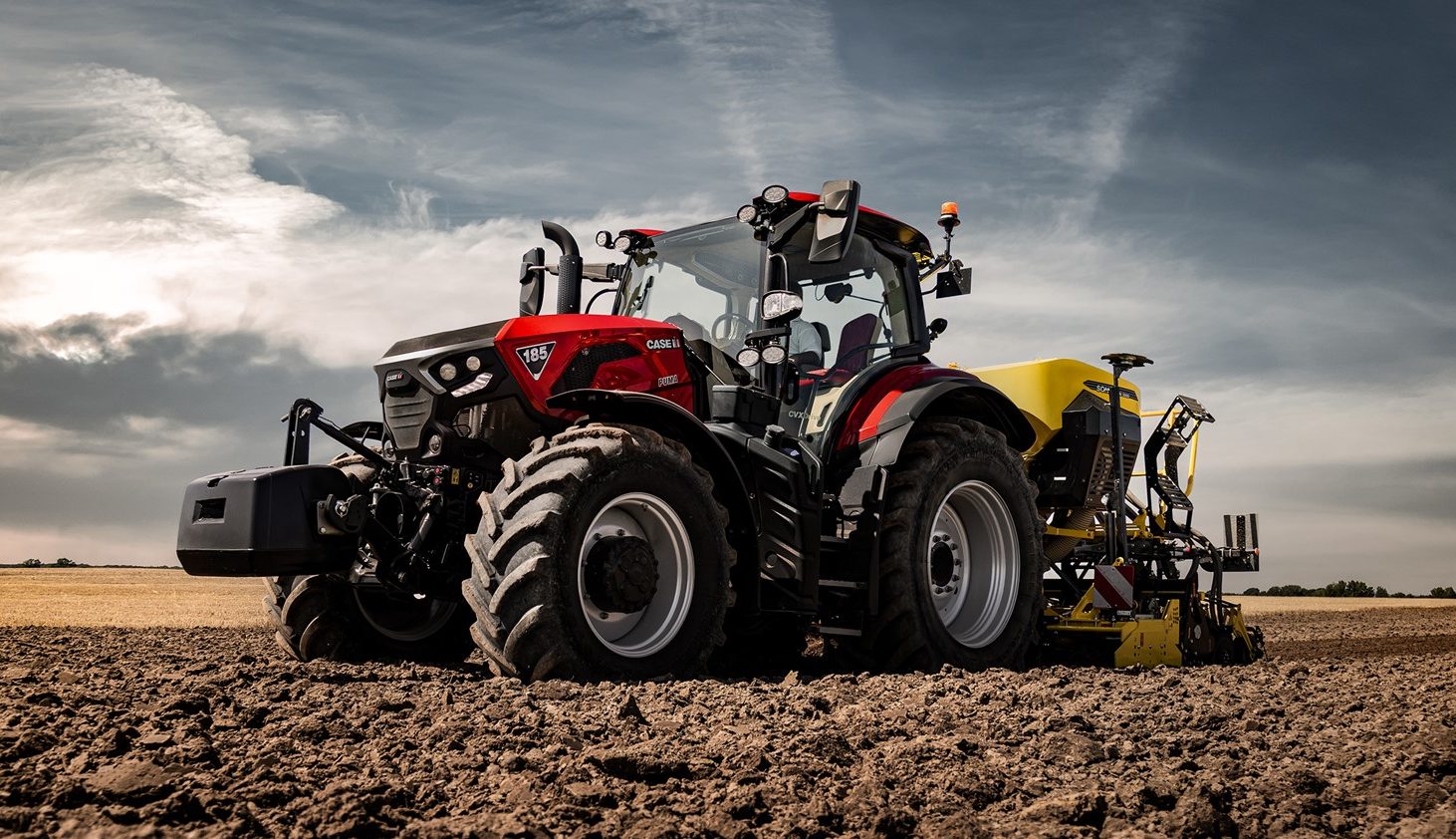
Case IH redesigned its Puma series tractor lineup, bringing major updates to maneuverability, operator comfort, and integrated technology. The Puma has long been a core tractor for livestock and mixed farming operations, and the new generation focuses on making the machine more capable and easier to operate during long workdays.
The new Puma lineup includes models rated at approximately 155, 165, and 185 horsepower. These tractors are designed for a wide range of tasks, including loader work, baling, planting, mowing, and transport. Case IH redesigned the platform with a tighter turning radius, improving maneuverability by roughly 20 percent compared to the previous generation. The updated front axle and suspension also improve ride quality and stability during transport.
Transmission options include the CVXDrive continuously variable transmission and the ActiveDrive 8 dual clutch transmission. CVXDrive provides smooth power delivery and allows operators to maintain precise ground speeds for fieldwork. ActiveDrive 8 offers fast directional changes and consistent power, making it well-suited for loader work and chores that require frequent shifting.
Operator comfort was another major focus of the redesign. The Puma features a new cab layout with improved visibility, better storage, and reduced vibration. The updated MultiController armrest and Pro 1200 display place key tractor and implement controls within easy reach, helping simplify operation.
Precision agriculture capability is also built into the new Puma series. The tractors support ISOBUS implement connectivity and can be equipped with Tractor Implement Management, allowing compatible implements to automatically control certain tractor functions. Integration with Case IH FieldOps allows operators to monitor machine performance and manage data remotely.
With improved maneuverability, updated operator controls, and stronger integration of precision technology, the new Puma series continues to serve as a versatile mid-horsepower tractor designed for the daily demands of modern farms.


Leave a Reply