There is a reason windrowers have held their place in hay production for so long. They sit at the very beginning of the process, and what happens in that first pass shapes everything that follows. When the windrow is clean, consistent, and laid correctly, the rest of the operation tends to fall into place. When it is not, problems start stacking up quickly.
That reality is exactly why more operators continue to move toward self propelled windrowers. The same shift we are seeing with self propelled balers is happening here. Farmers want fewer machines, fewer variables, and more control over the outcome.
A windrower may look simple at a glance, but it carries a lot of responsibility. It cuts the crop and places it into a row that will determine how evenly it dries and how smoothly it feeds into the next machine. If the crop is bunched unevenly or laid too tight, it slows dry down and creates headaches at the baler. If it is spread too thin, quality can suffer and valuable leaves can be lost. Getting that balance right is where modern windrowers separate themselves.
Self propelled machines give operators a level of consistency that is hard to match with older pull type setups. Everything is built into one platform, from the power unit to the header to the control systems. That integration shows up in the field. Ground speed stays steady, crop flow remains even, and the windrow coming out the back looks the same from one end of the field to the other.
Timing plays a big role in all of this. Hay season rarely gives you much room for error. When the window opens, you need to move fast and cover acres without sacrificing quality. Modern windrowers are built for that pace. They carry enough horsepower to handle heavy crops without slowing down, and they are designed to keep moving when conditions are less than perfect.
Operator experience has also changed in a big way. The cabs in today’s machines are quiet, comfortable, and easy to control. Visibility is better, controls are more intuitive, and fatigue is reduced over long days. That has a real impact when someone is trying to get across a lot of ground in a short window.
The technology behind these machines continues to move forward as well. Guidance systems are now built directly into the machine, helping operators stay on line and reduce overlap. Headers have improved with cleaner cutting and better crop handling, and conditioning systems are more effective at speeding up dry down when weather windows are tight.
That brings us to a machine that fits this trend perfectly.
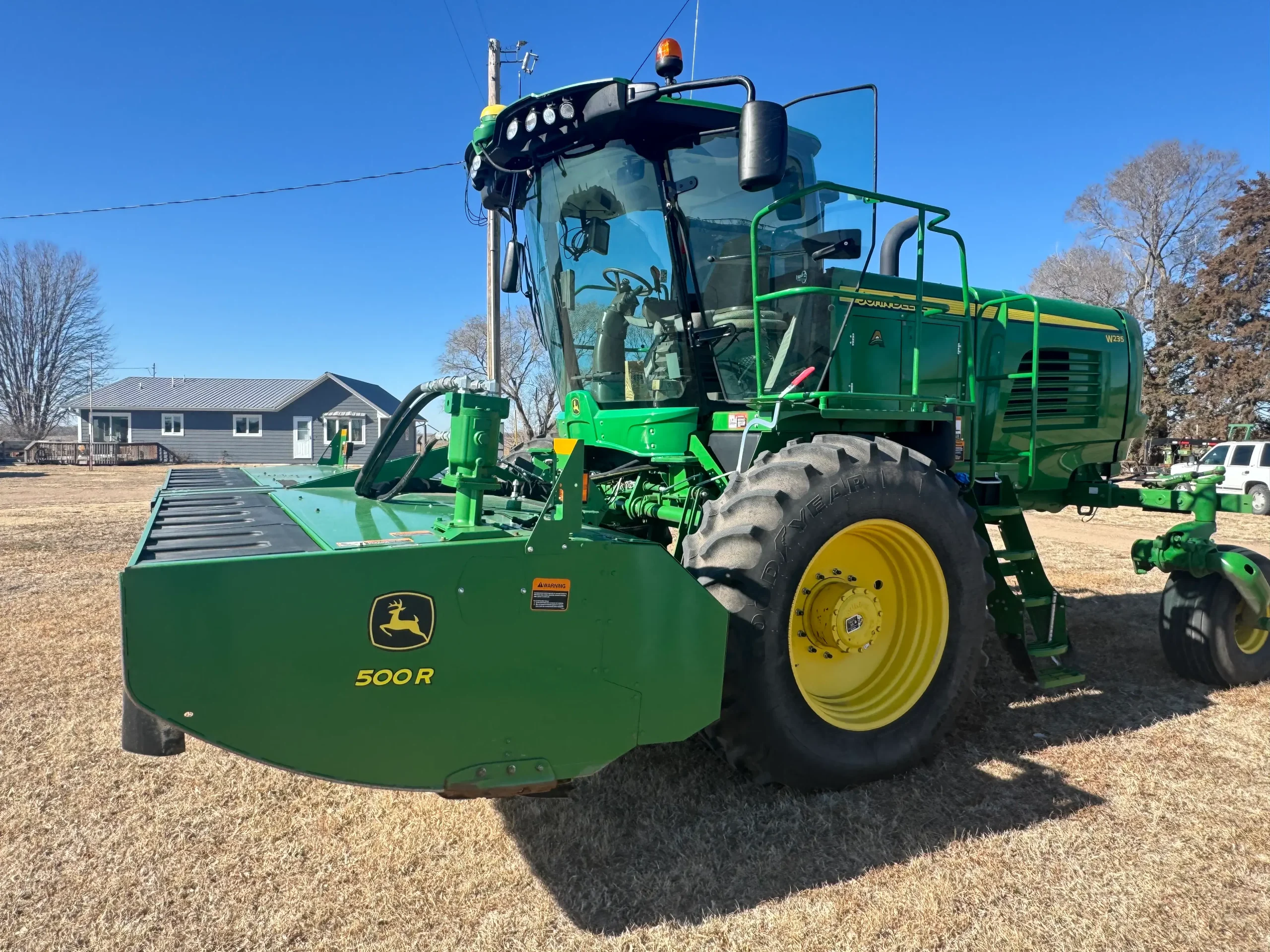
The 2020 John Deere W235 SP Windrower in the April 28 Hay and Forage auction is a strong example of what today’s operators are looking for. It is built around a 235 horsepower 6.8 liter John Deere PowerTech engine, with a power bulge up to 255 horsepower, giving it the ability to stay consistent in heavy crops. It comes JDLink enabled and is Integrated AutoTrac ready, making it easy to step into guidance and reduce overlap in the field. Inside the cab, the Command touchscreen and premium comfort setup make long days more manageable.
This particular unit has been well maintained and is field ready. It has new knives installed along with fresh hour filters and has gone through a Landmark inspection at Wrich Cloud. Oversize tires provide better traction in a range of conditions, and a monitor is included with the machine. It is ready to go straight to work.
Machines like this highlight where hay equipment continues to head. More power, more integration, and more control, all in one platform. When the first pass matters as much as it does in hay production, having a machine that can deliver consistency every time is a real advantage.

Leave a Reply