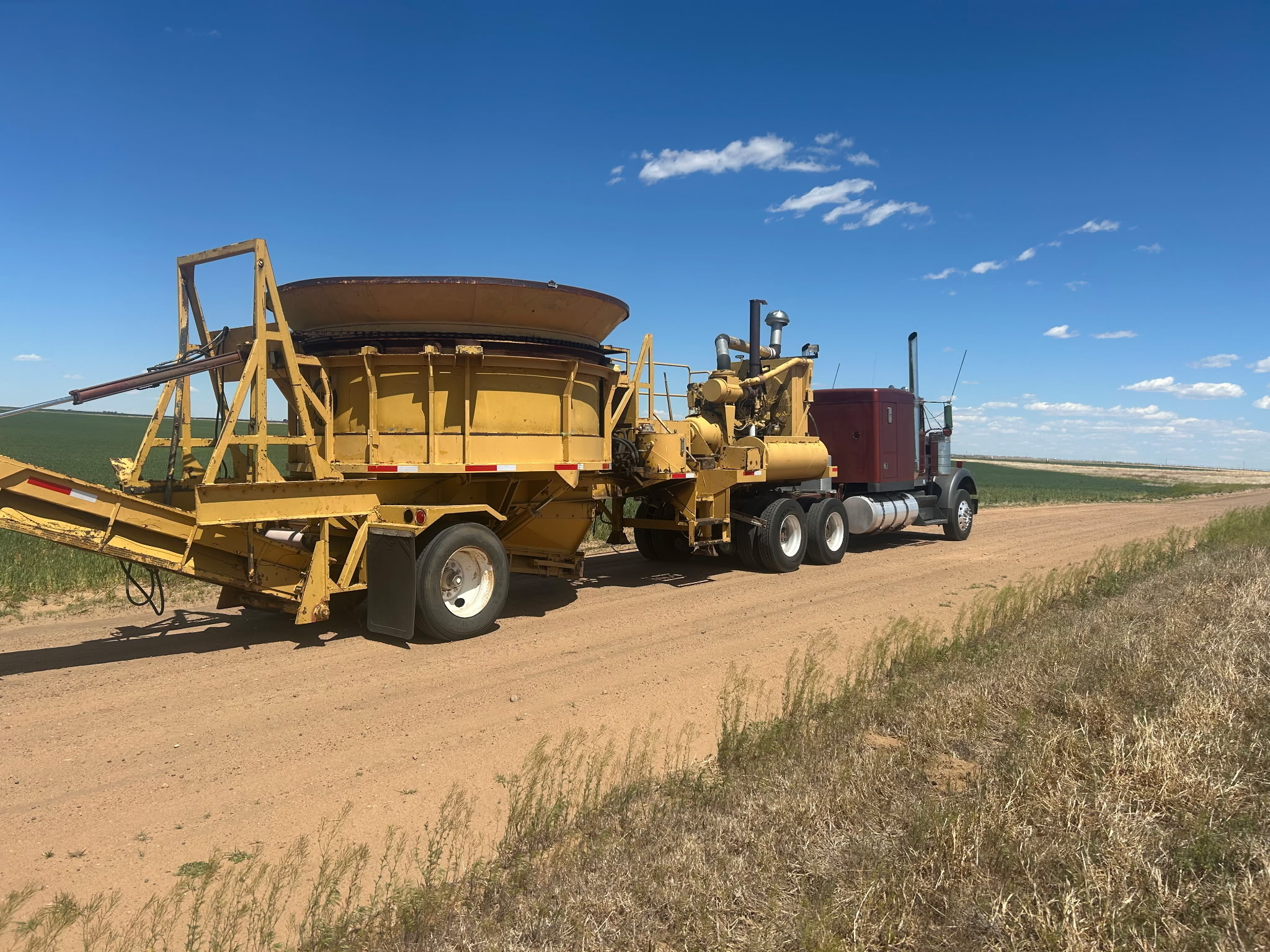
Feed has quietly become one of the biggest pressure points on cattle operations. Hay is not always put up in perfect conditions, quality can vary from cutting to cutting, and waste adds up faster than most people like to admit. Against that backdrop, more producers have started looking at ways to control how feed is presented and consumed. That is where tub grinders come into the conversation.
What a Tub Grinder Does
A tub grinder changes the physical form of hay. Instead of long stems that cattle sort through, you end up with a consistent material that can be fed on its own or blended into a ration. That consistency is the entire point. When cattle cannot pick through and leave the rougher parts behind, intake becomes more predictable and waste tends to drop. On operations that are already mixing feed, it also makes it easier to incorporate byproducts or lower quality forage without hurting overall performance.
There is also a labor angle that often gets overlooked. Grinding hay in batches allows an operation to process several days or even weeks of feed at once. That can reduce daily feeding time and create a more repeatable routine, especially during the winter months when conditions are less forgiving. For some, that alone is enough to justify the extra step.
Not for Every Operation
At the same time, tub grinders are not a universal solution. Many cow calf operations still do just fine feeding whole bales or using a processor. Those systems are simple and cost effective. A grinder starts to make more sense as scale increases, as rations become more controlled, or when forage quality is inconsistent enough that blending becomes necessary. The value shows up when it is used with purpose, not just as another piece of iron in the yard.
What Makes a Tub Grinder Useful
What has kept PTO units relevant is their flexibility. Instead of dedicating a separate engine to the grinder, they rely on horsepower that is already on the farm. That lowers the barrier to entry and simplifies maintenance. For operations that already have a high horsepower tractor available, a PTO grinder can deliver serious capacity without stepping into the cost of a self contained machine.
There is also a durability factor with certain builds that has kept them in demand. When a grinder is designed to handle high volumes day after day, it becomes less about occasional use and more about being part of the feeding system. That is where heavier mills, robust hammer setups, and straightforward service access start to matter.
Tub grinders are not for everyone, but for the right setup they can change how feed is handled from start to finish. When feed costs are high and margins are tight, that level of control can make a real difference.

Leave a Reply