
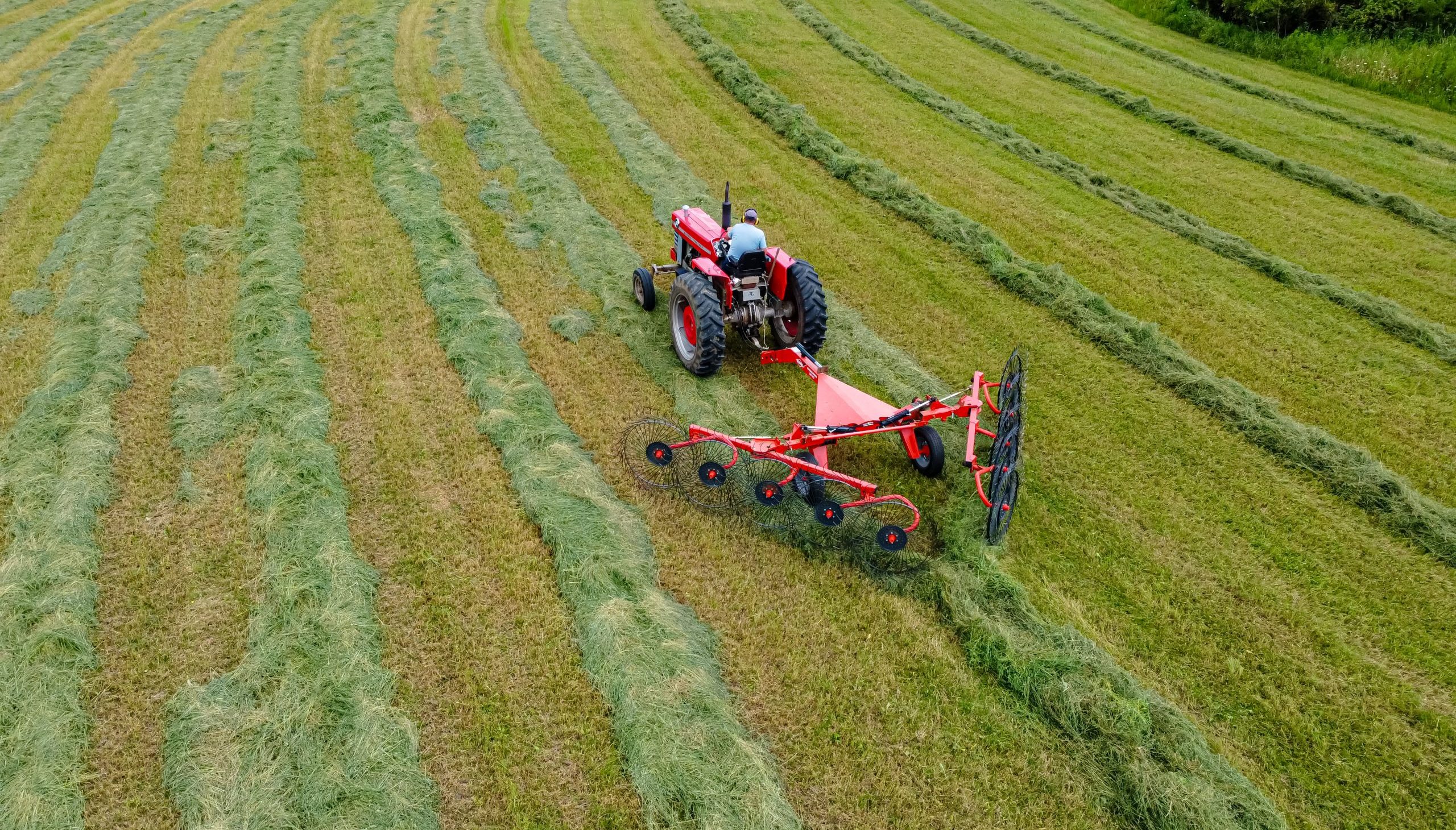
Hay equipment conversations tend to center around mowers and balers. They are easy to measure and easy to compare – what’s the cutting width, horsepower, and bale size? The rake usually gets treated as a supporting piece.
In practice, the rake has a direct influence on how the entire operation performs. It shapes the windrow that the baler depends on, and that affects feed consistency, drying, and final bale quality. A well-set rake can make the rest of the day feel smooth. A poor setup shows up later as uneven bales, extra passes, or slower progress.
The Windrow Sets the Tone
By the time the crop reaches the baler, most of the outcome has already been determined. The rake controls how material is gathered, how it lays, and how consistently it feeds into the pickup.
A clean, even windrow allows the baler to operate at a steady pace. When the windrow varies in size or density, the operator ends up compensating constantly. That shows up in bale shape, density swings, and added wear on belts, chains, and pickups.
Drying is tied closely to windrow structure as well. Air needs to move through the crop, especially in thicker stands. A windrow that is too tight can hold moisture. One that is too scattered can be difficult to pick up cleanly. The rake is where that balance is set.
Wheel Rakes and Field Efficiency
Wheel rakes cover ground quickly and handle a wide range of conditions. Their design allows them to gather crop across a broad working width and form consistent windrows with relatively simple adjustments.
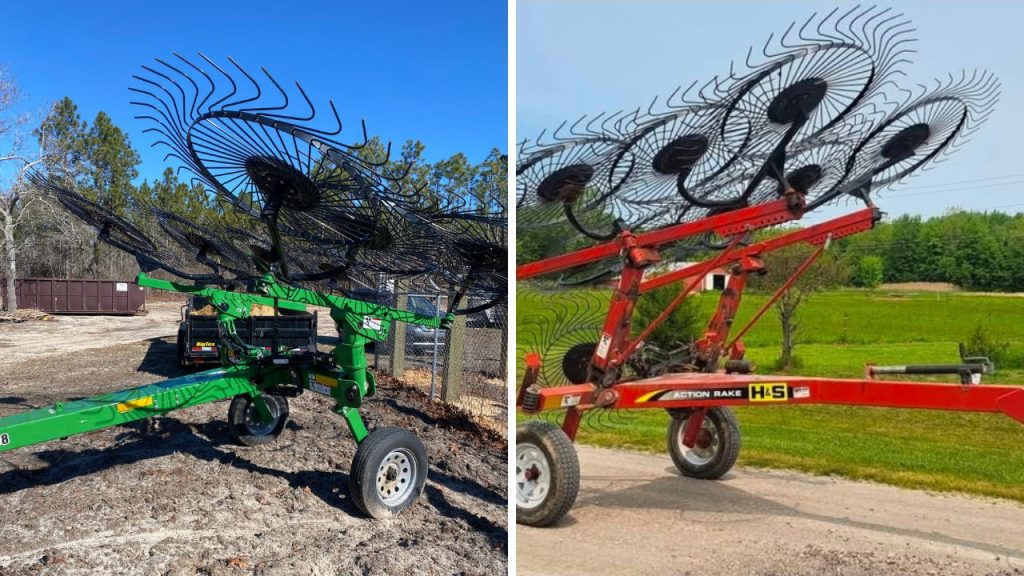
Both the John Deere Frontier WR3108 and the H&S Action Rake AR10 10-Wheel V-Rake (up for auction on April 28) fall into this category, and both are built around efficiency in the field. The V-rake layout pulls material inward from each side, creating a centered windrow that feeds cleanly into the baler.
The AR10’s center kicker adds another layer of flexibility by allowing operators to merge windrows when needed. That can be useful when trying to match windrow size to a higher-capacity baler or when field conditions vary across acres.
Keeping the Operation in Sync
Haying moves quickly once the weather lines up. Equipment that works at different speeds can create bottlenecks that slow everything down.
The rake often becomes the adjustment point. It can combine swaths to match baler capacity or manage windrow size so the baler is not constantly over- or under-fed. Small changes in how the rake is run can smooth out the flow from cutting to baling.
Operators who pay attention to this step tend to spend less time stopping, adjusting, or reworking areas of the field.
Handling the Crop with Care
In crops like alfalfa, leaves carry a large share of the nutritional value. The way the rake handles the crop has a direct effect on how much of that value makes it into the bale.
Timing matters. Raking when there is still a bit of moisture in the plant can reduce leaf loss. Ground speed and rake setup also play a role. Rotary designs tend to lift the crop, while wheel rakes move it across the surface. Both can perform well when set correctly, but they respond differently to conditions.
Drying is another piece of the equation. A properly formed windrow helps finish the job without trapping moisture underneath or spreading the crop too thin.
What to Check on a Used Rake
Condition shows up in how the rake performs in the field. A few areas are worth a close look:
- Teeth or tines for wear and uniformity
- Bearings and hubs for smooth operation
- Frame alignment on V-rakes
- The condition of hydraulic components and folding mechanisms
A rake that has been kept straight, greased, and adjusted will do a more consistent job across the field.
April 28 Opportunity
The April 28 auction includes two late-model wheel rakes with slightly different strengths. That gives buyers a chance to match a rake to their operation instead of adapting around what is already on hand.
The rake plays a steady role in every acre that gets baled. Getting that step right carries through the rest of the process, from the first windrow to the last bale stacked.


Leave a Reply