Fuel efficiency has become one of the most important performance metrics in modern agriculture. While horsepower, hydraulic capacity, and technology features still drive buying decisions, manufacturers increasingly recognize that farmers are also paying close attention to operating costs. Every gallon of diesel saved over thousands of annual operating hours can have a meaningful impact on the bottom line.
That reality is helping shape AGCO’s engine development strategy. The company recently highlighted a series of fuel-efficiency achievements across its Fendt, Massey Ferguson, and Valtra brands, pointing to advances in engine design, engine management systems, and independent testing results that it believes are helping reduce fuel consumption without sacrificing performance.
At the center of those efforts is AGCO Power, the company’s in-house engine division.
One Engine Strategy, Multiple Brands
Most farmers recognize Fendt, Massey Ferguson, and Valtra as separate brands, but all three increasingly benefit from a common engine-development strategy.
AGCO Power designs and manufactures the engines that power much of AGCO’s global tractor lineup. Rather than developing completely separate powertrain programs for each brand, AGCO has focused on creating engine platforms that can be adapted across multiple machine families while meeting different regional requirements and performance goals.
The company’s newest examples are the CORE50 and CORE75 engine families. These engines have been developed to meet modern international emissions requirements while also improving fuel efficiency, torque delivery, and overall operating performance.
By building engines that can be used across multiple product lines, AGCO can spread development costs over a larger number of machines while continuously refining the same core technology. The approach resembles strategies used by other major manufacturers, including John Deere, which has long emphasized close integration between its engines, transmissions, and machine controls.
The CORE Engines and Dynamic Engine Control
Much of AGCO’s fuel-efficiency strategy centers on its new CORE engine family and the software that manages it.
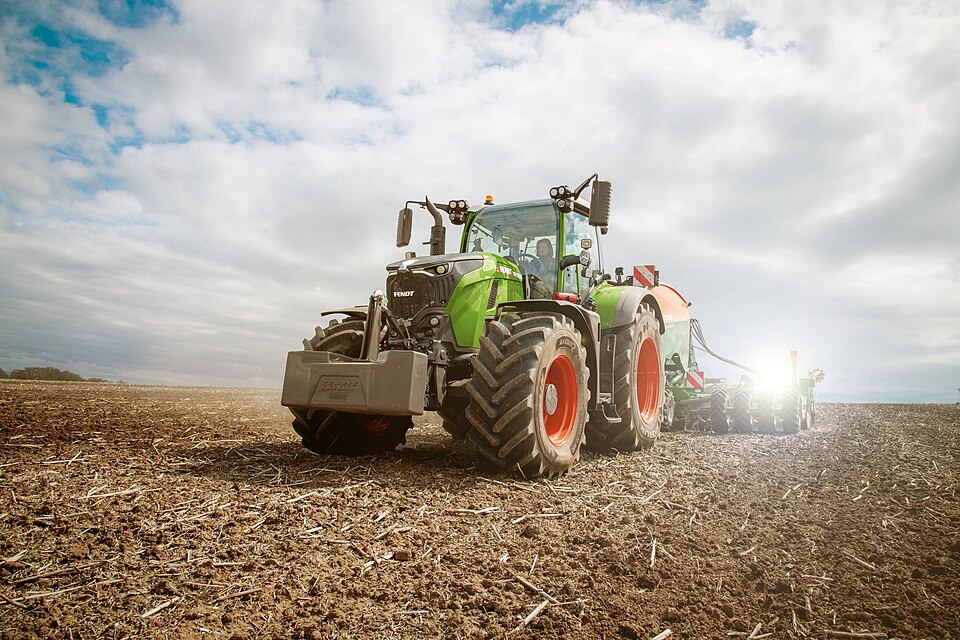
The 7.5-liter CORE75 engine powers tractors such as the Fendt 700 Vario Gen7, while the smaller CORE50 is used in the Fendt 600 Vario series. According to AGCO, both engines were designed to deliver strong torque at lower engine speeds, allowing operators to maintain productivity while reducing fuel consumption.
Engine performance is further supported by Dynamic Engine Control, a system that automatically adjusts engine speed and torque output based on workload demands. Rather than operating at higher RPMs than necessary, the system continuously matches engine performance to field conditions, helping reduce fuel use without sacrificing power when additional load is encountered.
The combination of high-torque engine design and intelligent power management reflects a broader trend across the industry. As modern diesel engines become increasingly refined, manufacturers are looking to software and electronic controls to unlock additional efficiency gains alongside traditional mechanical improvements.
Independent Testing Supports the Claims
AGCO’s announcement also leaned heavily on results from DLG PowerMix testing.
DLG PowerMix is widely regarded as one of the industry’s most respected independent tractor performance tests. Rather than relying solely on manufacturer-generated data, the testing evaluates tractors under a variety of realistic field and transport conditions to measure fuel consumption and overall efficiency.
AGCO highlighted strong PowerMix results for several Fendt models, using the data to support claims that its latest engine technologies are delivering measurable fuel savings in real-world operating scenarios.
As tractors become increasingly similar in terms of horsepower and capability, manufacturers are looking for objective ways to demonstrate performance advantages.
Valtra and Massey Ferguson Follow the Same Philosophy
The fuel-efficiency strategy extends well beyond Fendt.
Valtra has long promoted its EcoPower concept, which focuses on generating high torque at lower engine speeds. Massey Ferguson has also benefited from AGCO Power’s development efforts, particularly in its higher-horsepower tractor lineup.
While the machines carry different branding and target somewhat different customer segments, many of the underlying engine-development goals remain the same: lower fuel consumption, improved torque characteristics, and better overall operating efficiency.
A Growing Industry Trend
AGCO’s announcement highlights a trend that extends well beyond a single manufacturer.
The agricultural equipment industry spent decades competing primarily on horsepower. Today, the conversation increasingly centers on how efficiently that horsepower can be delivered. Advances in engine design, electronic controls, transmission integration, and machine management systems are becoming just as important as raw power figures.
For AGCO, that means continuing to invest in AGCO Power and developing engine technologies that can serve Fendt, Massey Ferguson, and Valtra simultaneously. As fuel costs remain a major concern for producers, the ability to squeeze more work from every gallon of diesel may become one of the most important competitive advantages a manufacturer can offer.


Leave a Reply