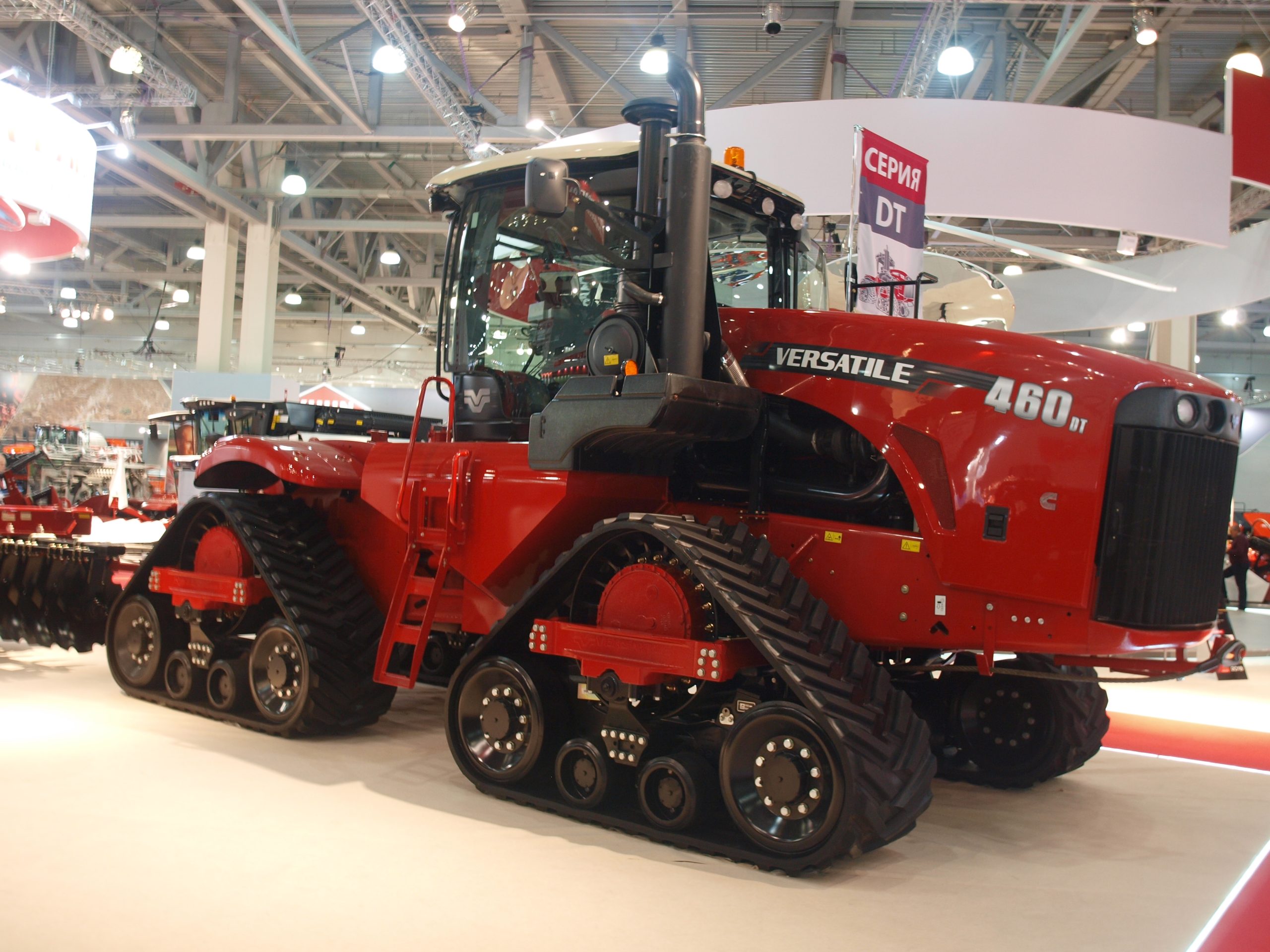
Versatile has never been known as a company that chases headlines. Instead, the Canadian manufacturer has built its reputation on producing high-horsepower tractors designed for demanding fieldwork. Its latest move, however, has little to do with agriculture alone.
Through parent company Buhler Industries, Versatile has agreed to acquire the operational assets of Germany’s ATLAS Group, a manufacturer of excavators, cranes, material handlers, and other construction equipment. At first glance, the acquisition may seem like an unusual expansion outside of farming. A closer look, however, suggests it fits into a broader strategy that has been taking shape since Versatile came under new ownership.
More Than an Equipment Purchase
ATLAS is far from an unknown name in Europe. The German manufacturer has spent decades building construction machinery for infrastructure, industrial, material handling, and municipal applications. While the company entered insolvency proceedings earlier this year, its manufacturing operations, engineering expertise, dealer relationships, and established product lineup remained valuable assets.
Rather than building a construction equipment business from scratch, Versatile is purchasing an established brand with an existing customer base and manufacturing capability. The deal immediately expands the company’s reach beyond traditional agriculture while giving it an established presence in European construction equipment markets.
A Different Direction Under ASKO
The acquisition also offers another glimpse into how Versatile has changed under its new ownership.
In late 2023, Turkish industrial conglomerate ASKO Holding acquired a controlling interest in Buhler Industries, ending years of ownership under Russia’s Rostselmash. Since then, ASKO has completed its acquisition of the remaining publicly traded shares while emphasizing operational improvements, international expansion, and long-term investment. Company leaders have pointed to significant operational changes and increased company value since the acquisition, making the purchase of ATLAS appear to be another step in a much larger growth strategy rather than an isolated transaction.
Why Diversification Matters
Agricultural equipment sales have always been cyclical. When commodity prices soften or farm income declines, purchases of large machinery often slow as well. Construction equipment follows a different economic cycle, with demand driven more by infrastructure projects, industrial development, and municipal investment.
By expanding into another equipment segment, Versatile’s parent company can reduce its dependence on the agricultural market alone. ASKO already owns businesses spanning agriculture, construction equipment, energy, and technology, and bringing ATLAS into the fold creates opportunities to share engineering expertise, manufacturing resources, and distribution networks across multiple industries.
What It Could Mean for Versatile
The acquisition does not mean Versatile is shifting its attention away from agriculture. Its core business remains high-horsepower tractors, tillage equipment, and Farm King implements, and there is no indication those priorities are changing.
Instead, the purchase suggests Versatile is evolving into a broader industrial equipment company with agriculture remaining at its foundation. The acquisition also strengthens the company’s European footprint through ATLAS’s established manufacturing and dealer network, potentially opening doors for future expansion that extend beyond construction equipment itself.
Looking Ahead
For much of the past decade, conversations surrounding Versatile focused on ownership changes, uncertainty, and the company’s future. Recent announcements paint a different picture.
The acquisition of ATLAS reflects a company that appears to be investing for long-term growth rather than simply maintaining its position in the agricultural equipment market. While farmers are unlikely to see immediate changes in Versatile’s tractor lineup because of this deal, the move suggests the company is positioning itself for a future that is larger, more diversified, and increasingly international.

Leave a Reply