
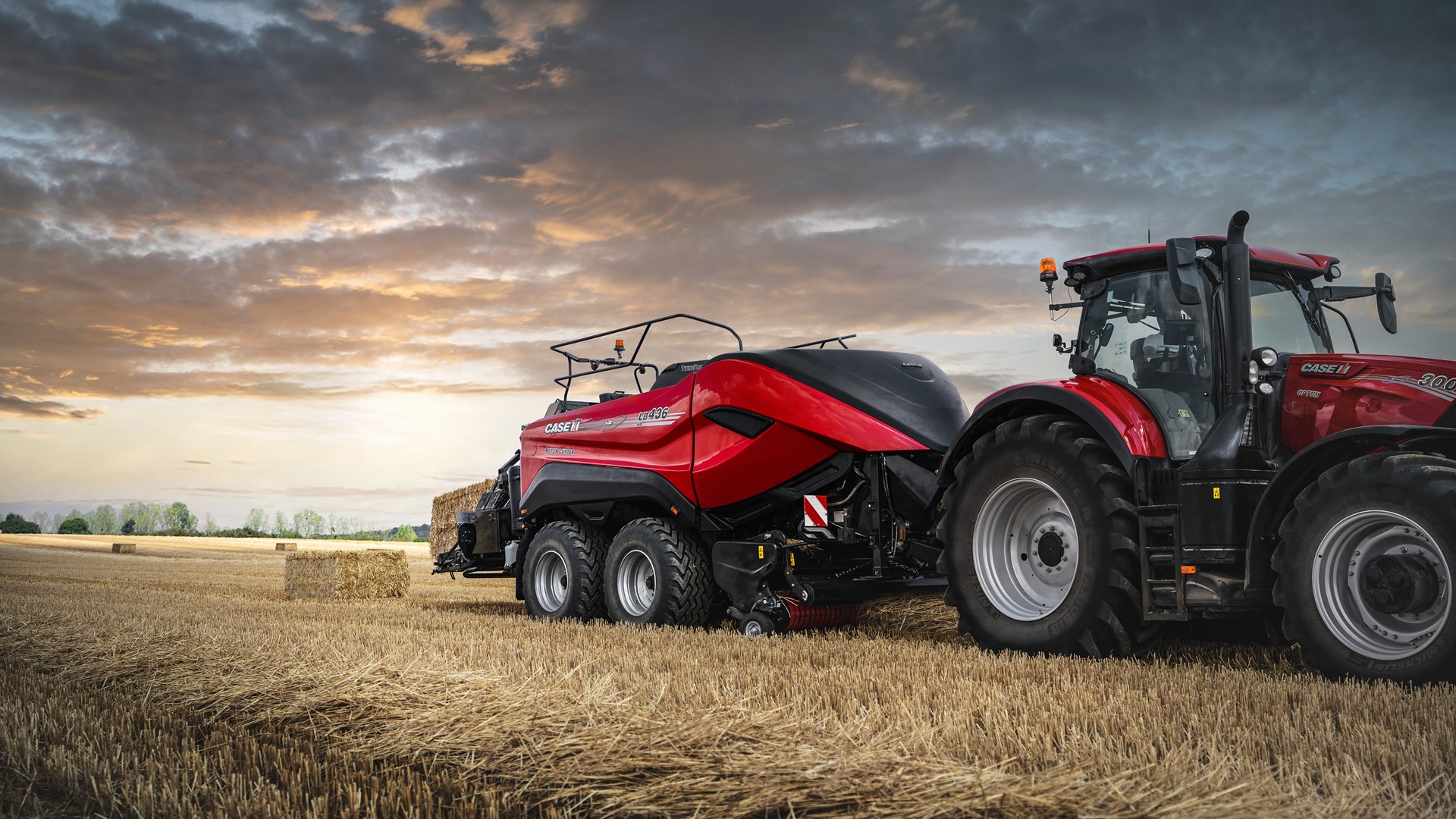
When it comes to hay equipment, incremental improvements often have the biggest impact. A stronger bearing, a simpler lubrication system or an automated function that saves a few seconds per bale can add up quickly over the course of a busy harvest season.
That’s the thinking behind Case IH’s latest updates to its baler lineup. The company has announced a series of improvements across its round and large square balers that are designed to increase durability, reduce maintenance and make it easier for operators to produce consistent, high-quality bales.
Rather than introducing an entirely new generation of machines, Case IH focused on refining the areas producers use every day.
Round Balers Built for Tougher Conditions
The RB6 variable chamber round balers receive several mechanical upgrades aimed at extending service life in demanding field conditions.
One of the most significant changes is a redesigned chain drive system featuring higher-strength chains to better withstand heavy crop loads. Case IH has also equipped the balers with triple-sealed bearings that are designed to keep dust and debris out while retaining lubricant longer, helping reduce wear over time.
The balers’ rollers have also been updated with a seamless extruded design for greater strength, while reinforced rolls further improve durability and reduce maintenance requirements.
Individually, none of these changes may seem dramatic. Together, they target some of the highest-wear components on a round baler, giving producers a machine that should stand up better during long harvest days.
Smarter Operation From the Tractor Seat
Case IH has also expanded the automation capabilities available on the RB6 series.
ISOBUS compatibility comes standard, allowing supported tractors to communicate directly with the baler. When paired with compatible Case IH tractors, operators can automate several repetitive tasks, including stopping the tractor once the desired bale size is reached, initiating the net wrap cycle and opening the tailgate.
For producers running older or non-ISOBUS tractors, optional Pro 700 Plus and Pro 1200 displays provide access to many of the same control functions.
While experienced operators may already perform these tasks instinctively, automation helps maintain consistency and reduces fatigue during long days in the field.
Field Data Becomes Part of the Baling Process
Connectivity continues to play a larger role in hay equipment, and the updated balers are designed to integrate with the Case IH FieldOps platform.
With optional Basic or Advanced Telematics, operators can monitor machine activity remotely, including field totals, bale drop locations and moisture data. Having this information available after the field is finished can simplify transportation logistics, storage planning and record keeping, particularly for commercial hay producers serving multiple customers.
Large Square Balers Receive Practical Improvements
Case IH also introduced several updates for its LB4 XL and LB436 HD large square balers, with an emphasis on reducing daily maintenance.
Perhaps the most noticeable change is a new automatic chain greasing system that replaces the previous oil-based lubrication system. According to Case IH, the redesigned system extends service intervals by a factor of four while eliminating the oiler pump and reducing the number of fluids operators need to manage.
For producers who spend every available hour baling when conditions are right, reducing routine maintenance can translate directly into more productive time in the field.
The large square balers also gain a new load-sensing package that allows bale eject and bale ramp functions to be activated either from inside the tractor cab or from the rear of the machine, making unloading more convenient during operation.
Automation Expands to Large Square Balers
Case IH’s Baler Automation system also continues to evolve.
The company says the system will soon be compatible with Tractor Implement Management, or TIM, allowing the baler to automatically adjust tractor speed based on crop flow and bale density. By matching ground speed to changing crop conditions, the system is intended to produce more consistent bale density while helping prevent overloads.
The technology also has the potential to reduce operator fatigue by removing another repetitive task from the baling process, particularly for newer operators or long harvesting days.
Small Changes That Add Up
While these updates may not completely redefine Case IH’s baler lineup, they address many of the areas producers notice most during a hay season.
Stronger driveline components should improve long-term durability. Simplified lubrication systems reduce maintenance. Expanded automation helps improve bale consistency while easing operator workload, and additional connectivity provides better access to machine and crop data.
For producers considering a new baler, the latest updates are less about adding flashy features and more about making proven machines easier to own, easier to operate and better prepared for the demands of modern hay production.


Leave a Reply