
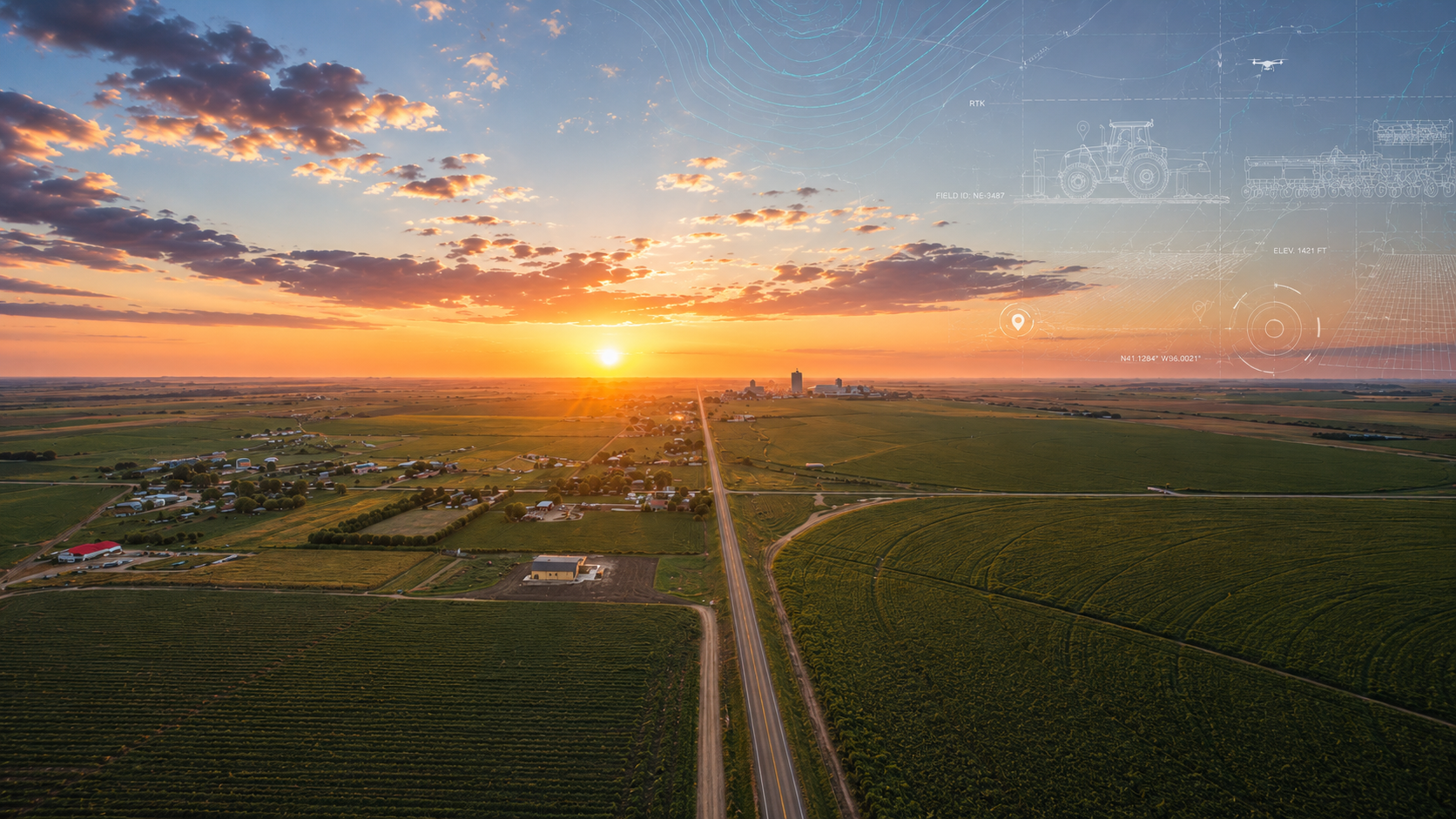
For generations, Nebraska has been known for producing corn, soybeans, cattle and some of the hardest-working farmers in the country. Now, the state is setting its sights on becoming the place where the next generation of agricultural technology is developed, tested and refined.
That ambition was the focus of a recent gathering of ag tech leaders, entrepreneurs and researchers, who shared a vision of making Nebraska a proving ground for the future of farming. Rather than simply adopting new technology after it’s developed elsewhere, they want innovation to happen alongside the farmers who will ultimately use it.
For Tractor Tuesday, the idea hits close to home. We’re proud to call Nebraska home ourselves, and we’ve watched firsthand as the state’s combination of production agriculture, engineering talent and entrepreneurial spirit has made it an increasingly attractive place for ag innovation.
Why Nebraska?
It isn’t just geography. Nebraska sits at the center of American agriculture, with a remarkable diversity of crops, livestock operations and irrigation systems packed into one state. Companies can test new equipment and software across a wide range of real-world conditions without traveling across the country.
The state also benefits from a strong network of universities, research institutions and startup incubators that are increasingly working together. Investments like the University of Nebraska’s National Center for Resilient and Regenerative Precision Agriculture demonstrate the growing commitment to making Nebraska a leader in agricultural research and technology development. The new facility will expand collaboration between the university and the USDA while giving researchers more opportunities to move ideas from the lab to the field.
The Future Is Already Taking Shape
Agricultural technology has advanced rapidly over the past decade, but the pace of innovation is accelerating.
Autonomous tractors and retrofit autonomy kits are becoming more practical. Drones are moving beyond imagery into crop protection and field scouting. Artificial intelligence is helping farmers interpret growing amounts of field data. Equipment manufacturers continue adding automation that reduces operator fatigue while improving consistency.
Many of these technologies have one thing in common: they perform best when they’re developed with direct feedback from producers working in real farming conditions.
That’s why Nebraska’s role could become increasingly important. A startup developing autonomous equipment doesn’t just need engineers. It needs farmers willing to put prototypes through long days in dusty, unpredictable field conditions. Software developers need growers who can point out what works, what doesn’t and what features actually save time during planting or harvest.
As many farmers already know, some of the best innovations have started in machine sheds, test plots and combines running until well after sunset.
More Than Economic Development
There’s certainly an economic opportunity for Nebraska. Successful ag tech companies create jobs, attract investment and strengthen the state’s already significant agricultural economy.
But the bigger opportunity is helping shape the future of farming itself.
If new technologies are designed and tested where agriculture is practiced every day, they’re more likely to solve real problems rather than theoretical ones. Farmers benefit from equipment that’s been refined under actual field conditions, while manufacturers gain valuable feedback before bringing products to market. That’s a win for everyone involved.
A Front-Row Seat to Agriculture’s Next Chapter
No one knows exactly what farming will look like 20 years from now. But it’s becoming clear that software, automation, robotics, connectivity and artificial intelligence will play a larger role alongside the iron that has always driven agriculture forward.
If Nebraska succeeds in becoming the proving ground for those innovations, the technologies shaping farms across North America may first be tested in the fields of the Cornhusker State.
And for those of us who call Nebraska home, that’s an exciting future to watch unfold.

Leave a Reply