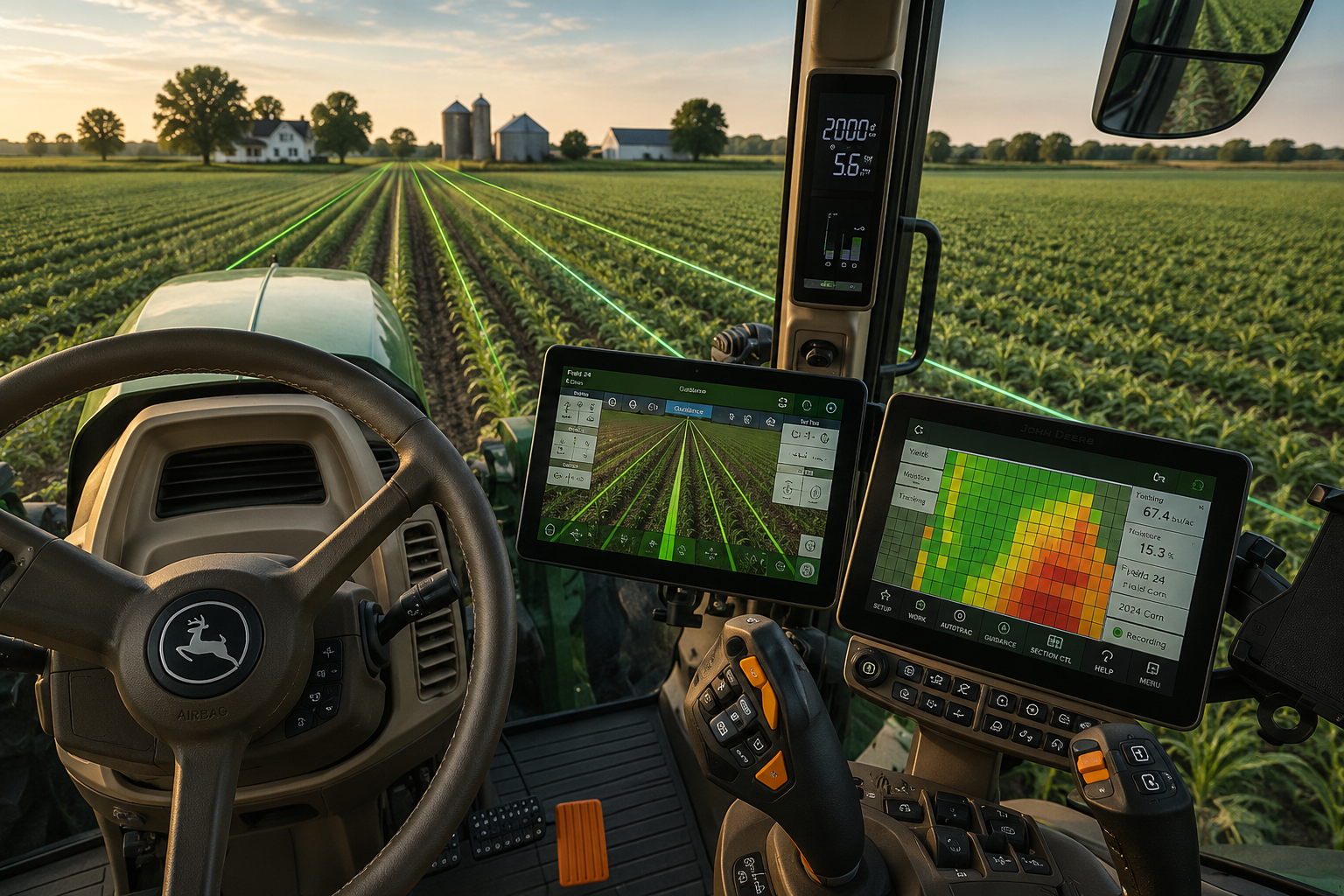
Precision agriculture has transformed modern farming over the past two decades. Today’s tractors, sprayers, planters, and combines are packed with features designed to improve efficiency, reduce input costs, and make every pass across the field more productive. Yet despite all of that technology, many producers admit they are only using a fraction of what their equipment is capable of.
That is not because farmers are resistant to technology. In many cases, it is simply a matter of time. Planting and harvest leave little opportunity to dig through menus, watch training videos, or experiment with new settings. Equipment has become increasingly sophisticated, and learning every feature often takes a back seat to getting the crop in the ground or out of the field.
As a result, one of the best returns on investment in precision agriculture may not come from buying another display, subscription, or sensor. It may come from making better use of the technology already sitting in the cab.
Start With the Features That Deliver Immediate Payback
Some precision ag features begin paying for themselves almost immediately once they are properly configured and used consistently.
Auto guidance is one of the best examples. While many producers initially adopted guidance systems to reduce operator fatigue, today’s systems often include additional capabilities such as AutoTurn, adaptive curves, implement guidance, and boundary management. Those features can help reduce overlap, improve consistency on oddly shaped fields, and make long days in the cab a little easier.
Section control is another feature that frequently delivers measurable savings. Whether applying seed, fertilizer, herbicides, or fungicides, automatically shutting off sections where an area has already been covered reduces overlap and unnecessary input costs. On fields with terraces, waterways, or irregular boundaries, those savings can add up surprisingly quickly over the course of a season.
Variable-rate application is another tool that many farms have available but do not fully utilize. While variable-rate fertilizer is becoming increasingly common, the same technology can also optimize seeding populations, nitrogen rates, and even certain crop protection products. Matching inputs to field variability can improve efficiency without increasing overall costs.
The Data Is Only Valuable If You Use It
Modern equipment collects an incredible amount of information during every field operation.
Yield maps, machine telemetry, fuel consumption, moisture readings, application records, and machine performance metrics are generated almost automatically. Unfortunately, much of that information is reviewed once, if at all, before being stored away and forgotten.
Looking back at harvest data can reveal consistent yield-limiting areas, drainage issues, equipment performance concerns, or opportunities to refine variable-rate prescriptions for the following season. Even reviewing machine idle time or transportation efficiency can uncover opportunities to save fuel and labor.
Collecting data is only the first step. The real value comes from turning that information into better decisions.
Sometimes Training Delivers a Better Return Than New Equipment
It is easy to assume the next technology purchase will solve efficiency problems. In reality, many farms already own equipment capable of delivering better performance with a little additional training.
Most major manufacturers provide online tutorials, dealer-led training sessions, and precision agriculture specialists who can help producers configure existing equipment. Spending a few hours learning how to use features that are already installed may provide a better return than investing thousands of dollars in another hardware upgrade.
Many dealers also offer preseason clinics that walk operators through display settings, calibration procedures, and software updates before spring fieldwork begins. Those sessions often uncover capabilities that owners never realized their machines already had.
Upgrade With Purpose
None of this suggests that new technology is not worth considering.
Artificial intelligence, camera-guided spraying systems, autonomous equipment, and agricultural drones are creating real opportunities to reduce costs and improve productivity. As these technologies mature, they will likely become an increasingly important part of modern farming.
At the same time, there is value in taking full advantage of today’s equipment before moving on to tomorrow’s innovations. A farm that is already maximizing guidance, section control, documentation, and data analysis is in a much stronger position to evaluate whether the next technology investment truly fits its operation.
Five Features Worth Checking Before Next Season
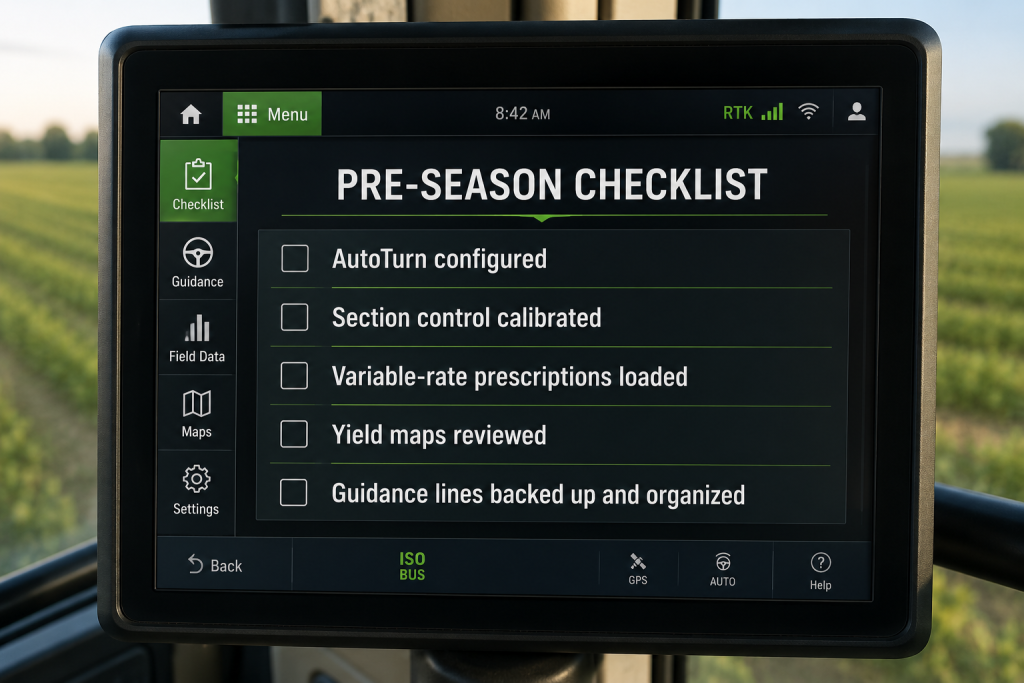
Before making another precision ag purchase, it may be worth asking whether these existing tools are already working as intended:
- Auto guidance features such as AutoTurn or adaptive curves are enabled and properly configured.
- Section control has been calibrated to minimize overlap.
- Variable-rate prescriptions are being used where they make agronomic and economic sense.
- Yield maps and field data are reviewed after harvest instead of simply archived.
- Guidance lines, field boundaries, and machine displays are backed up, organized, and updated before the next season.
You don’t always need to buy the latest display or add another subscription to benefit from precision agriculture. The greatest return often comes from using existing technology more effectively. Before investing in the next upgrade, producers may find that some of the most valuable tools are already riding with them every time they head to the field.


Leave a Reply