
By Braden Chupp
From Chupp Industrial
A mini excavator is one of the handiest machines a small farm can own. It digs ponds, cleans ditches, trenches water lines, pulls stumps and sets corner posts, and it does it without tearing up a pasture the way a bigger machine would. The trick is buying the right size. Most of the trouble we see does not come from the machine being too small to dig. It comes from the machine being too big to get where the work is, or too heavy for the truck that has to haul it.
Here is how to match the size to the job.
First, the size classes
Mini excavators are sold by operating weight, in tons. Roughly:
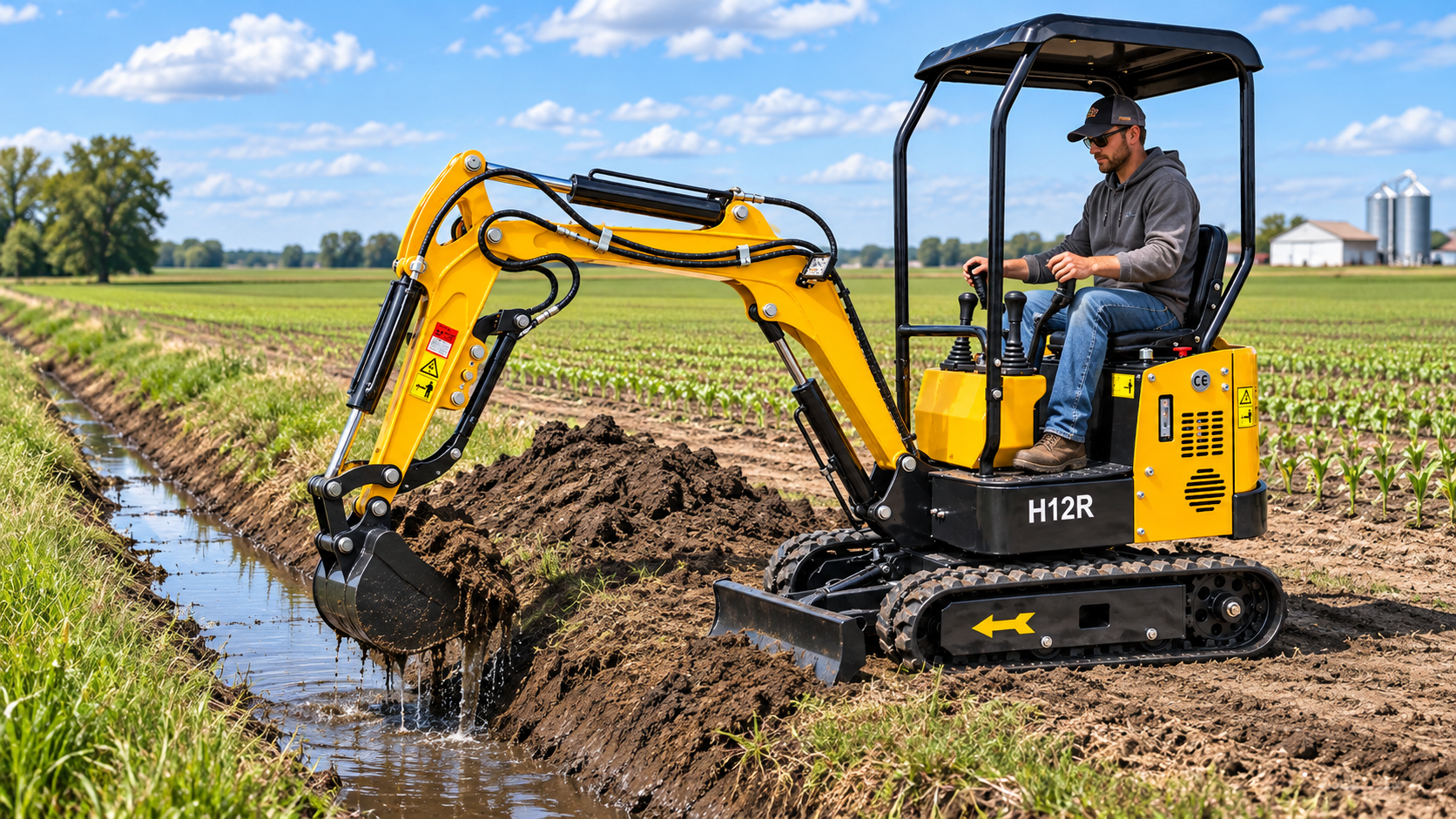
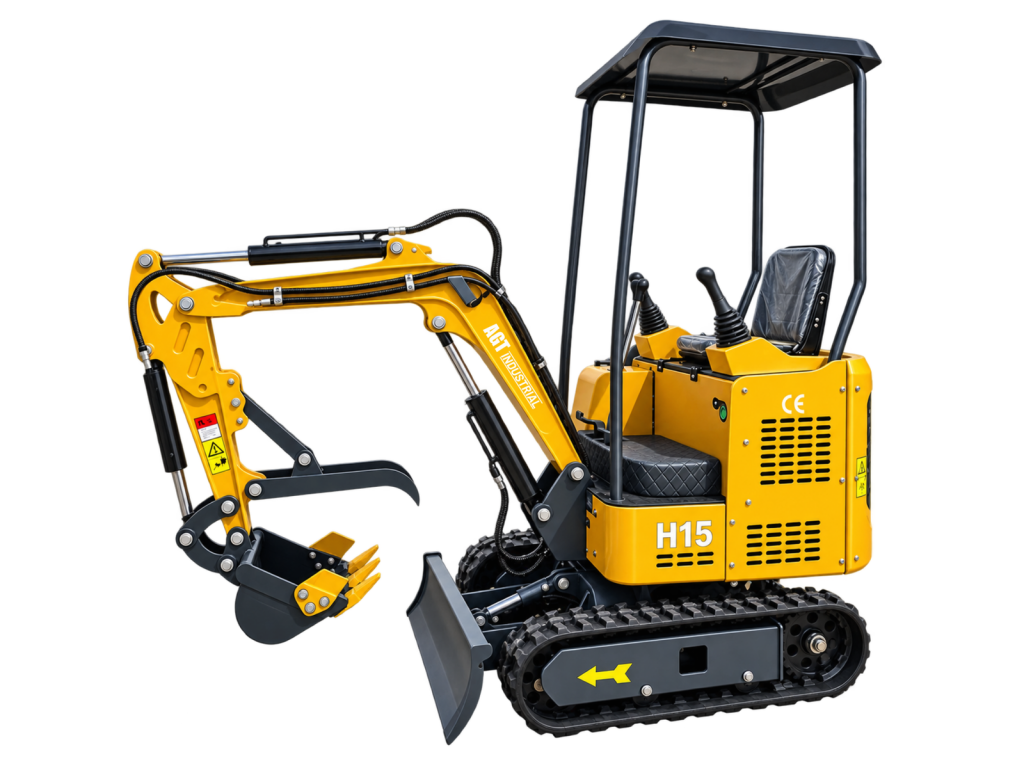
- 1 to 2 tons. Light, narrow and easy to haul. A typical 1-ton machine digs about 5 to 6 feet deep. Our AGT H12R, for example, is listed at 65 inches of dig depth and about 10 feet of reach from the machine, and it ships in a crate under 40 inches wide.
- 3 to 5 tons. Digs deeper and moves a lot more dirt per bucket, but it is heavier on soft ground and usually needs a bigger trailer and truck.
- 6 tons and up. A real earthmoving machine. Fast, but it is a different hauling and storage commitment.
Always check the spec sheet for the exact model. The published dig depth is measured straight down; when the arm is reaching out as well, the usable depth is less.
Ponds
A pond is the biggest digging job on most farms, and the one where size matters most. Oklahoma State University Extension recommends a fishing pond be at least half a surface acre, and a pond that has to hold water through a dry summer needs a deeper section somewhere in it.
A 1- to 2-ton machine is a good fit for a small livestock dugout, cleaning out an existing pond, or shaping banks and spillways. A new pond of any real size, especially one with a dam, is better done with a larger machine or a contractor, and it is worth talking to your local NRCS office about soil and site first.
Drainage ditches
Cleaning and reshaping ditches is where small machines shine. Most farm ditches are only a few feet deep, well within a 1-ton machine’s reach. A narrow machine can work along a fence line or between a ditch and a road without leaving the deep ruts that start new washouts. A backfill blade on the front helps you spread the spoil instead of leaving a pile on the bank.
Water lines
Trenching a water line to a tank, barn or hydrant is one of the most common reasons people buy a mini excavator. The trench only needs to be below your local frost depth, which your county extension office or water district can tell you. A 1-ton machine with a narrow bucket can cut a clean trench across a pasture in a day and backfill it with the blade. Narrow buckets also mean less dirt to move back in.
Stumps
A compact machine handles small and medium stumps well, especially with a thumb. A thumb works against the bucket like a thumb and finger, so you can dig around the roots, grab the stump and lift it out instead of chasing it around the hole. Large old stumps are a different story; a small machine can still do it, but it means a lot of digging around the root ball first.
Fence corners
Corner and brace posts need deep, solid holes. A mini excavator can dig them with the bucket, or run an auger if the machine has auxiliary hydraulics. It can also set and tamp the posts and pull out old rotten ones. For a long fence job, that alone can be worth the machine.
Gate width: measure before you buy
This is the one that catches people. Measure the narrowest point between where you unload and where you dig: the gate, the gap between two trees, the alley beside the barn. Then compare it to the machine’s overall width, tracks and blade included. A 1-ton machine will go through a lot of openings that a 3-ton machine will not. Taking a fence panel down every time you use the machine gets old fast.
What your pickup can tow
Add up three numbers: the machine, any attachments riding with it, and the trailer itself. Compare that total to the towing rating in your truck’s owner’s manual, not to what you think it can pull. A 1-ton class machine weighs about a ton (our ME20 diesel is listed at roughly 2,400 to 2,700 pounds), so on a utility or small equipment trailer it is a load many full-size pickups are rated for. A 3- to 5-ton machine on an equipment trailer can push a three-quarter-ton truck to its limit.
Under federal rules, a combination rated at 26,001 pounds or more, where the trailer is rated over 10,000 pounds, requires a commercial driver’s license (49 CFR 383.91). Most compact excavator setups are nowhere near that, but bigger machines can get there.
Before you dig
Call 811 to have buried lines marked before any digging. It is free (https://call811.com). Plan your route in on the firmest, driest path, because water projects sit in the wettest part of the property and heavy machines rut.
The short version
If your list is ditches, water lines, stumps, fence corners and small ponds, a 1- to 2-ton mini excavator will do nearly all of it, fits through most gates and rides behind a pickup. If one big pond is the whole reason you are buying, look at a bigger machine or hire that one job out.
About the author: Braden Chupp is a consultant with Chupp Industrial in Chouteau, Oklahoma, which has sold compact equipment and skid steer attachments for more than 15 years. See their mini excavators at https://chuppindustrial.com/products/mini-excavators.

Leave a Reply