
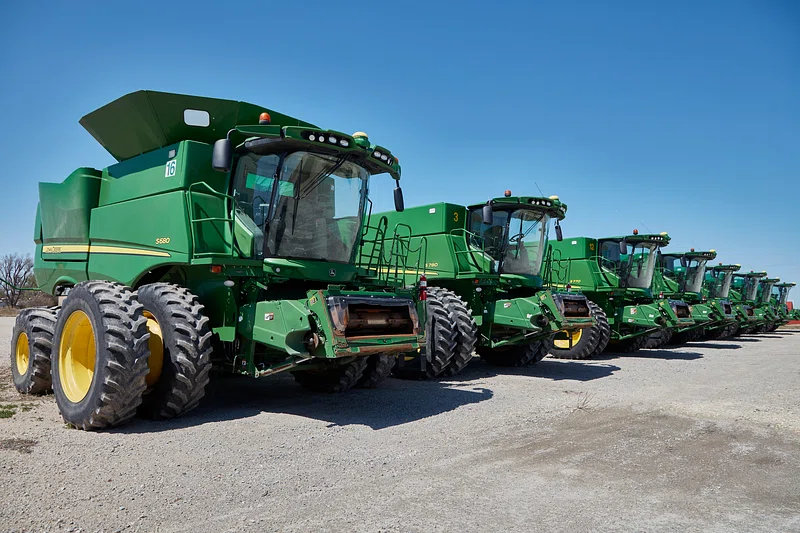
If you’ve been watching the market this winter, you’ve probably noticed the same split that a lot of us in the Midwest have. New equipment sales are still in the tank, but clean, late-model used row crop tractors, combines, tillage tools, and grain carts are holding their value surprisingly well, sometimes even gaining a bit.
It’s one of the more unusual market dynamics we’ve seen in a while.
The New Equipment Picture (Still Rough)
According to the final 2025 AEM numbers released in mid-January:
- Total U.S. farm tractor sales finished at 195,857 units, down 9.9% from 2024.
- Self-propelled combine sales were 3,579 units, a steep 35.6% decline from the prior year.
The high-horsepower stuff (the 300+ HP tractors and Class 8/9 combines that dominate Midwest corn and soybean country) took the hardest hits. Dealer lots remain heavy in these categories, and most 2026 forecasts call for new sales to be flat at best, with many expecting another 0–5% decline.
The Used Side: Different Story
Meanwhile, the used market, especially low-hour, 2021–2024 row crop tractors and combines, has been much more resilient. After bottoming out in early to mid-2025, auction and retail values on clean late-model iron stabilized and then firmed up noticeably in the fourth quarter.
Machinery Pete has been vocal about this, calling it a disconnect he hasn’t seen in his 36+ years tracking the market. Clean late-model, high-horsepower tractors and combines are moving at higher-than-expected percentages of original list price, largely because used inventory is thinning rapidly. With new sales so slow, there simply aren’t as many late-model trade-ins hitting the market.
Grain carts and tillage equipment are following a similar (though less dramatic) pattern, with solid demand for well-maintained, recent-model pieces, especially larger 1000+ bushel carts and high-speed disks/field cultivators.
Used grain carts stabilized in late 2025 after earlier softening (Machinery Pete noted signs of easing in Oct 2025), with clean late-model 1000-1300 bu units often holding 70-85% of original value and moving quickly in Midwest auctions. Tillage tools like high-speed disks and field cultivators show steadier trends, down only 10-15% overall in 2025 vs. sharper drops for combines/tractors, as farmers prioritize efficiency and residue management in corn/soybean rotations. Demand remains solid for recent pieces that reduce passes and fuel use.
What to Watch: The Spring Auction Wave
One factor that could shake things up starting in the next 4–8 weeks: we’re hearing from multiple sources, including Tractor Tuesday founder Zach Bosle, that a larger-than-normal number of farmer-owned, late-model pieces are expected to hit the auction block between late February and April.
Cash flow and liquidity pressures are building, with banks potentially pushing inventory to market. Bosle predicts a possible “bloodbath” in prices (especially for row crop tractors and planters) if supply surges overwhelm demand, advising selling strong pieces before March 1st. February (e.g., dates like 17th and 24th) could be the peak window.
If this materializes, it could bring additional supply as planting ramps up, something Midwest farmers will want to monitor closely.
Bottom Line for 2026
We’re in a market where time is money in more ways than one:
- Farmers holding good used iron have more equity than many expected.
- Buyers looking for 300–400 HP tractors, 8000/9000 series combines, or large grain carts still have a decent selection, but the really clean units are moving faster than they were six months ago.
It’s not a booming market, but it’s not the fire sale a lot of people feared either, just a very segmented, supply-driven environment.
We’ll continue to monitor the auction calendars closely over the next 60 days.


Leave a Reply