Artificial intelligence has become one of the most overused phrases in agriculture. Farmers have heard promises for years about precision technology transforming operations, reducing inputs, and maximizing yields. Many tools delivered useful data, but often left growers with more dashboards, subscriptions, and complexity rather than clearer decisions.
That is why the latest wave of AI agronomy may deserve a closer look.
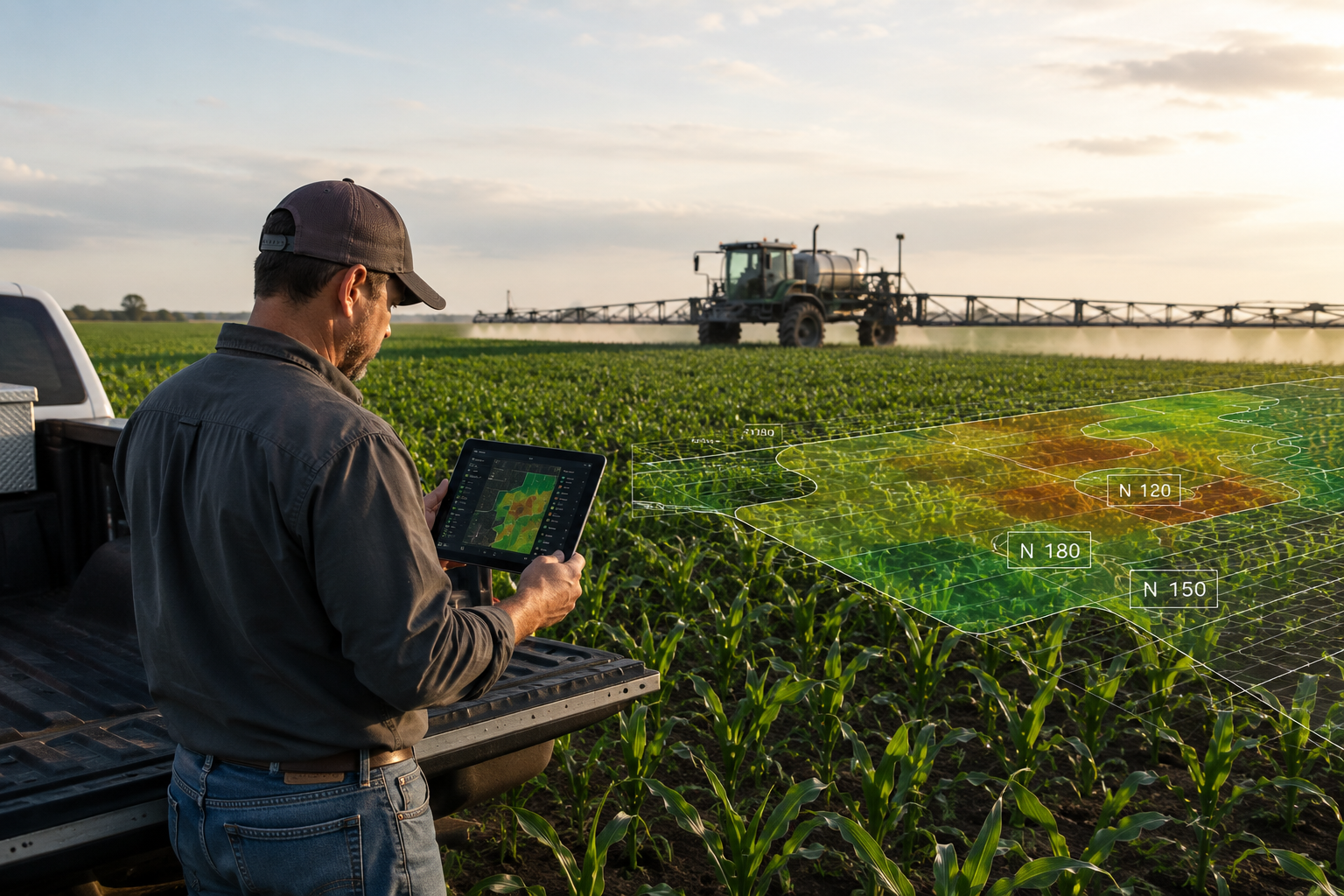
Companies across agriculture are beginning to move beyond simple record keeping or variable rate maps and toward systems designed to interpret field-level data, identify patterns, and recommend actions. One recent example is a new AI platform launched by Advanced Agrilytics, built to analyze agronomic information and assist with management decisions. Rather than replacing agronomists, the goal is to extend expertise and make recommendations more precise.
Whether this is truly different remains an open question, but there are reasons farmers are paying attention.
The Cost of Being Slightly Wrong Has Increased
Agronomic decisions have always involved uncertainty. Fertility timing, nitrogen rates, hybrid selection, and population recommendations often rely on weather, local knowledge, and experience. The challenge is that mistakes have become more expensive.
Input costs remain elevated compared to historical levels, and a small miscalculation across hundreds or thousands of acres can quickly become significant. If AI systems can improve recommendations by even a few percentage points, the economics may begin to matter.
For example, applying slightly less nitrogen where it is unnecessary while maintaining yields could save substantial money over time. Likewise, identifying areas where additional fertility actually pays could improve returns rather than simply cutting inputs. The promise is not perfection. The promise is marginal improvement at scale.
AI Has Access to More Patterns Than Any Individual Agronomist
Experienced agronomists remain incredibly valuable because they understand local conditions, soil types, weather trends, and farming realities that software often misses. At the same time, AI systems can process enormous amounts of information far faster than humans.
Historical yield maps, satellite imagery, weather patterns, tissue tests, soil samples, machine data, and previous management decisions can all become part of one recommendation engine. The idea is not necessarily AI versus agronomists. The more realistic future may be AI plus agronomists, where software surfaces patterns and professionals interpret them.
That approach may feel familiar to farmers already using auto guidance, yield monitors, or machine diagnostics. Technology increasingly acts as an assistant rather than a replacement.
Farmers Have Heard Similar Promises Before
Skepticism is reasonable because precision ag was expected to revolutionize farming decades ago. Some technologies delivered real value. Others became expensive features that operators ignored after a few seasons.
The difference today could be computing power and data availability. Modern systems have access to larger datasets and more sophisticated models than were possible even five years ago. Still, farmers will likely judge AI agronomy the same way they judge machinery.
Does it save money? Does it increase yield? Does it reduce headaches?
If the answer is no, adoption will stall regardless of how advanced the technology sounds.
The Bigger Question Might Be Data Ownership
As AI becomes more involved in agronomy, another issue grows in importance: who owns the information?
AI recommendations depend on data. Field histories, planting records, fertility programs, and operational details become increasingly valuable. Farmers may eventually ask whether they are simply receiving recommendations, or contributing information that benefits someone else’s platform.
Agriculture has already seen growing debate around data privacy and ownership. Expect those conversations to become louder as AI expands deeper into management decisions. The technology itself may prove useful, but trust around the data may determine who farmers choose to work with.
Why This Time Could Be Different
AI in agriculture still has plenty to prove, and it is unlikely to replace experienced growers or trusted agronomists anytime soon. What may change is how decisions get made.
Instead of relying entirely on generalized recommendations, future systems could help deliver field-by-field guidance based on years of performance data and changing conditions. If those recommendations consistently improve profitability, adoption may happen faster than many expect.
Farmers have always embraced technology that creates real value. Auto steer was questioned once. Yield mapping was questioned once. Precision planting was questioned once. AI agronomy could follow the same path.
Or it could become another buzzword.
The next few years will determine which one it becomes.


Leave a Reply