For years, precision agriculture conversations have largely centered around planting. AutoTrac systems, variable rate prescriptions, section control, and increasingly advanced planter technology changed how crops go into the ground and how farmers think about efficiency.
Harvest has often received less attention.
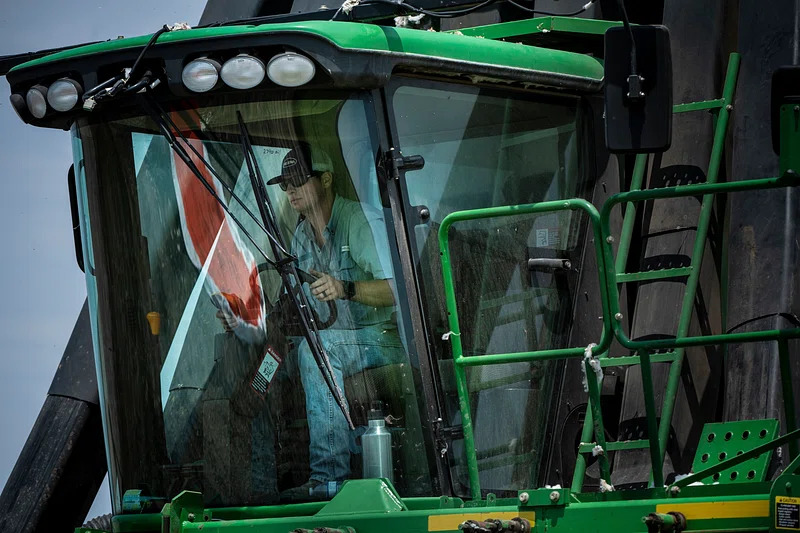
That may be starting to change. Earlier this month, Ag Leader Technology announced a new integrated row guidance system called Z-Row, designed to help combines stay centered on corn rows while combining guidance functions and harvest information into a more streamlined experience inside the cab. According to the company, the system aims to improve performance in difficult harvest conditions while reducing operator workload.
Why Better Row Guidance Could Matter More Than It Sounds
Keeping a combine centered on rows may not seem revolutionary until harvest conditions become difficult. Corn may be leaning after storms. Dust can limit visibility. Harvest often continues well after sunset, and fatigue builds quickly during narrow weather windows.
Even experienced operators can struggle under those conditions.
Small improvements in guidance during harvest could help maintain consistency, reduce operator stress, and potentially minimize crop losses. When multiplied across hundreds or thousands of acres, modest efficiency gains can become meaningful.
These systems may also become increasingly valuable as labor shortages continue affecting agriculture. Assistance technologies can help shorten learning curves for younger or less experienced operators while making long days in the field more manageable.
Why Ag Leader’s Announcement Is About More Than Row Guidance
For years, adding technology often meant adding another display to the cab. More capability frequently brought more screens, more alerts, and more separate systems competing for an operator’s attention.
Companies increasingly appear to be moving away from that model. Instead of layering tools onto equipment, they are trying to combine guidance, machine control, and harvest information into unified workflows.
Agriculture is steadily becoming a connected ecosystem where guidance systems communicate with displays, displays connect with cloud platforms, and machine data flows into larger management software. Companies across precision ag are competing to become the operating system behind those workflows.
The combine cab is becoming another battleground.
That may ultimately be the most important takeaway from products like Z-Row. The technology itself matters, but the larger shift toward integrated, increasingly automated harvest operations could matter even more.
Harvest Automation May Arrive Gradually
When farmers hear discussions about autonomy, many picture fully driverless machines operating with little human involvement. The transition will likely happen much more gradually.
Machines begin steering more accurately. Guidance systems maintain row position. Software adjusts settings automatically. Alerts identify problems before operators notice them. Recommendations slowly become automated decisions.
Eventually, technology handles more routine tasks while operators focus more on oversight than direct control.
Many of those steps are already underway. Integrated harvest technologies like Ag Leader’s new system may seem modest today, but years from now, tools designed to reduce fatigue, simplify decisions, and improve consistency could be viewed as early pieces of a much larger shift toward increasingly automated harvest operations.
Agriculture rarely changes overnight. More often, major shifts begin with small improvements that quietly reshape expectations over time. A row guidance system for combines may appear incremental today. The long-term impact could prove much larger.

Leave a Reply