
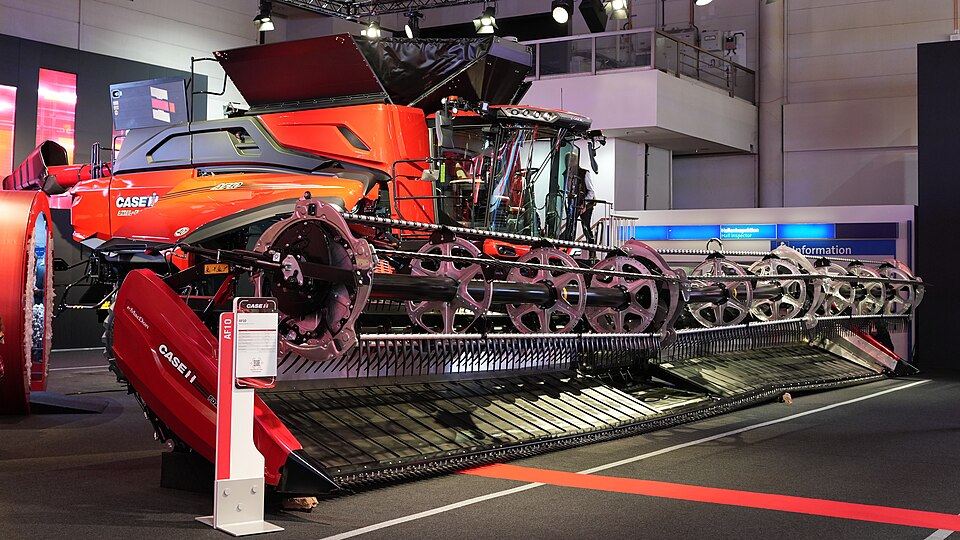
For decades, conversations about harvest innovation have largely centered on the combine itself. Manufacturers competed to build larger grain tanks, increase horsepower, improve threshing systems, and push more crop through the machine every hour.
While those improvements continue, a different trend is beginning to emerge across the industry. Increasingly, manufacturers are focusing their engineering efforts on the part of the harvest system that touches the crop first: the header.
Reducing Losses Before They Happen
Modern combines already process enormous amounts of material. As a result, manufacturers are increasingly looking upstream for efficiency gains.
Every soybean pod left below the cutterbar and every ear missed by the header represents yield that can never be recovered. Rather than focusing solely on larger combines, companies are investing in technologies that help capture more crop, follow ground contours more accurately, and feed material into the machine more consistently.
That shift is helping move header technology to the forefront of harvest equipment development.
John Deere’s Latest Header Updates
One of the most notable examples of this trend comes from John Deere’s recent header updates.
Among the changes is a new three-piece CAM reel design intended to improve the relationship between the reel and cutterbar throughout operation. Deere also introduced a dense-pack finger system that increases the number of reel tines compared to previous designs.
While those changes may sound minor compared to a new combine model, they are aimed directly at one of the industry’s biggest challenges: consistently moving crop from the cutterbar into the feeder house.
Smooth crop flow helps reduce bunching and slug feeding while allowing operators to maintain productivity in varying field conditions. Improvements in feeding consistency can have a significant impact on overall harvest performance, particularly when operating large combines at higher capacities.
Deere also introduced an 18-row folding corn head designed to better match today’s larger planter configurations. As farms continue adopting wider planting equipment, manufacturers are responding with harvest solutions that help reduce passes across the field while maintaining transport practicality.
The Continued Evolution of Draper Headers
The growing focus on headers extends well beyond a single manufacturer.
Draper headers have become one of the most active areas of development as companies work to improve crop capture and feeding performance. Engineers are refining everything from cutterbar flexibility and reel control to belt designs and frame structures.
The objective remains the same across the industry: gather more crop while delivering it to the combine in a smooth, consistent stream.
For soybean growers, these improvements can be especially valuable. Harvest often takes place under changing conditions, and maintaining close contact with uneven ground can make a significant difference in the number of pods that ultimately end up in the grain tank.
As a result, many manufacturers are placing greater emphasis on systems that help headers adapt to field conditions automatically rather than relying solely on operator adjustments.
Bigger Isn’t Always Better
The evolution of header technology also reflects a broader shift in how manufacturers think about productivity.
In previous generations, gains often came from building larger machines with more horsepower and greater capacity. Today, there is increasing recognition that efficiency can also be improved by maximizing the performance of existing equipment.
Capturing more crop at the header, maintaining smoother crop flow, and reducing losses can sometimes provide benefits that rival those of a larger combine. For many operations, those improvements may offer a more practical path to increased productivity than simply moving to the next size class of machine.
That philosophy is influencing product development throughout the harvest equipment market.
The Front Line of Harvest Innovation
For farmers evaluating harvest equipment, that shift could change how upgrades are prioritized in the years ahead.
While combines continue to grow more capable, manufacturers increasingly view the header as one of the fastest ways to improve harvest performance. Whether through flexible cutterbars, improved reel systems, wider corn heads, or smarter automation, the goal remains the same: capture more crop and keep it moving efficiently through the machine.
As a result, some of the most meaningful harvest innovations may no longer be found under the combine’s side panels. They may be attached to the front of it.


Leave a Reply