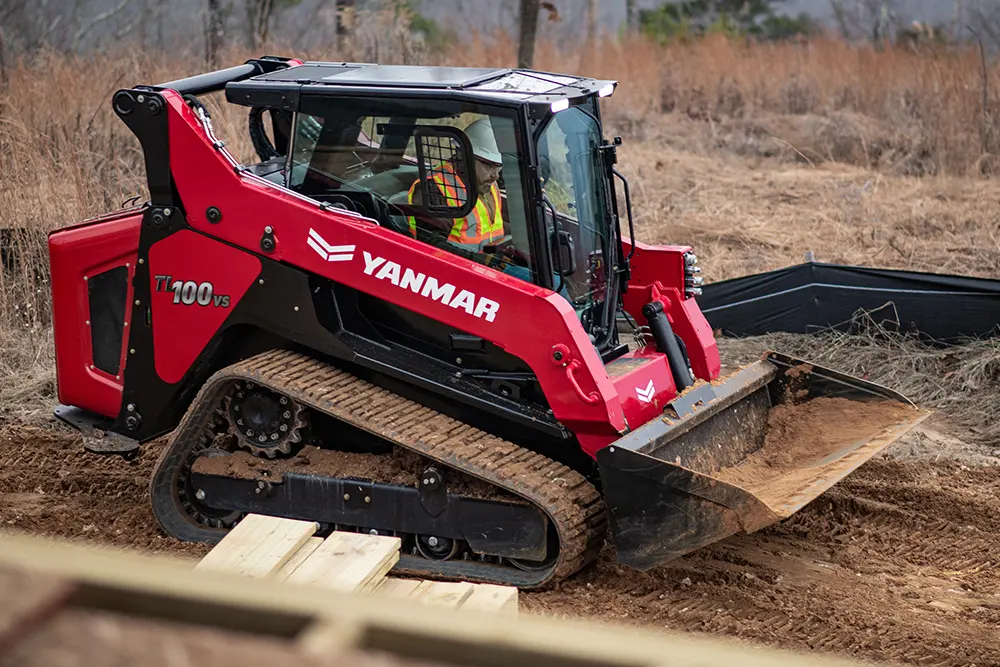
Yanmar, the Japanese manufacturer founded in 1912, recently announced that its Grand Rapids, Minnesota facility has produced its 50,000th compact machine, a TL100 compact track loader. More importantly, the company says it has now committed more than $60 million to expanding and modernizing the facility since acquiring ASV in 2019, with another $30 million planned over the next five years.
For a company that has traditionally been best known in North America for compact tractors and diesel engines, those investments suggest Yanmar has much bigger ambitions in the compact equipment market.
More Than a Manufacturing Milestone
Production milestones often make for good press releases, but they’re only meaningful if they signal something larger.
In this case, the 50,000th machine represents years of investment in North American manufacturing, engineering and product development. Since purchasing ASV, Yanmar has expanded automation, upgraded manufacturing technology and improved the Grand Rapids facility while retaining one of the industry’s most recognizable compact track loader platforms. The company says additional investments will focus on engineering capabilities, production capacity and future product development.
The ASV Acquisition Is Beginning to Pay Off
When Yanmar acquired ASV in 2019, some observers viewed the purchase as a way to enter the compact track loader market more quickly rather than building an entirely new platform from scratch. Seven years later, that strategy appears to be entering its next phase.
At this year’s ConExpo, Yanmar announced its “One Yanmar” initiative, bringing the ASV and Yanmar compact track loader portfolios together under the Yanmar name. Rather than maintaining separate product identities, the company is creating a unified lineup that includes both ASV’s well-known Posi-Track suspended undercarriage and more conventional steel-embedded track systems.
For buyers, that means more choices without forcing them into a single design philosophy.
For Yanmar, it creates a much broader product portfolio that can compete across multiple customer segments.
Agriculture Is Part of the Plan
Although compact track loaders are often associated with construction, agriculture has become an increasingly important market for these machines.
Livestock operations, hay producers, specialty crop growers and diversified farms rely on compact equipment for everything from loading feed and cleaning barns to pallet handling and material movement. A machine that spends mornings moving round bales may spend afternoons loading seed, gravel or fertilizer.
Yanmar clearly recognizes that opportunity. When discussing its expanded product lineup, the company specifically highlighted applications in agriculture alongside construction, landscaping, utilities, rental and land management. That’s a reminder that the compact equipment market is no longer divided neatly between construction contractors and farmers. Increasingly, many buyers operate in both worlds.
Manufacturing Closer to Customers
Domestic manufacturing has become a larger competitive advantage over the past several years.
Building machines in Minnesota allows Yanmar to shorten supply chains, respond more quickly to dealer demand and invest directly in engineering resources that support the North American market. It also provides greater flexibility as customer preferences evolve.
That’s particularly important as manufacturers introduce new technology, update emissions systems and respond to changing expectations around operator comfort, controls and productivity.
The Grand Rapids facility is no longer just an assembly plant. It’s becoming a strategic hub for product development and manufacturing.
A More Competitive Compact Equipment Market
The compact equipment market remains highly competitive, with established players including Bobcat, Caterpillar, John Deere, Kubota, Takeuchi and Case Construction Equipment all investing heavily in new machines and expanded product lines. That makes Yanmar’s continued investment noteworthy.
Rather than simply maintaining its existing presence, the company appears to be positioning itself for growth through manufacturing capacity, product development and dealer support. Producing 50,000 machines is an achievement, but committing another $30 million to the facility suggests the company believes the next 50,000 will come faster than the first.
Looking Ahead
Yanmar is building the foundation for its future in North America. Whether the company ultimately captures a larger share of the compact equipment market will depend on product performance, dealer expansion and continued innovation. Those questions won’t be answered overnight.
What is already clear, however, is that Yanmar isn’t treating North America as a secondary market. With more than $60 million invested in its Minnesota operations, a unified compact track loader lineup and an aggressive product strategy, the company is signaling that it intends to compete much more aggressively in the years ahead.


Leave a Reply