
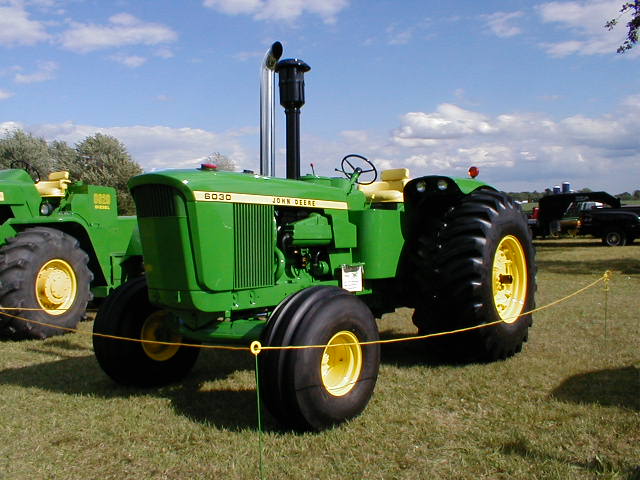
Some tractors earn their reputation by selling in huge numbers. Others become legends because they were unlike anything else on the market. The John Deere 6030 belongs firmly in the second category. Built from 1972 through 1977, it represented the peak of Deere’s conventional two-wheel-drive horsepower at a time when farms were getting larger and producers needed more power to keep up.
That legacy was recently highlighted in a video from the John Deere Archives, where Heritage PR Manager Chris Buyans and Successful Farming’s Ryan Roush took viewers behind the scenes to see the last John Deere 6030 ever built. The tractor has never been sold, has never left Deere’s possession, and still shows only 29.4 hours on the hour meter. It is an incredible piece of company history, but it also serves as a reminder of why the 6030 continues to command so much respect nearly 50 years after production ended.
Built to Be Deere’s Biggest
The early 1970s marked a period of rapid change in agriculture. Implements were becoming wider, farms were expanding, and the demand for horsepower continued to grow. John Deere answered that demand with the 6030, a tractor that pushed the limits of what a conventional row-crop machine could do.
Power came from a turbocharged 531-cubic-inch six-cylinder diesel engine rated at 175 PTO horsepower. Nebraska Tractor Test results recorded nearly 176 PTO horsepower, making it the most powerful conventional two-wheel-drive tractor John Deere offered at the time. While those numbers may seem modest compared to today’s largest tractors, they were impressive in an era when 100 horsepower was still considered substantial on many farms.
The 6030 also looked the part. Its long hood, towering exhaust stack, and massive rear tires gave it a commanding presence that made it instantly recognizable. Even people who were not devoted John Deere fans knew when a 6030 rolled into the field.
A Tractor That Didn’t Quite Fit
One reason the 6030 remains so memorable is that it occupies an unusual place in John Deere history. Although it carried a 30 Series model number, it retained much of the styling and engineering philosophy introduced with Deere’s New Generation tractors. By the time much of the rest of the lineup had adopted the new Sound-Gard cab and updated appearance, the 6030 continued with a familiar platform that many farmers already trusted.
Chris Buyans described it as a bridge between generations during the video, and that description fits well. The tractor combined proven design elements from the past with the horsepower demands of a new era. It became the final evolution of Deere’s classic two-wheel-drive row-crop tractors before the company shifted its attention toward larger and more modern machines.
Built for Power Instead of Comfort
Nobody bought a 6030 because it offered a luxurious ride. This was a tractor designed to spend long days pulling heavy tillage equipment, and everything about it reflected that mission. With ballast installed, it could weigh well over 18,000 pounds and put every bit of its horsepower to work.
Farmers appreciated the tractor’s raw pulling ability and the torque produced by its big six-cylinder engine. It earned a reputation as a machine that simply dug in and worked, even under demanding conditions. That straightforward personality has become part of the 6030’s appeal, especially among collectors who admire tractors that were engineered with function as the top priority.
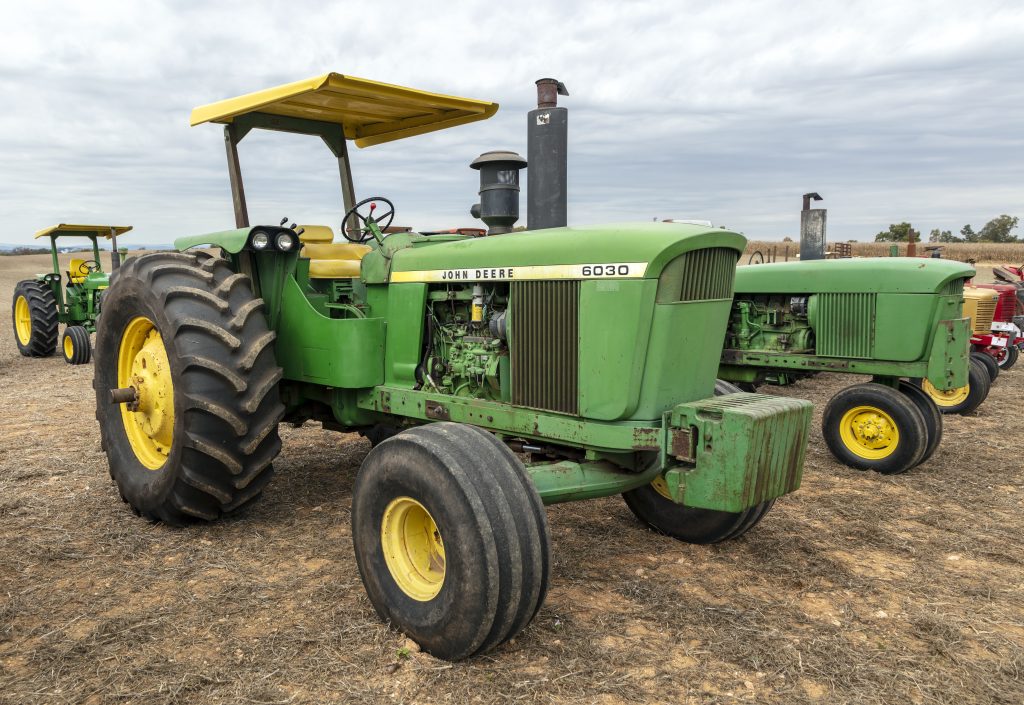
Rare From the Beginning
The 6030’s reputation has only grown because relatively few were built. John Deere produced just 4,028 examples during its six-year production run, making it far less common than many of the company’s other classic models.
One of the most interesting chapters in the tractor’s history involves a naturally aspirated version that many enthusiasts have never seen. Deere briefly offered the model without a turbocharger, but buyers overwhelmingly chose the turbocharged tractor instead. Production of the naturally aspirated version ended quickly, and only 45 were ever built, making them among the rarest production tractors John Deere has ever sold.
Limited production has helped make every surviving 6030 more desirable today. Nicely restored examples regularly draw crowds at tractor shows, and collectors continue searching for original, well-preserved machines.
A Following Unlike Almost Any Other
Many classic John Deere tractors have loyal fans, but the 6030 inspires a different level of enthusiasm. Owners have created dedicated online communities, restoration groups, and serial number registries devoted almost entirely to this single model. During the Archives video, Buyans joked that “the 6030 guys have their own page, their own complete group,” and longtime collectors know exactly what he meant.
Part of that enthusiasm comes from the tractor’s unique personality. It was the biggest conventional tractor Deere offered, it was produced in relatively small numbers, and it represented the end of an important chapter in the company’s history. Those qualities have transformed the 6030 from a hardworking farm tractor into one of Deere’s most recognizable collector machines.
The Last One Ever Built
Among all the surviving 6030s, one stands apart from the rest. The final tractor built never went to a dealership and never found its way onto a farm. Instead, John Deere kept it as part of its historical collection, preserving it with only 29.4 hours of use.
For most collectors, owning that tractor is an impossible dream. Even so, seeing it preserved in nearly new condition offers a rare glimpse into what farmers would have seen when a brand-new 6030 arrived in 1977. It is more than just the last one off the assembly line. It is a snapshot of an era when horsepower was rapidly increasing, farms were changing, and John Deere was preparing for the next generation of agricultural equipment.
The 6030 earned its legendary reputation because it arrived at exactly the right moment in farming history. It delivered unmatched power for its time, bridged two generations of John Deere design, and left behind a legacy that continues to captivate collectors decades later. The last one ever built may never leave the John Deere Archives, but it reminds us why this remarkable tractor remains one of the most celebrated machines the company has ever produced.

Leave a Reply