
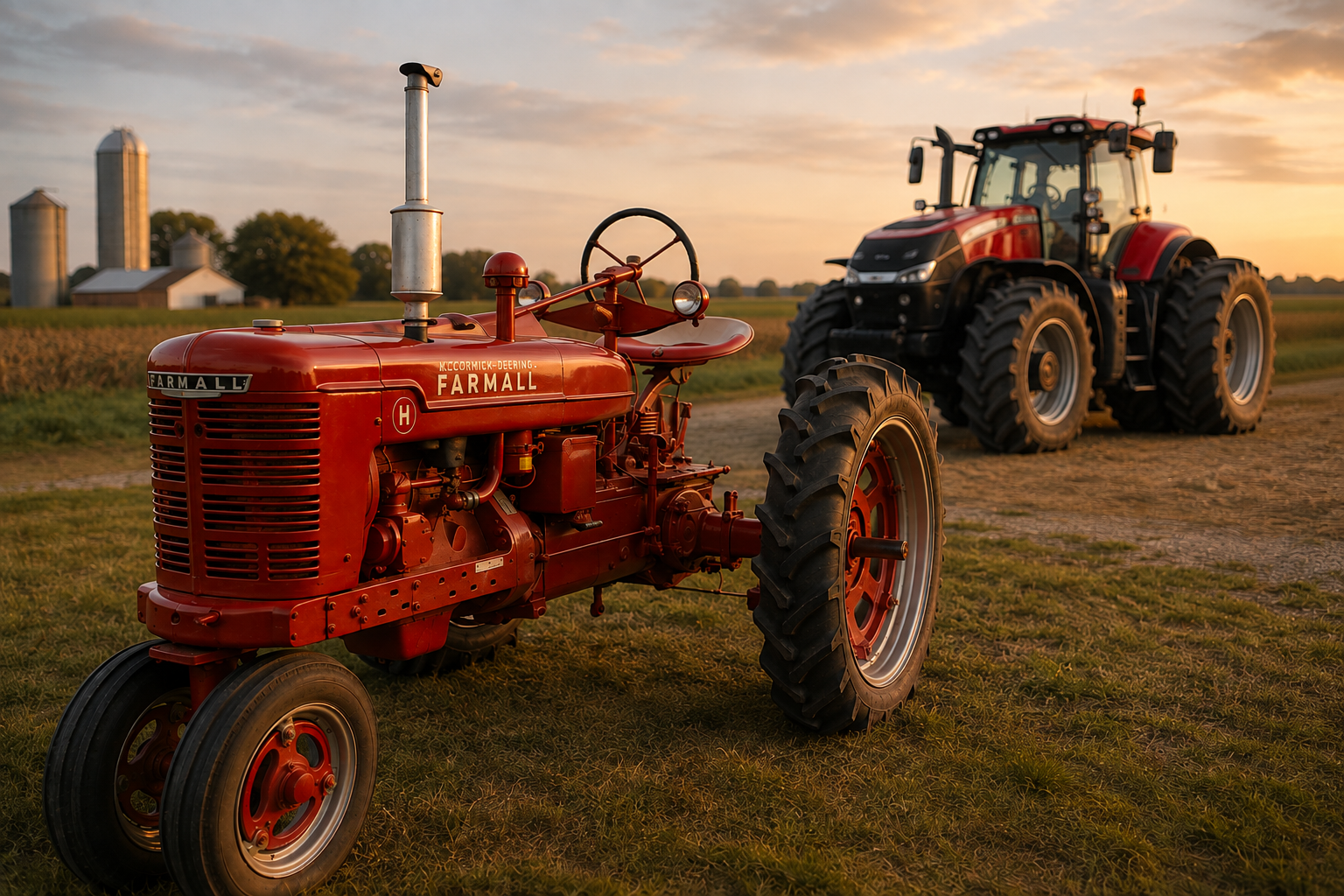
Every year, farm equipment grows more sophisticated. Today’s tractors steer themselves with RTK guidance, collect terabytes of performance data, communicate wirelessly with dealerships, and increasingly rely on artificial intelligence to help operators make better decisions in the field.
At the same time, thousands of people across North America are spending evenings in machine sheds rebuilding tractors that left the factory more than half a century ago. They search for original parts, track down factory paint colors, rebuild worn engines, and proudly drive their restored machines in local parades and tractor shows. To an outsider, it might seem like an unusual hobby. To many farm families, it is a way of preserving the story of American agriculture.
That idea is at the heart of Antique Tractor Preservation Day, observed each year on August 22. Established by antique tractor advocate Michael Hinton, the annual observance encourages collectors, families, museums, and communities to preserve the machines that transformed agriculture. Over the years, the effort has gained recognition through state proclamations and agricultural organizations. While the day may not receive the attention of major farm shows or equipment launches, its mission resonates with anyone who appreciates the role tractors have played in feeding the world.
More Than Old Iron
It is easy to look at an antique tractor and see only outdated technology: a narrow front axle, steel gauges, manual steering, and an engine producing a fraction of the horsepower found in modern equipment. Collectors see something very different. They see the Farmall that replaced horses on a family farm, the John Deere that allowed another generation to expand acreage, or the Case, Oliver, Allis-Chalmers, Minneapolis-Moline, or International Harvester that carried parents and grandparents through long harvest days.
Every tractor has a story attached to it. Sometimes that story spans decades on a single farm. Other times it marks a turning point in agricultural engineering, introducing innovations that would eventually become industry standards. When those machines disappear, those stories often disappear with them.
Preserving Agricultural History
Agriculture has always evolved, but today’s pace of change is remarkable. Autonomous tractors are beginning to work fields without an operator. Precision application systems can vary fertilizer rates by the square foot. Cameras and sensors monitor crops in real time, while cloud-connected software allows dealers to diagnose equipment remotely before a technician ever arrives on the farm.
That rapid progress makes preserving yesterday’s equipment even more valuable. Antique tractors provide a tangible record of how farmers solved problems with the tools available at the time. Looking at a restored machine reveals not only how equipment was built, but also how farms operated, how rural communities developed, and how engineering advanced from simple mechanical systems to today’s highly computerized machines. They remind us that every breakthrough, whether it was the three-point hitch, live PTO, diesel power, powershift transmissions, or GPS guidance, built upon the innovations that came before it.
A Hobby That Continues to Grow
Far from fading away, antique tractor collecting remains remarkably active. Across the country, local tractor clubs organize shows, plow days, and community events that bring generations together. Online forums and social media groups connect enthusiasts who trade restoration advice, technical manuals, and hard-to-find replacement parts, while specialized suppliers continue manufacturing components for tractors that have been out of production for decades.
YouTube has also introduced a younger audience to restoration projects, with creators documenting everything from engine rebuilds to full frame-off restorations. Many viewers who never grew up on a farm have discovered an appreciation for the craftsmanship and mechanical simplicity of older equipment. Not every restored tractor becomes a museum piece. Many continue to rake hay, pull wagons, power antique threshing demonstrations, or carry children and grandchildren through a local parade. Others remain ready to start whenever the family wants to hear the familiar sound of an engine that has been part of their history for generations.
Why Preservation Matters
People who are interested in restoration are not resisting progress. Modern equipment has dramatically improved productivity, efficiency, safety, and sustainability, allowing farmers to accomplish more work with fewer people than at any point in history. Remembering where that progress began is just as important.
The tractors sitting in barns, museums, and restoration shops today represent the machines that mechanized American agriculture, increased food production, and helped rural families build their livelihoods. Without them, today’s autonomous tractors and precision farming systems would not exist.
That is what makes Antique Tractor Preservation Day more than a celebration of vintage machinery. It is a reminder that preserving agricultural heritage means preserving the ingenuity, determination, and stories of the people who operated these machines long before touchscreens, satellites, and software became part of everyday farming. Sometimes the most important piece of farm equipment is not the newest tractor in the field. It is the one in the shed that reminds us how far agriculture has come.


Leave a Reply