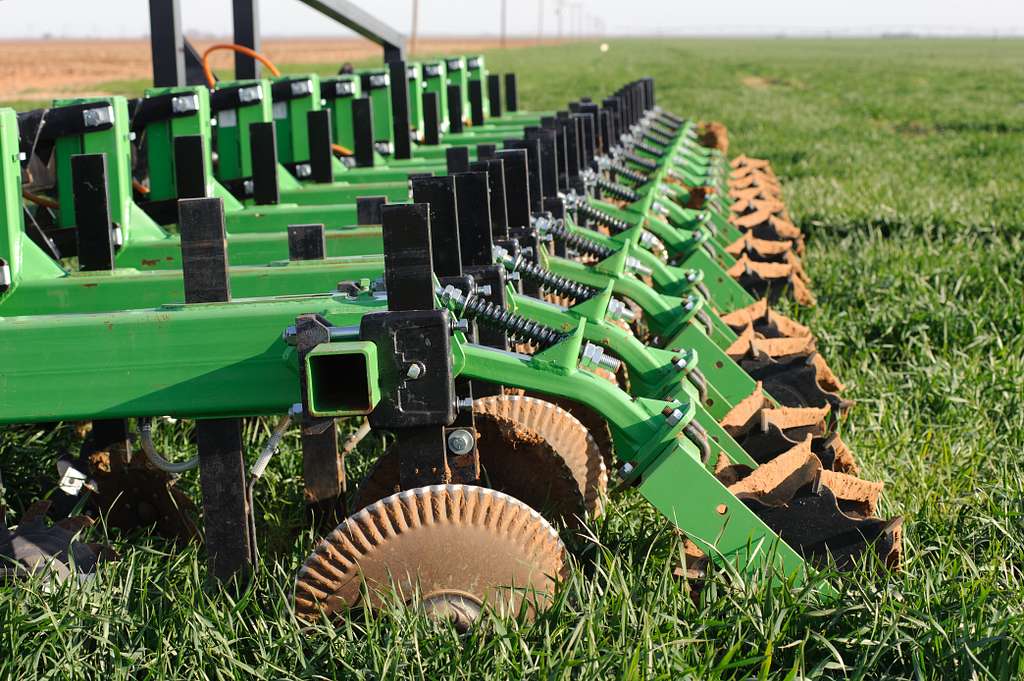
With farm margins tight and diesel over $6 a gallon in much of the Corn Belt, this fall may be a good time to ask a question that can easily get lost in routine: What is each tillage pass actually accomplishing?
The answer isn’t necessarily to park the tillage equipment and go completely no-till. Some fields need tillage, and compaction, residue, drainage, fertilizer management and crop choice all matter. But an expensive pass made simply because “that’s what we always do” deserves a harder look.
A Tillage Pass Costs More Than Diesel
Iowa State University recently calculated what could happen if a farmer eliminated a fall subsoiler or V-ripper pass and a spring field cultivator pass. Using $5.50 diesel, the university estimated a variable machinery cost reduction of $24.52 per acre. Eliminating only the fall pass while retaining spring tillage produced an estimated $16.30-per-acre reduction.
Across 1,000 acres, that’s roughly $16,300 to $24,520. Across 2,500 acres, it becomes about $40,750 to $61,300.
Not all of that comes out of the fuel tank. Machinery wear, repairs, labor, depreciation and ownership costs are part of the equation, which is why expensive diesel is really just the catalyst for a bigger question: Is the entire operation producing enough value to justify its cost?
The Iowa Soybean Association recently used a chisel plow as an example. Its analysis estimated fuel consumption at about 0.7 gallon per acre. Moving from $3 to $6 diesel raises the fuel expense by only about $2.10 per acre, while the total estimated cost of the operation was about $19.15 per acre.
So reducing tillage isn’t simply about saving a few dollars worth of diesel. It’s about deciding whether a $15, $20 or $25 operation is actually earning its keep.
Soybeans May Be the Easiest Place to Experiment
For farmers interested in reducing tillage without completely changing their operation, soybeans following corn may be one of the better places to start.
Iowa State long-term research has found soybean yields to be relatively insensitive to tillage system. One nine-year study comparing no-till, strip-till, chisel plowing, deep ripping and moldboard plowing found soybean yields were not affected by tillage system. University of Minnesota research tells a similar story, finding no effect on soybean yield following corn 76% of the time.
That doesn’t mean planting directly into standing corn residue requires no preparation. Residue needs to be distributed properly behind the combine, while the planter still has to maintain seed depth, down pressure and good furrow closure.
But it raises a legitimate question for someone currently ripping corn stalks in the fall and working them again in the spring before planting soybeans: What return are those passes providing?
Iowa State has estimated that moving to no-till soybeans can save roughly $15 to $25 per acre in reduced tillage costs. Across a large number of acres, that’s enough money to make experimenting on a few fields worth considering.
Corn Makes It More Complicated
Corn is where a blanket recommendation to “just go no-till” starts falling apart.
University of Minnesota research found tillage type didn’t affect corn yield in 44% of the site-years studied. When differences did appear, strip-till frequently performed well. Iowa State has also noted that no-till corn can struggle more in poorly drained, cold soils, while well-drained and adequately tiled fields can be better candidates for reduced tillage.
That leaves plenty of room between intensive conventional tillage and doing nothing. A farmer might eliminate a fall pass but retain spring tillage, use strip-till ahead of corn, or no-till soybeans while continuing reduced tillage on corn acres.
The goal doesn’t have to be becoming a “no-till farm.” It can simply be making fewer trips across the field.
Compaction Still Has to Be Addressed
Wet harvest conditions can leave ruts and compaction that shouldn’t be ignored just because tillage is expensive. But that doesn’t necessarily mean working the entire field.
The Iowa Soybean Association recommends first determining where the problem actually exists. Damaged headlands, grain-cart paths or other high-traffic areas may need attention while the majority of the field does not. Severe compaction may justify an in-line ripper or another targeted treatment rather than tilling every acre.
Timing matters, too. Deep tillage in saturated soil can smear and damage soil structure rather than relieve compaction. Iowa State cautions that deep tillage in waterlogged soils may have little positive effect and can actually make the problem worse.
In other words, having ruts doesn’t automatically mean it’s time to pull out the biggest ripper in the shed.
No-Till Is a System, Not Just One Less Implement
There’s a reason successful no-till operations tend to talk about a system rather than simply eliminating tillage. Residue management, planter setup, nutrient placement, drainage, weed control and crop rotation all become part of the equation.
A recent No-Till Farmer profile of North Carolina farmer Zeb Winslow illustrates that approach. Winslow has paired no-till and cover crops with extensive on-farm testing and targeted nutrient applications in an effort to reduce fertilizer costs while maintaining crop performance.
A farmer considering one fewer tillage pass doesn’t need to completely reinvent the operation. But eliminating a pass without considering what it was accomplishing can simply trade one problem for another.
Maybe the Answer Is Minimum Till
The conversation around tillage can become unnecessarily binary: conventional tillage or no-till. For many farms, the economic answer may be somewhere between the two.
Maybe corn still gets strip-till while soybeans go directly into corn residue. Maybe the ripper stays parked except for fields with documented compaction. Maybe a two-pass system becomes one pass, or only headlands and grain-cart traffic areas get worked.
Tillage decisions will always be local. Soil type, drainage, crop rotation, weather, residue, compaction, equipment and years of experience all matter. If a pass improves emergence, corrects a real compaction problem, incorporates manure or fertilizer, manages troublesome residue or consistently protects yield, its cost may be money well spent.
But if the answer to “Why are we making this pass?” is simply “because we always have,” this may be a good year to run the numbers again.
You don’t have to become a no-till farmer. You might just find that the cheapest piece of tillage equipment on the farm this fall is the one that stays in the shed.


Leave a Reply