
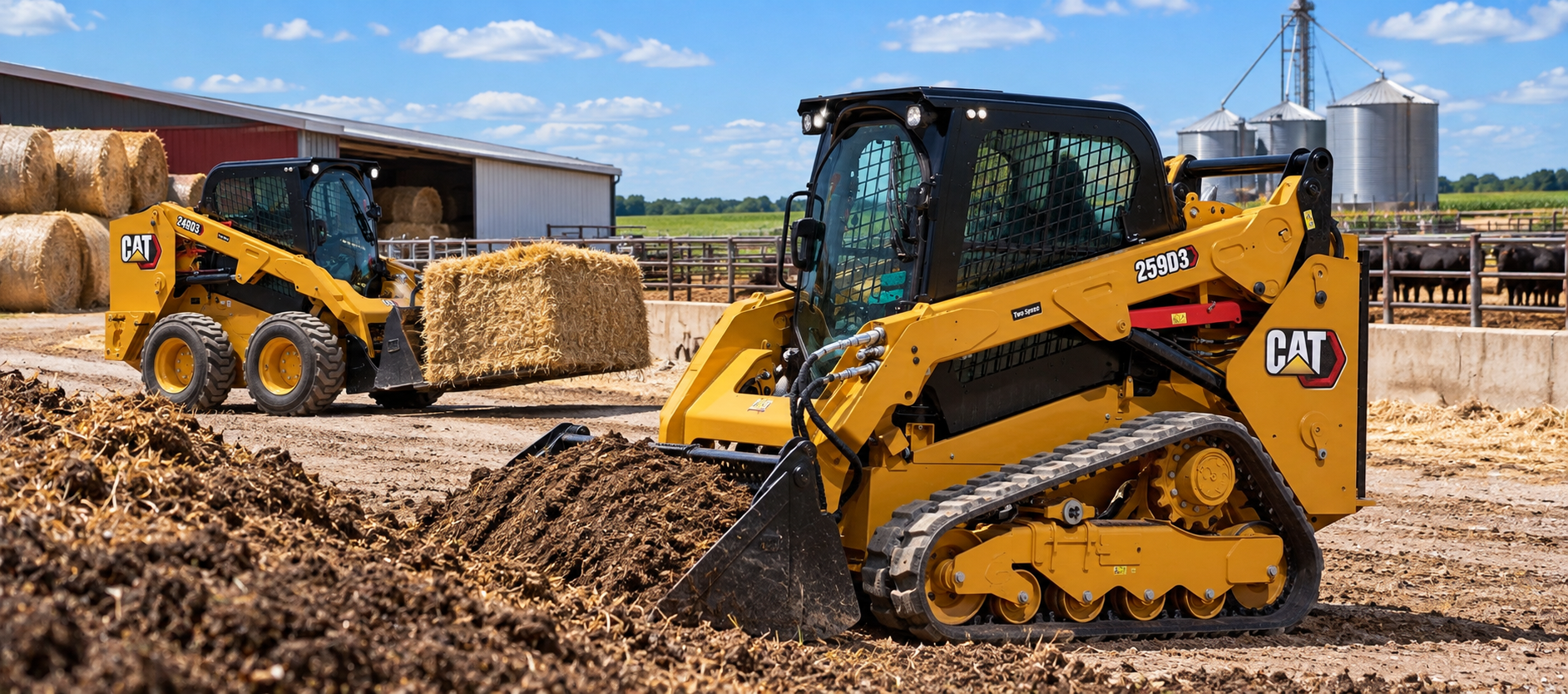
There was a time when the machinery lineup on a typical farm was relatively predictable: tractors, combines, planters, tillage equipment and maybe a skid steer around the yard. That line is getting considerably blurrier.
Compact track loaders, mini excavators and compact wheel loaders may have been designed largely with construction in mind, but they are increasingly finding permanent homes on farms. A recent Farm Progress roundup of new equipment from JCB, Bobcat, Kubota and CL Manufacturing shows manufacturers responding with machines that are easier to transport, more versatile and capable of handling an expanding range of attachments.
One Machine, A Lot of Jobs
The appeal isn’t difficult to understand. A tractor is still hard to replace for pulling implements and sustained fieldwork, but around the farmstead, a compact track loader can move dirt, handle pallets, clean pens, push snow, carry bales, clear brush and operate dozens of attachments.
Mini excavators bring another set of capabilities, including drainage work, water lines, fence installation, stump removal and general digging. Compact wheel loaders can make sense for operations spending significant time handling feed, manure or bulk materials.
Equipment traditionally labeled “construction” can quickly accumulate a lot of hours on a farm.
More Than Horsepower
The new JCB 250T compact track loader is a good example of how manufacturers are competing on more than power and lift capacity. Its 74-horsepower engine is paired with an operating weight under 10,000 pounds, helping make the machine easier to transport. JCB also offers high-flow hydraulics and its distinctive side-door entry, allowing operators to enter without climbing over a bucket, bale spear or other attachment.
Bobcat is adding more technology to its loaders, including selectable drive modes, improved displays and available camera- and radar-based object detection. Some models can automatically stop when an obstacle is detected behind the machine. Those features have obvious construction applications, but they can be just as useful around farm buildings, trucks, livestock and other people.
Kubota is pushing toward more power with the 112-horsepower SVL110-3, but its attachment technology may be just as significant. Land Pride’s Intell Attach system can automatically configure hydraulic flow when a compatible attachment is connected, reducing the need for an operator to manually set up the machine every time a tool is changed.
That matters when a compact loader might use pallet forks in the morning, a grapple after lunch and a brush cutter later in the day.
Attachments Change the Equation
Attachments may be one of the biggest reasons compact loaders have become so useful on farms. CL Manufacturing, for example, has introduced hydraulic-shift pallet forks that can be repositioned from inside the cab, along with an adapter allowing skid steers to use Euro/Global-style tractor attachments.
Cross-compatibility is especially valuable in agriculture because many farms already own buckets, grapples, bale spears and other loader tools. The easier those tools can move between machines, the easier it becomes to justify adding a compact loader rather than another tractor.
It also changes how the purchase is evaluated. A farmer isn’t necessarily buying a machine for one particular job. They’re buying a mobile power unit that could potentially perform dozens of jobs depending on what is attached to it.
The Tractor Isn’t Going Anywhere
Compact construction equipment isn’t replacing the farm tractor. Tractors remain much better suited to PTO work, drawbar loads, three-point implements and most field operations.
But there is a growing middle ground where the choice isn’t nearly as obvious. For digging a water line, cleaning a lot, moving pallets, handling brush or working in confined spaces, putting hours on a large agricultural tractor may not make sense when a smaller purpose-built machine can do the job faster and maneuver more easily.
Compact track loaders have made the crossover particularly easy. Compared with traditional wheeled skid steers, tracks provide better flotation and traction in soft conditions, extending their usefulness well beyond pavement and prepared construction sites.
Farms Are Becoming Mixed Fleets
Farm machinery is increasingly difficult to divide neatly into agricultural and construction categories. Manufacturers appear comfortable with that overlap, offering more power, better transportability, smarter controls and increasingly capable attachment systems.
For farmers, that means the next useful piece of equipment may not look much like traditional farm machinery.

Leave a Reply