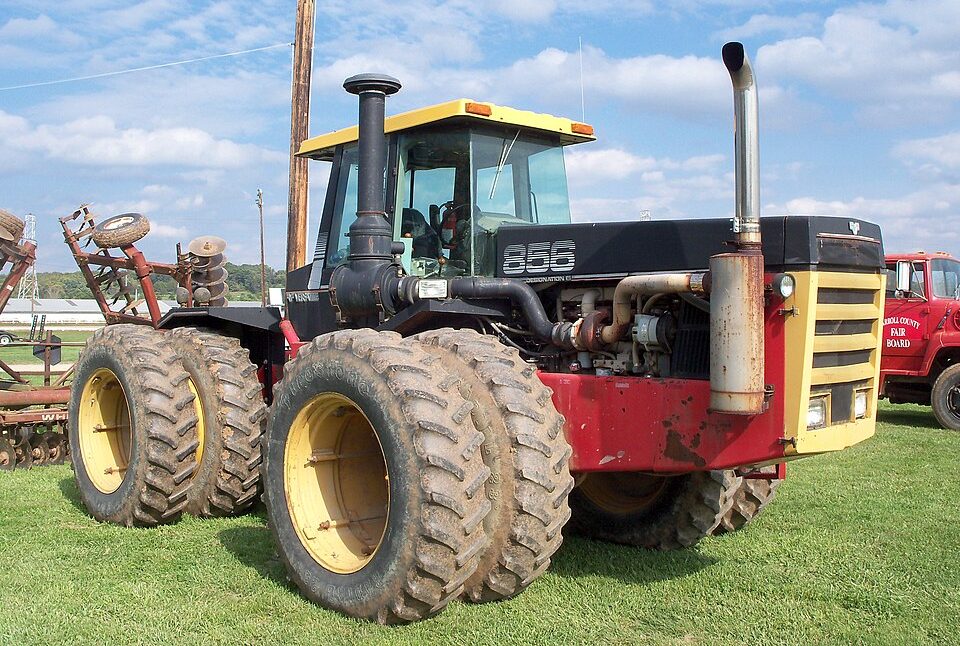
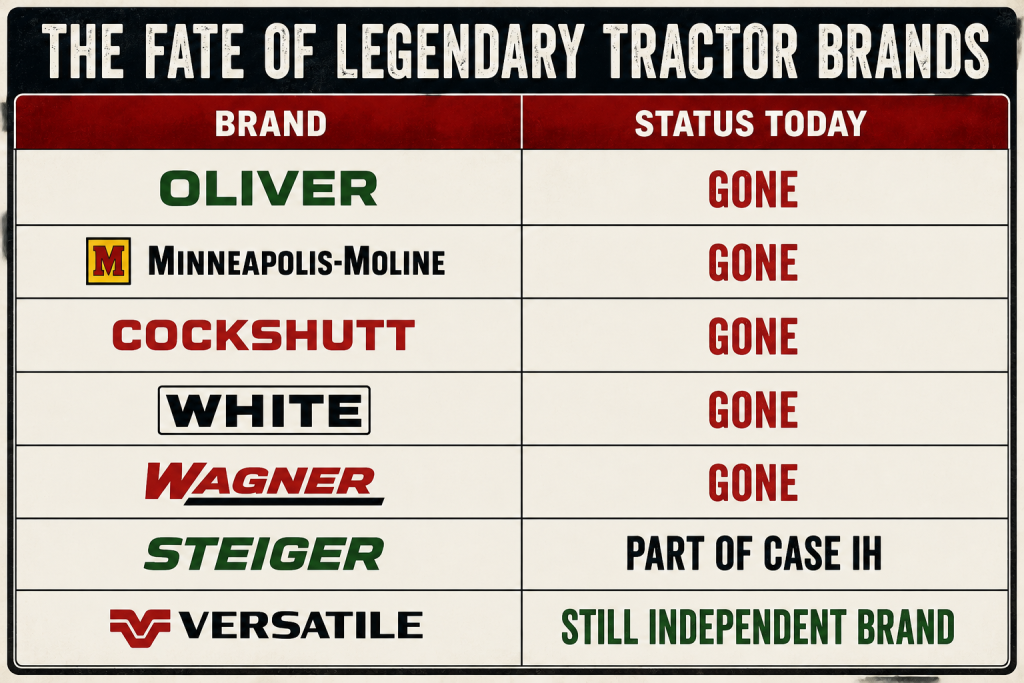
Walk through a farm machinery show or auction today and you’ll see familiar names like John Deere, Case IH, New Holland, and AGCO. A few decades ago, the list was much longer. Farmers could choose from brands such as Oliver, Minneapolis-Moline, Cockshutt, White, Allis-Chalmers, Wagner, and Steiger, each with its own loyal following and identity.
Most of those names are now gone, absorbed into larger corporations, discontinued, or reduced to a historical footnote. Yet one company that emerged during the same era remains in business under its original name: Versatile.
The Canadian manufacturer has changed owners several times and faced many of the same economic pressures that claimed its competitors. Through it all, the Versatile badge survived. In an industry defined by consolidation, that raises an interesting question: why?
Built for the Prairies
Versatile was founded in Winnipeg, Manitoba, in 1966, serving a region where large acreages demanded powerful, practical machinery. Rather than building every type of equipment imaginable, the company focused on four-wheel-drive tractors designed for broad-acre farming.
That specialization proved valuable. While many manufacturers spread resources across numerous product lines, Versatile concentrated on a single mission: delivering reliable horsepower for large-scale operations. The company’s timing was also ideal. As farm sizes expanded during the 1970s, demand for larger tractors grew rapidly.
Models like the 700, 800, and 900 series helped establish Versatile’s reputation for durability, simplicity, and value. Farmers could often buy comparable horsepower for less money than competing brands, making the tractors especially attractive to cost-conscious operators.
Surviving the Consolidation Era
The agricultural downturn of the 1980s reshaped the equipment industry. High interest rates, falling commodity prices, and financial pressure throughout farm country forced manufacturers into mergers, acquisitions, and restructurings.
Many famous brands disappeared during this period. Allis-Chalmers exited the farm equipment business. White eventually vanished through consolidation. Oliver and Minneapolis-Moline were folded into larger organizations. International Harvester’s agricultural division became part of Case IH.
Versatile faced the same challenges, but the brand managed to survive. While ownership changed repeatedly, the company itself remained relevant.
Why Ownership Changes Didn’t Kill the Brand
One of the most remarkable parts of Versatile’s story is the number of companies that have owned it. The brand moved from Ford to New Holland, later through Fiat’s agricultural operations, then to Buhler Industries, and ultimately under the ownership structure that exists today.
Many brands disappear after a single acquisition because they overlap with existing products or lose their distinct identity. Versatile avoided that fate because it filled a clear role wherever it landed. It was known for high-horsepower tractors, particularly articulated four-wheel drives, and there was little confusion about what the brand represented.
That focus made it easier for new owners to preserve rather than replace. Farmers associated the name with straightforward, powerful tractors that offered strong value per horsepower. The company never needed to convince customers what it stood for. Dealers understood where the tractors fit, buyers knew what to expect, and the brand maintained a consistent identity even as technology evolved.
That consistency became one of its greatest strengths.
A Loyal Following
Talk to longtime Versatile owners and similar themes emerge. The tractors are often praised for being durable, easy to maintain, and straightforward to operate. While competitors frequently emphasized premium features and increasingly complex technology, Versatile developed a reputation for practical engineering and dependable performance.
That reputation helped create a loyal customer base that remained with the brand through multiple ownership changes and economic cycles. In many farming regions, a positive experience with one Versatile often led to another.
Why Versatile Is Still Here
Today’s equipment market is dominated by a handful of global manufacturers, and competing at scale requires enormous investments in engineering, technology, and manufacturing. Yet Versatile continues to occupy a place in the industry because it never lost sight of what made it successful.
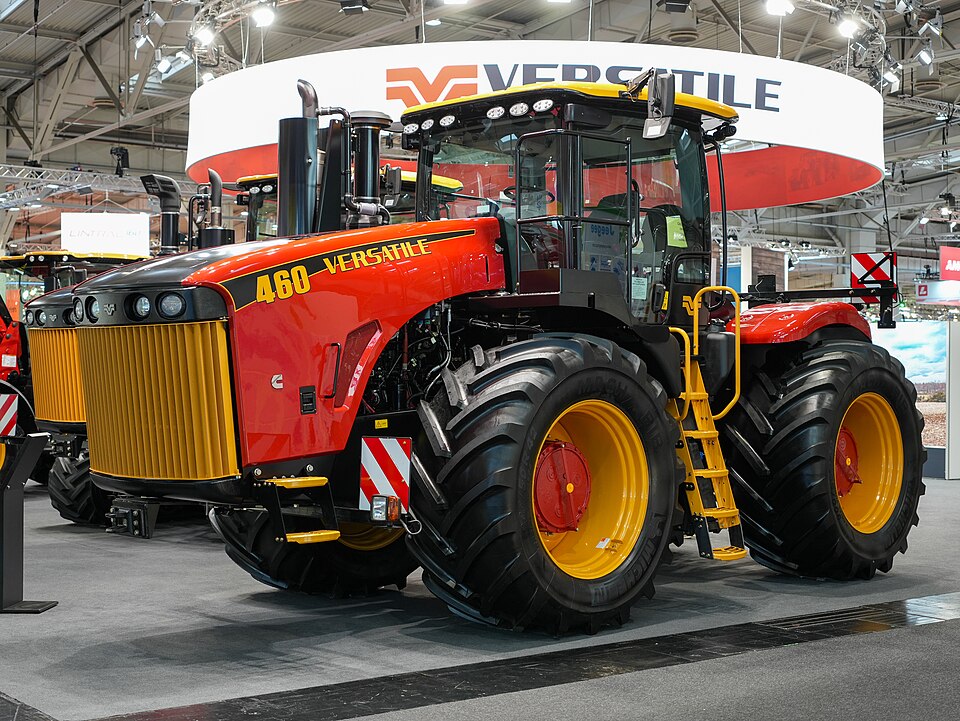
The company found a niche, served it well, and maintained a clear identity while many competitors disappeared through consolidation. Brands like Oliver, Minneapolis-Moline, White, and Allis-Chalmers left lasting legacies, but their names largely became part of history.
Versatile took a different path. By staying focused on what its customers wanted and resisting the urge to become everything to everyone, it managed to survive an era that claimed many of the most recognizable names in farm equipment. In an industry where longevity is increasingly rare, that may be the company’s greatest accomplishment.

Leave a Reply