
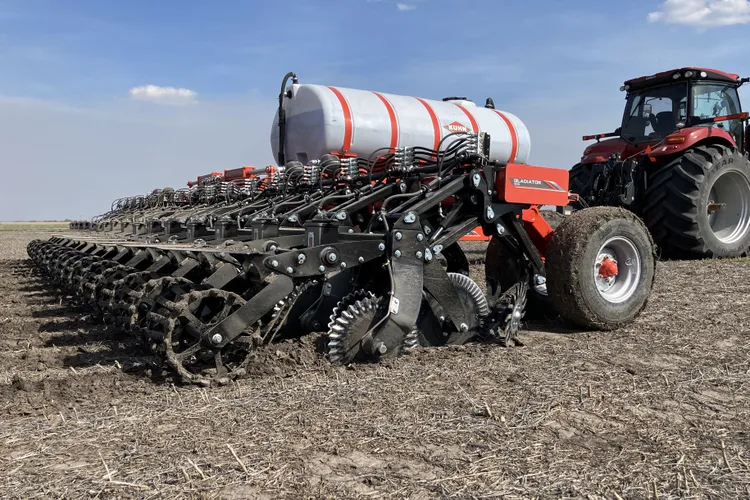
Kuhn Krause is expanding its Gladiator strip-till lineup with the introduction of the new VT-PRO row unit, giving growers another option for creating strips while adapting to different field conditions, nutrient management strategies, and planting windows.
The new VT-PRO joins the company’s existing ST-PRO II row unit platform and is designed specifically for producers looking to run shallower strip-till operations, particularly in spring conditions. While the ST-PRO II remains focused on deeper strip creation and nutrient placement, the VT-PRO utilizes a coulter-based design that operates at depths of 2 to 5 inches.
The addition reflects a broader trend within strip-till equipment as manufacturers increasingly recognize that growers are not all approaching strip-till the same way. Soil types, fertilizer programs, planting schedules, and weather patterns vary widely across North America, and equipment makers are responding with more specialized solutions.
A New Option for Gladiator Owners
According to KUHN, the VT-PRO is designed to create a 10-inch-wide strip with a raised berm while utilizing a coulter-style row unit rather than the shank-based design found on the ST-PRO II. The system includes hydraulic downforce, row cleaners, dual liquid fertilizer tubes, and finishing reel options intended to create a consistent seedbed ahead of planting.
One of the primary distinctions is operating depth. The VT-PRO is intended to run between 2 and 5 inches deep, while the ST-PRO II typically operates between 6 and 12 inches and is often used for deeper fertilizer placement and fall strip-till applications.
KUHN says the VT-PRO places liquid fertilizer on both sides of the strip near the seed zone, allowing nutrients to be positioned closer to the developing crop. Meanwhile, the company’s existing ST-PRO II system continues to focus on deeper nutrient placement through its Drop Zone fertilizer delivery system.
Why Spring Strip-Till Continues to Gain Attention
The introduction of the VT-PRO highlights a growing divide in how farmers are using strip-till systems.
For many years, strip-till was primarily associated with fall operations. Growers would build strips after harvest, apply nutrients, and allow the berms to weather through the winter before returning to plant in the spring. That approach remains common, particularly in heavier soils where deeper nutrient placement can provide long-term benefits.
However, spring strip-till has become increasingly attractive in certain regions and soil conditions. Shallow coulter-style systems can create a planting zone without disturbing as much soil, while allowing fertilizer to be applied closer to planting. In wetter conditions, growers may also prefer a shallower pass that avoids bringing colder soil to the surface.
KUHN specifically notes that the VT-PRO is intended for spring operation in wetter conditions, while the ST-PRO II remains better suited for deeper fall applications and heavier soils.
More Than Just Tillage
Another notable aspect of the announcement is how much modern strip-till equipment has evolved beyond simply moving soil.
Many of today’s strip-till systems are designed around fertilizer placement, nutrient efficiency, residue management, and seedbed preparation all in a single pass. The Gladiator platform itself has long emphasized nutrient management alongside tillage, offering multiple fertilizer delivery options and placement strategies depending on crop and soil requirements.
That shift mirrors broader trends throughout precision agriculture. As fertilizer costs remain a major consideration for growers, manufacturers continue investing in equipment that can place nutrients more accurately and reduce unnecessary field passes.
The result is equipment that increasingly serves as both a tillage tool and a nutrient management platform.
What It Means for Growers
The VT-PRO does not replace KUHN’s existing strip-till offerings. Instead, it expands the number of options available to producers already using or considering the Gladiator system.
For growers operating in heavier soils and relying on deep fertilizer placement, the ST-PRO II will likely remain the preferred choice. For those focused on spring strip-till, shallower operation, or fertilizer placement closer to planting, the new VT-PRO offers an alternative approach.
More importantly, the announcement signals where strip-till equipment development appears to be heading. Rather than offering a single solution for every operation, manufacturers are increasingly building tools tailored to specific agronomic goals and field conditions.
As strip-till adoption continues to expand, growers can likely expect even more specialization in the years ahead.


Leave a Reply