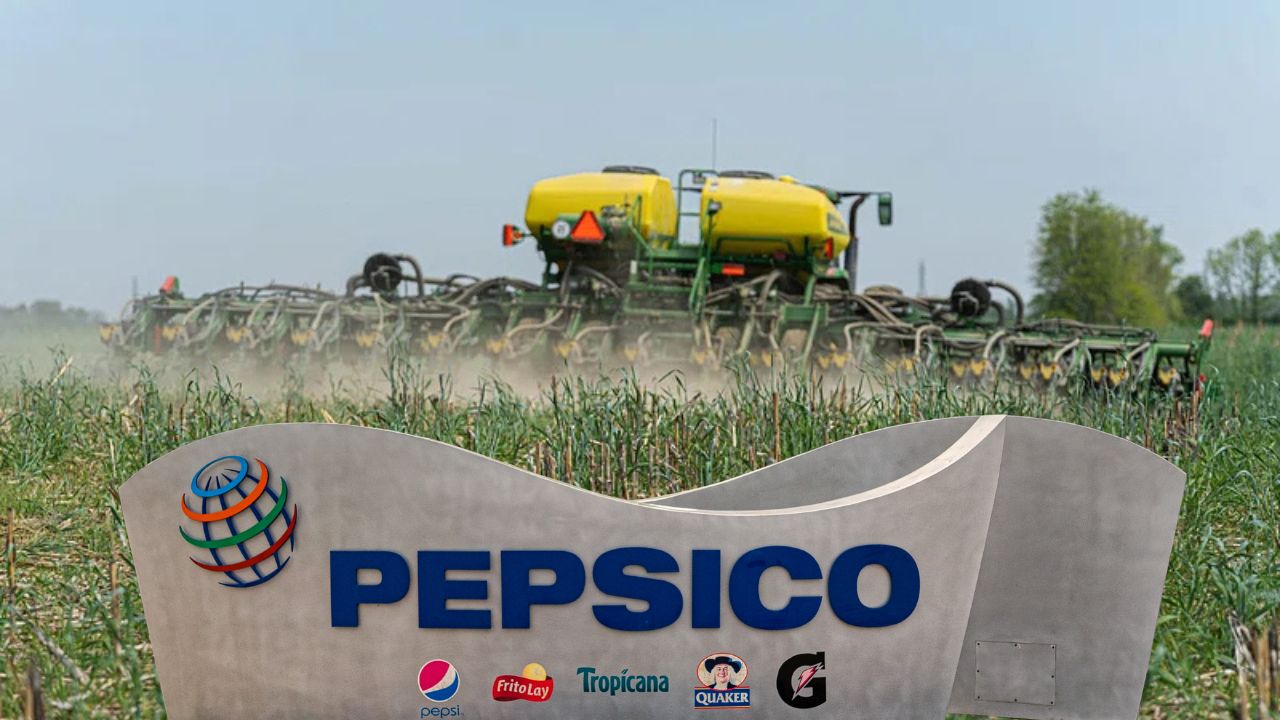
Earlier this month, PepsiCo and Compeer Financial announced a financing program designed to help farmers adopt strip-till practices. Under the pilot program, PepsiCo will help offset a portion of lease payments on strip-till equipment, reducing costs for participating growers. On the surface, it looks like a relatively small sustainability initiative. In reality, it may be a glimpse into a much larger shift taking place across agriculture.
For generations, farm equipment purchases were driven by a familiar set of considerations. Farmers invested in machinery that could improve productivity, reduce labor requirements, lower fuel consumption, or help them make better use of increasingly narrow planting and harvest windows. Dealer support mattered because downtime was costly. Reliability mattered because weather rarely waits for repairs. Economics mattered because every machine eventually has to justify its place on the operation.
Those factors remain as important as ever, but a new influence is beginning to shape equipment decisions across parts of agriculture. Increasingly, some of that influence is coming from the companies that buy the crops.
Over the past several years, major food manufacturers and retailers have announced ambitious sustainability goals tied to their agricultural supply chains. Not just PepsiCo, but also General Mills, Nestlé, McDonald’s, Walmart, and others have committed to reducing emissions, improving soil health, conserving water, and expanding the use of regenerative farming practices. To achieve those goals, however, they need more than marketing campaigns and annual sustainability reports. They need changes to happen on farms.
That reality is creating an interesting question for agriculture. As food companies encourage farmers to adopt new production practices, are they helping drive meaningful improvements in efficiency and soil health, or are they simply shifting the burden of meeting corporate sustainability targets onto producers? Either way, the trend is beginning to influence equipment demand in ways that could shape the machinery market for years to come.
When Sustainability Becomes a Machinery Decision
Many of the practices promoted through sustainability initiatives sound more agronomic than mechanical. Reduced tillage, strip-till, cover crops, precision nutrient management, and diverse crop rotations are often discussed in terms of soil health and environmental outcomes. In practice, however, many of these changes require machinery investments before they can be successfully implemented.
A grower interested in moving toward strip-till may need to purchase a strip-till bar. Cover crop adoption often requires a drill, air seeder, or modifications to existing planting equipment. Precision nutrient management may require upgraded application equipment, guidance systems, section control technology, or variable-rate capabilities. Even data collection and reporting requirements associated with some sustainability programs can increase demand for software, sensors, and precision agriculture tools.
As with the recent PepsiCo and Compeer Financial, program food companies are increasingly using financing assistance, incentive payments, and technical support to encourage the adoption of specific farming practices. In many cases, those practices directly influence the machinery farmers purchase.
Why Companies Are Looking Upstream
From the perspective of large food companies, the strategy is fairly logical. Much of the environmental impact associated with food production occurs before a product ever reaches a processing facility or grocery store shelf. Companies that have publicly committed to reducing emissions or improving sustainability metrics eventually find themselves looking upstream toward the farm.
Investors, consumers, regulators, and advocacy groups are all paying closer attention to how food is produced. As a result, companies are searching for measurable ways to demonstrate progress toward environmental goals. Encouraging changes in tillage practices, nutrient management, and soil conservation has become one of the most direct paths available.
The challenge is that these changes often require time, money, and risk on the part of farmers. New equipment can be expensive. New management practices can require a learning curve. Yield impacts during transition periods are not always predictable. To increase participation, many companies have concluded that they need to offer incentives rather than simply ask producers to change.
The Potential Benefits for Farmers
Supporters of these programs argue that they can help farmers adopt practices that may already make economic sense. Reduced tillage can lower fuel consumption and reduce wear on equipment. Precision nutrient placement can improve efficiency and potentially reduce input costs. Improved soil structure can help fields retain moisture and withstand weather extremes more effectively.
From that perspective, sustainability incentives may simply help farmers overcome the upfront costs associated with transitioning to new systems. A financing program, cost-sharing arrangement, or incentive payment can reduce the financial risk of experimenting with different approaches. If the practice ultimately proves beneficial, both the farmer and the company sponsoring the program may benefit.
There is also a practical reality that many producers are already evaluating these practices on their own merits. The promise of fewer field passes, reduced labor requirements, and improved efficiency can be compelling regardless of whether a sustainability payment is attached.
Why Some Farmers Remain Skeptical
At the same time, many producers approach these initiatives with caution. Agriculture has a long history of trends that generated significant excitement before proving less effective than advertised. Farmers understand that practices that work well in one region may not perform the same way somewhere else. Soil types, weather patterns, crop rotations, and management styles vary widely across operations.
There is also the question of who benefits most. Critics argue that many sustainability programs are ultimately designed to help corporations meet public commitments made to investors and consumers. From that perspective, farmers may be asked to assume the costs, risks, and management challenges associated with changing practices while companies receive much of the public credit.
The long-term durability of these programs is another concern. Equipment purchases often remain on a farm for years or even decades. Incentive programs, however, can change quickly as budgets, priorities, and market conditions shift. Farmers considering major investments naturally wonder whether today’s sustainability payments will still exist five years from now.
None of those concerns automatically invalidate the practices being promoted. They do, however, help explain why many producers evaluate these opportunities through a practical business lens rather than viewing them as environmental initiatives alone.
A New Driver of Equipment Demand
Whether these programs ultimately succeed or fail, they are creating a new dynamic within the machinery industry. Historically, equipment demand has been driven primarily by factors such as labor shortages, productivity gains, fuel efficiency, and agronomic needs. Those drivers remain important, but sustainability initiatives are beginning to influence demand as well.
If food companies continue encouraging practices such as strip-till, reduced tillage, cover crops, and precision nutrient management, demand for the equipment that enables those practices could continue to grow. Dealers may increasingly find themselves discussing incentive eligibility alongside horsepower, capacity, and operating costs. Manufacturers may devote more engineering resources toward products that help farmers meet the requirements of emerging programs.
That does not mean corporate sustainability initiatives will determine the future of farm equipment. Farmers will continue making machinery decisions based on economics first. What it does mean is that a new voice has entered the conversation. For the first time, some of the most important influences on future equipment demand may come not from machinery manufacturers or government programs, but from the companies purchasing the crops themselves.
Whether that ultimately creates meaningful change on the farm or primarily helps corporations achieve sustainability goals remains an open question. What is becoming increasingly clear, however, is that the answer may shape the next generation of agricultural equipment just as much as any new tractor, planter, or combine technology.


Leave a Reply