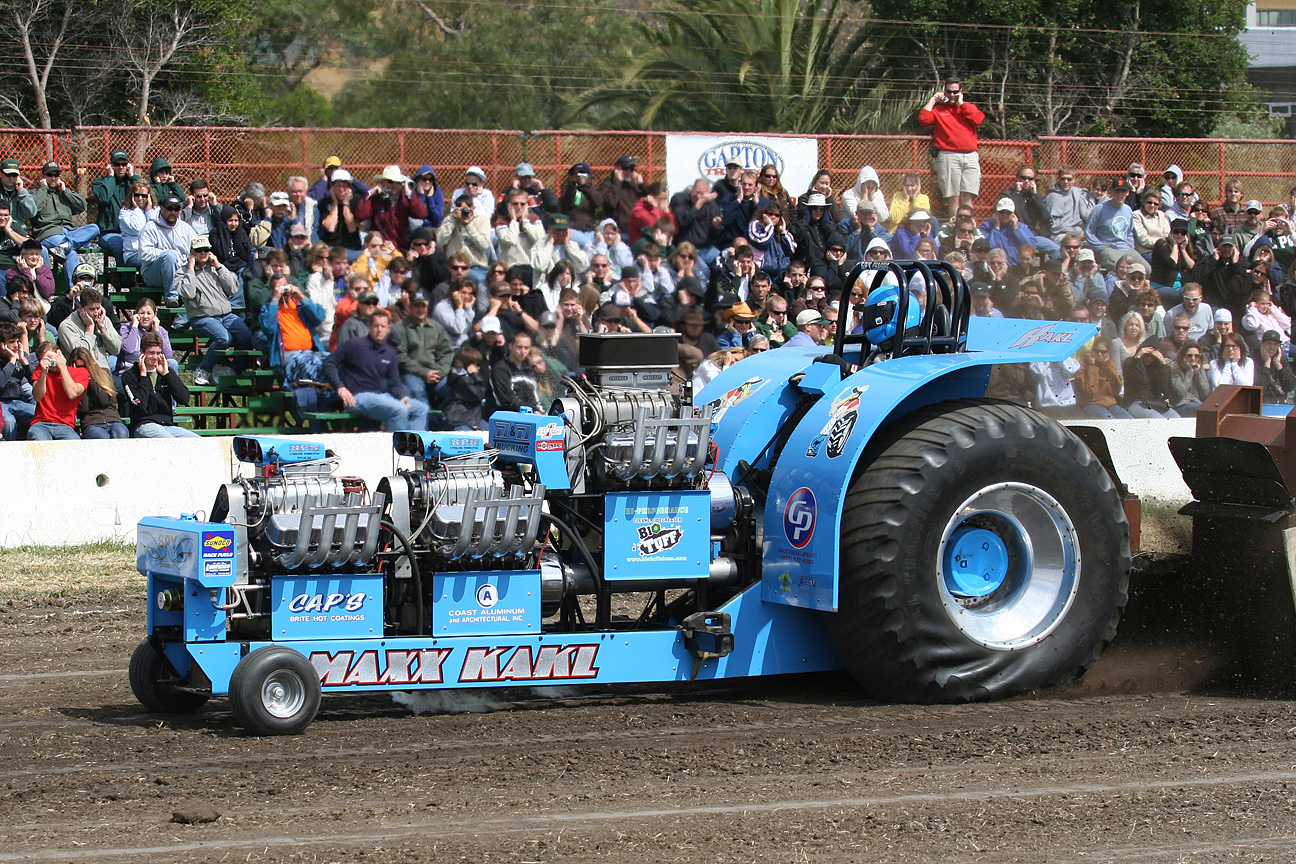
Few agricultural competitions capture the imagination quite like tractor pulling. For a few seconds, a machine claws at the dirt, the front wheels hang in the air, and thousands of horsepower fight to drag a weighted sled every inch farther down the track. Fans cheer, engines scream, and smoke pours from exhaust stacks as the sled grows heavier with every foot traveled.
It is one of agriculture’s most recognizable motorsports, yet today’s pulling tractors share surprisingly little with the farm machines that inspired them. What began as friendly contests between neighboring farmers has evolved into an engineering arms race where purpose-built machines can produce well over 10,000 horsepower and are designed for a single job: pulling farther than the competition.
It Started Long Before Modern Tractors
Long before diesel engines and four-wheel-drive tractors became common, farmers measured strength in a much simpler way. Communities often gathered to see whose team of draft horses could pull the heaviest load. These informal competitions were part entertainment, part bragging rights, and part practical demonstration of which animals were best suited for demanding farm work.
As gasoline-powered tractors became more common during the early twentieth century, those same competitions naturally shifted from horses to machinery. Local fairs and community events began featuring pulling contests where stock farm tractors hooked to simple sleds or weighted wagons. There were few formal rules. The strongest tractor usually won, and competitors often drove the same machine back to the farm after the event.
In those early years, the tractors remained largely unchanged from their working counterparts. A few adjustments to weight or tire pressure might offer an advantage, but these were still everyday agricultural machines built to plow fields, cultivate crops, and haul wagons.
The Sled Changed Everything
One of the biggest innovations in tractor pulling was not the tractor itself, but the sled.
Early competitions often relied on fixed-weight sleds, requiring organizers to continually add more weight as tractors became more powerful. In some events, additional people even climbed aboard the sled during the pull to increase resistance. While effective enough for local contests, this approach became increasingly impractical as horsepower continued to climb.
The introduction of the weight-transfer sled transformed the sport. As a tractor moves forward, the sled transfers its own weight toward the front, increasing friction against the ground and making the pull progressively more difficult. Every competitor now faces a challenge that grows harder with every foot traveled, creating a much more consistent and exciting competition.
That innovation helped pave the way for organized tractor pulling and allowed competitors from different regions to measure themselves against one another under standardized conditions.
From County Fairs to Professional Competition
By the late 1960s, tractor pulling had grown beyond informal county fair entertainment. Organized sanctioning bodies established consistent rules, weight classes, and safety standards that allowed the sport to flourish across North America.
With standardized competition came specialization.
Instead of asking how to make a farm tractor slightly stronger, competitors began asking how to build the ultimate pulling machine. The answer rarely involved compromises. Every component was designed around one objective: transferring as much power to the ground as possible over a track measuring roughly 300 feet.
That shift fundamentally changed what a pulling tractor looked like.
When More Horsepower Was Never Enough
Modern pulling tractors may wear familiar sheet metal from manufacturers like John Deere, Case IH, International Harvester, Massey Ferguson, or Allis-Chalmers, but underneath those recognizable hoods lies an entirely different machine.
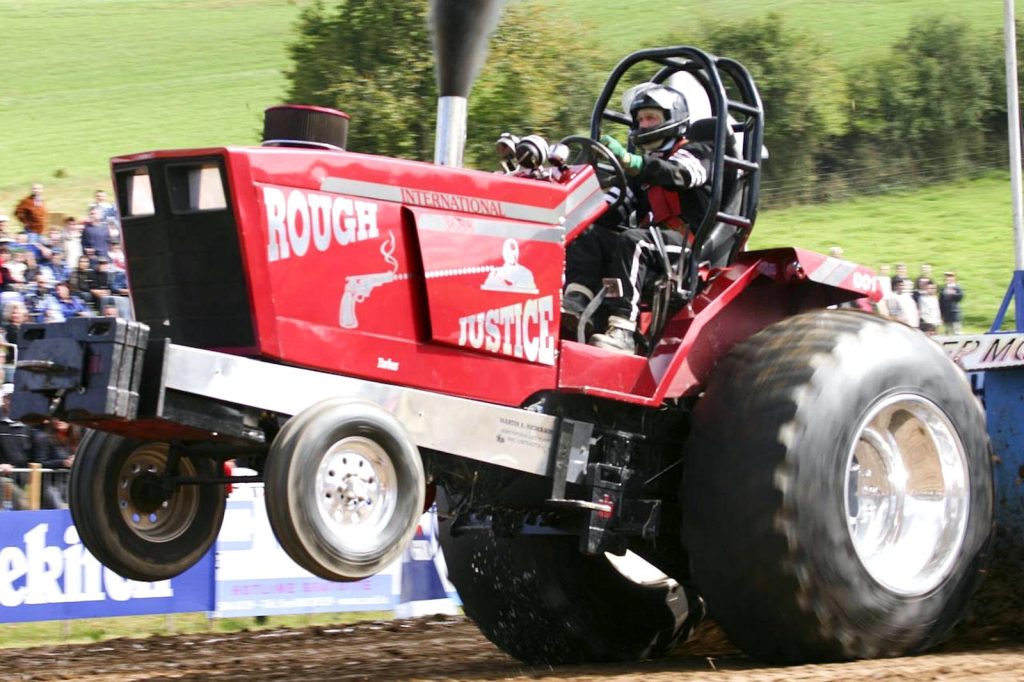
Purpose-built tube chassis replace traditional tractor frames. Custom drivetrains, reinforced transmissions, roll cages, wheelie bars, and carefully engineered hitch systems all work together to maximize traction while keeping the machine stable under enormous loads.
Engine builders also discovered that durability means something different in pulling than it does in farming.
A field tractor is expected to perform reliably for thousands of hours. A pulling tractor only needs to survive a run lasting around ten seconds. That allows builders to extract astonishing amounts of power from engines using enormous turbochargers, specialized fuels, and highly modified internal components.
The result is horsepower figures that would have seemed impossible only a few decades ago.
Not Every Pulling Tractor Is the Same
One reason tractor pulling remains so popular is the wide variety of machines competing on the same weekend.
Super Stock
Often considered one of the premier classes, Super Stock tractors feature highly modified diesel or alcohol-burning engines equipped with massive turbochargers. They retain the appearance of agricultural tractors while delivering extraordinary power that can lift the front wheels almost the entire length of the track.
Pro Stock
Pro Stock tractors are powered exclusively by diesel engines and generally use a single large turbocharger. They remain closely tied to production agricultural engines while pushing those platforms to incredible performance levels. Many fans appreciate this class because the tractors still resemble the machines found on modern farms.
Modified
If any class defines the phrase “horsepower monster,” it is Modified.
These purpose-built machines often feature multiple supercharged V8 engines mounted side by side, producing combined horsepower figures that can exceed 10,000 horsepower. Some historic Modified tractors even experimented with aircraft and turbine engines in the pursuit of greater performance. Nearly every aspect of these machines exists solely to maximize pulling distance.
Mini Modified
Despite their smaller size, Mini Modified tractors are among the most exciting vehicles in the sport. Their short wheelbase and incredible power-to-weight ratio create spectacular launches that make them crowd favorites wherever they compete.
Engineering for Just One Job
Unlike production tractors that must perform dozens of different tasks, a pulling tractor is engineered around a single moment.
Weight distribution is carefully balanced to transfer as much force as possible to the rear tires without allowing the tractor to flip backward. Wheelie bars limit how high the front end can rise, while custom hitch geometry helps keep the rear tires planted as the sled becomes progressively heavier.
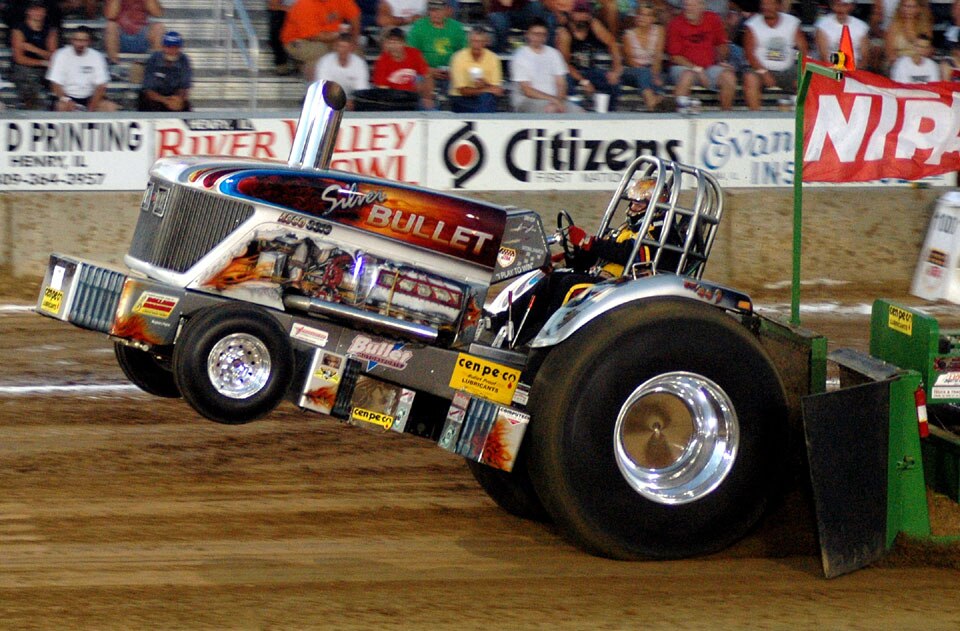
The rear tires themselves are a marvel of engineering. Their aggressive tread patterns and carefully prepared surfaces are designed to bite into the clay track while flexing just enough to maximize traction. Teams spend countless hours testing tire pressure, ballast placement, suspension settings, and engine tuning to find even the smallest competitive advantage.
Data logging has also become commonplace. Teams analyze engine performance, boost pressure, wheel speed, and dozens of other variables after every run, applying lessons from one event to the next much like professional racing organizations.
A Celebration of Power
For all the sophisticated engineering behind today’s pulling tractors, the appeal of the sport remains surprisingly simple.
Every pull asks the same question farmers were asking nearly a century ago: which machine can pull the hardest?
The answer has changed dramatically. Today’s competitors use custom-built drivetrains, specialized engines, and enough horsepower to rival professional race cars, all packed into machines that would be nearly unrecognizable beneath their vintage-looking body panels.
Yet the spirit of tractor pulling remains firmly rooted in agriculture. It is still a competition built around strength, traction, mechanical ingenuity, and the timeless challenge of putting every available horsepower to the ground. What started as neighbors comparing working tractors has become one of the most spectacular demonstrations of engineering anywhere in motorsports, proving that the quest for “just a little more power” never really ends.

Leave a Reply