
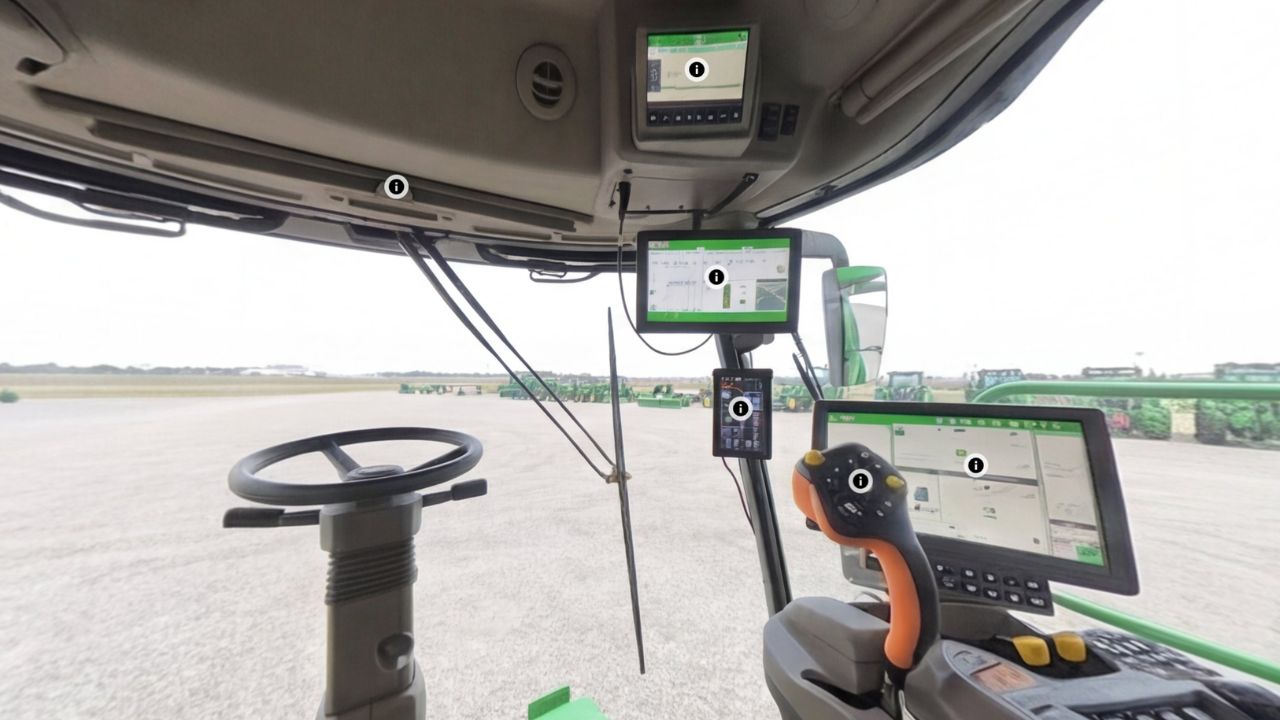
For many farmers, a tractor is more than a machine. During planting, spraying, and harvest, it can become an office, a lunchroom, and a workplace for 12 to 16 hours at a time. That’s one reason John Deere continues to devote so much engineering effort to improving the operator’s experience inside the cab.
Successful Farming’s recent look back at Deere’s legendary Sound-Gard cab reminded us just how revolutionary that concept was when it debuted in 1972. At a time when tractor operators accepted excessive noise, dust, heat, and vibration as part of the job, Sound-Gard proved those conditions didn’t have to be the norm. More than 50 years later, Deere is still refining the same idea, though today’s innovations are aimed less at simply making tractors quieter and more at improving comfort and reducing fatigue throughout an entire workday.
It Started With the Sound-Gard Cab
Before the Sound-Gard cab, most tractor cabs were added almost as an afterthought. They offered some protection from the weather, but noise levels remained high, dust often found its way inside, and creature comforts were limited.
John Deere took a different approach by designing the cab as an integral part of the tractor. The isolated cab structure, improved insulation, integrated heating and air conditioning, and significantly lower noise levels immediately changed operator expectations. Farmers quickly realized that spending long days in the field didn’t have to be physically exhausting simply because of the environment around them.
The success of Sound-Gard also changed the industry. As competitors introduced improved cab designs of their own, operator comfort became another area where manufacturers competed to win customers.
Today’s Challenges Are Different
Modern tractors produce far more horsepower than the machines of the early 1970s, yet today’s operators often finish the day in a much quieter and more comfortable environment. That’s because Deere’s engineers are now focused on a different challenge: minimizing the cumulative fatigue that builds over hundreds of hours each season.
Long days behind the wheel don’t become tiring because of one major annoyance. Instead, fatigue comes from dozens of small stressors. Constant vibration, engine noise, dust, awkward seating positions, repetitive movements, and even the effort required to climb in and out of the cab all add up over time.
Modern cab design attempts to eliminate as many of those distractions as possible.
Small Features Make a Big Difference
Some of today’s improvements are immediately noticeable. Others are almost invisible until you’ve spent an entire day in the seat.
Take John Deere’s auto-cinching door, for example. Instead of requiring the operator to slam the door shut, the mechanism gently pulls it completely closed and seals the cab. Besides adding a premium feel, the system helps maintain proper cab pressurization, reducing dust intrusion and outside noise.
The cab itself has also become noticeably quieter. Better insulation, improved seals, refined engine mounting, and advances throughout the drivetrain all contribute to lower sound levels. Operators may not think about those improvements while they’re working, but less background noise means less mental stress and easier conversations over the phone or radio.
Positive-pressure air systems have become another important part of the equation. By keeping the cab slightly pressurized and filtering incoming air, these systems help prevent dust, pollen, and other contaminants from entering the workspace. During spraying operations, the ability to maintain a cleaner cab environment becomes even more valuable.
Ride quality has improved as well. Cab suspension systems isolate operators from many of the jolts and vibrations created by rough fields and road travel. Combined with advanced seat suspension, adjustable lumbar support, heating, ventilation, and even massage functions on premium models, the result is a workspace that places far less physical strain on the operator over the course of a long day.
Technology Has Improved the Experience
Comfort today extends beyond the seat itself.
Modern CommandView cabs integrate large displays, intuitive controls, wireless connectivity, Bluetooth, Apple CarPlay, Android Auto, wireless phone charging, multiple USB ports, and improved storage solutions. Better LED lighting extends productive working hours, while larger glass areas and improved visibility help reduce eye strain and improve awareness around the machine.
Many of these conveniences might seem minor on their own. Together, however, they create an environment that feels more like the cab of a modern pickup than the tractors many operators grew up driving.
Comfort Is Really About Productivity
It’s easy to dismiss premium cab features as luxuries, but Deere views many of them as productivity tools.
An operator who experiences less fatigue throughout the day is more likely to remain focused during long planting or harvest windows. Better visibility can reduce mistakes. Cleaner air can make long spraying days more comfortable and keep the operator healthier. Lower noise levels reduce stress, while better seating can help minimize soreness after weeks of consecutive fieldwork.
As farms continue to grow and operators spend more hours covering more acres, those incremental improvements become increasingly valuable.
The Philosophy Hasn’t Changed
More than five decades separate today’s CommandView cabs from the original Sound-Gard design, but the philosophy behind them remains remarkably similar.
In 1972, John Deere wanted to build a tractor that was quieter, cleaner, and more comfortable than anything farmers had experienced before. Today’s engineers are pursuing that same goal with better materials, smarter technology, and a deeper understanding of operator fatigue.
The individual features have changed dramatically over the years, but the mission hasn’t. Whether it’s an auto-cinching door, a pressurized filtration system, cab suspension, or simply a quieter workspace, every improvement is designed to help operators finish the day feeling a little less tired than they otherwise would.
For farmers who spend hundreds of hours each year behind the wheel, that may be one of the most valuable upgrades a tractor can offer.


Leave a Reply