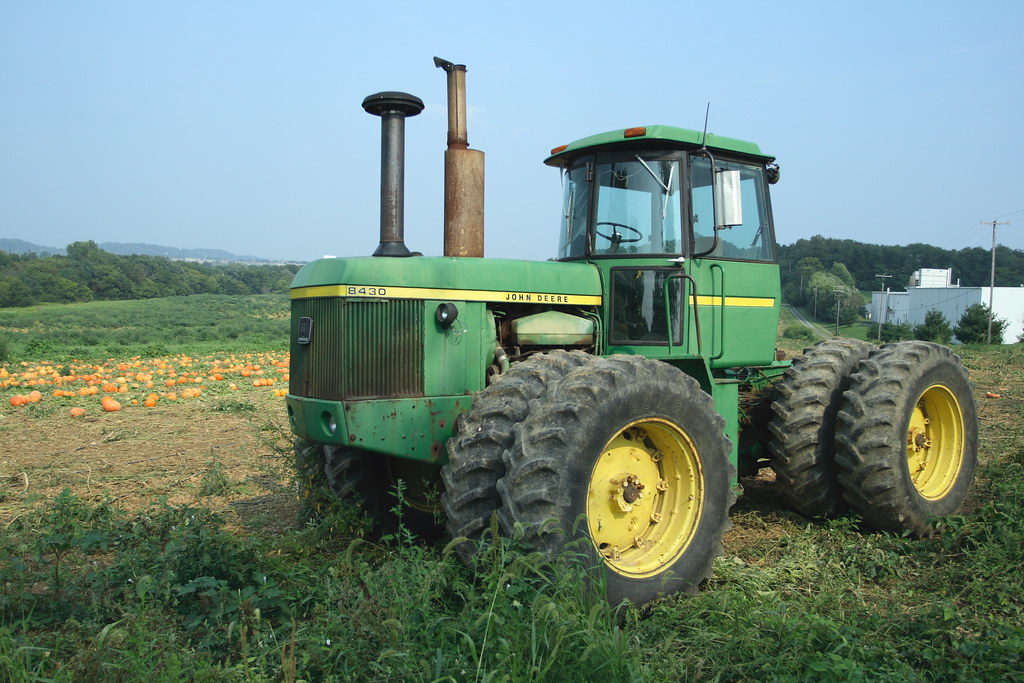
There is a lot of old machinery sitting on American farms. Some of it works every day, some comes out of the shed for only a few weeks each year, and some hasn’t moved in years but remains around because there might still be a pulley, hydraulic component or piece of steel on it that can keep another machine running.
To someone outside agriculture, a farmyard filled with decades-old equipment might look like a collection of machines that should have been replaced years ago. To a farmer, it can look more like an inventory of tools, parts and possibilities. That resourcefulness is becoming increasingly important as farmers navigate a difficult agricultural economy and historically high equipment prices.
A recent report from Harvest Public Media found farmers around the country are repairing older tractors, combines and other machinery rather than replacing them, sometimes keeping equipment in service for decades. The story highlights something farmers have understood for generations: the value of a piece of farm equipment isn’t determined entirely by the year on its serial plate.
When Old Equipment Still Does the Job
At Kellogg Family Farms in Ithaca, Michigan, sixth-generation farmer Dennis Kellogg has accumulated old machinery and parts around the farm. Some machines will probably never work again, but that doesn’t necessarily make them worthless. Kellogg told Harvest Public Media that he can often find a component from one old machine that will work on another, sometimes even across different brands.
His mechanical ability allows him to turn equipment purchased near scrap value into machinery capable of doing the same job as something that might cost $40,000 or $50,000 new. It’s a calculation that doesn’t show up neatly on a balance sheet, because the value isn’t entirely in the machine. Some of it is in the person who knows how to keep it running.
A farmer who has owned a tractor for 25 years knows far more about it than just its horsepower and hours. They know how it starts on a cold morning, which hydraulic hose has already been replaced, where it tends to leak, which bearings need watching and what that particular rattle means. That familiarity can make an old machine considerably more valuable to the farmer who owns it than its auction value might suggest.
The Farm Shop Changes the Economics
There is a big difference between owning an old machine when every repair requires a service call and owning one when you can repair much of it yourself. Farmers have traditionally been mechanics, fabricators and problem-solvers almost by necessity, and a farm shop equipped with a welder, torch, tools and a supply of old parts can dramatically change the economics of keeping an aging machine.
That is evident at Edwards Farms in Paducah, Kentucky. Farmer Donnie Edwards and his son operate a repair shop alongside their 2,000-acre row-crop operation, which makes running secondhand equipment considerably more practical. Edwards told Harvest Public Media that he wants his son to understand how to survive financially in farming, and that continually owning new equipment and making the associated payments isn’t realistic for their operation.
That doesn’t mean every farmer should keep every old tractor forever. Eventually downtime, repairs, parts availability and lost productivity can make replacement the better decision. But farmers have an option that many other industries don’t in that they can often create value with their own labor.
A $5,000 repair bill looks different when much of the labor can be performed in the farm shop. A machine that might not make financial sense for one operation can therefore be extremely valuable to another, particularly if the owner already understands the machine and has the tools, knowledge and parts needed to maintain it.
Older Doesn’t Necessarily Mean Obsolete
Another reason this works today is that the basic design of farm equipment hasn’t changed as radically as it once did. Drew Kientzy, an agricultural research analyst at the University of Missouri, told Harvest Public Media that by roughly the mid-1990s, farm equipment had begun taking the general form it still has today. Many older machines can remain productive, and in some cases newer technology can be added to them.
A tractor doesn’t necessarily stop being useful because it lacks the newest display, and a combine doesn’t suddenly lose its ability to harvest grain because a newer model has more automation. New equipment unquestionably offers advantages, including greater capacity, improved operator comfort, better fuel efficiency, precision technology, automation and access to information that farmers couldn’t have imagined several decades ago.
The question is whether those improvements generate enough additional value to justify their cost on a particular farm. For some operations, they absolutely do. For others, especially those that don’t put large numbers of hours on a machine each year, the numbers become much harder to make work.
Edwards told Harvest Public Media that spending another $100,000 to add computerized technology across tractors, combines and sprayers can be difficult to justify if it doesn’t generate a comparable increase in farm income. At the same time, he isn’t opposed to technology. His operation hired a drone service for fungicide application this year because he believed the efficiency justified the expense.
That distinction matters. Keeping old equipment isn’t necessarily a rejection of new technology. It can simply mean being selective about where technology produces a return and where an existing machine is still perfectly capable of doing its job.
A $1 Million Replacement Changes the Calculation
The economics have become especially important because replacing major farm equipment has gotten so expensive. Harvest Public Media reported that equipment prices increased sharply beginning in 2020 and remain near historic highs. New combines and sprayers can carry price tags ranging from roughly $600,000 to $1 million.
At the same time, farmers have been pulling back on purchases. The report cited Association of Equipment Manufacturers data showing combine sales down 50% compared with last year and tractor sales down 20%. When replacement means taking on hundreds of thousands of dollars in additional capital costs, repairing what is already sitting in the shed starts looking considerably different.
Older equipment also has another important advantage: much of its depreciation has already happened. A tractor purchased for a fraction of its original price can still provide years of useful work, and even several thousand dollars in annual repairs may compare favorably with the payments and depreciation associated with replacing it.
The equation becomes especially compelling for machinery that doesn’t accumulate many hours. A tractor running an auger, pulling a mower or handling occasional tillage doesn’t necessarily need every feature found on the newest machine. Equipment that works only a few weeks each year can be even harder to justify replacing if the machine already on the farm continues to perform reliably.
Knowing When to Keep It and When to Move On
An older combine that breaks down during a narrow harvest window can cost far more in lost time than the repair itself. Newer machines can cover more acres with fewer operators, while modern technology can reduce inputs, improve accuracy and help farmers make better decisions. For some farms, those gains easily justify upgrading.
The calculation will be different for every operation and every machine, but the current farm economy is forcing more farmers to make it carefully. Instead of simply asking whether something newer would be better, the more useful question is whether something newer will generate enough additional value to justify replacing what is already there.
Sometimes the answer is yes. Other times, a repair, a used part and a few hours in the shop can put a machine back to work for another season. Kellogg summarized that tradeoff particularly well when speaking with Harvest Public Media: “It’s your time or your money.”
Farmers have been making that exchange for generations. In an era when replacing a major piece of equipment can cost hundreds of thousands of dollars, the ability to diagnose a problem, find a used part, make a repair and squeeze another productive year out of old iron isn’t simply nostalgia or stubbornness.
It’s an economic advantage.

Leave a Reply