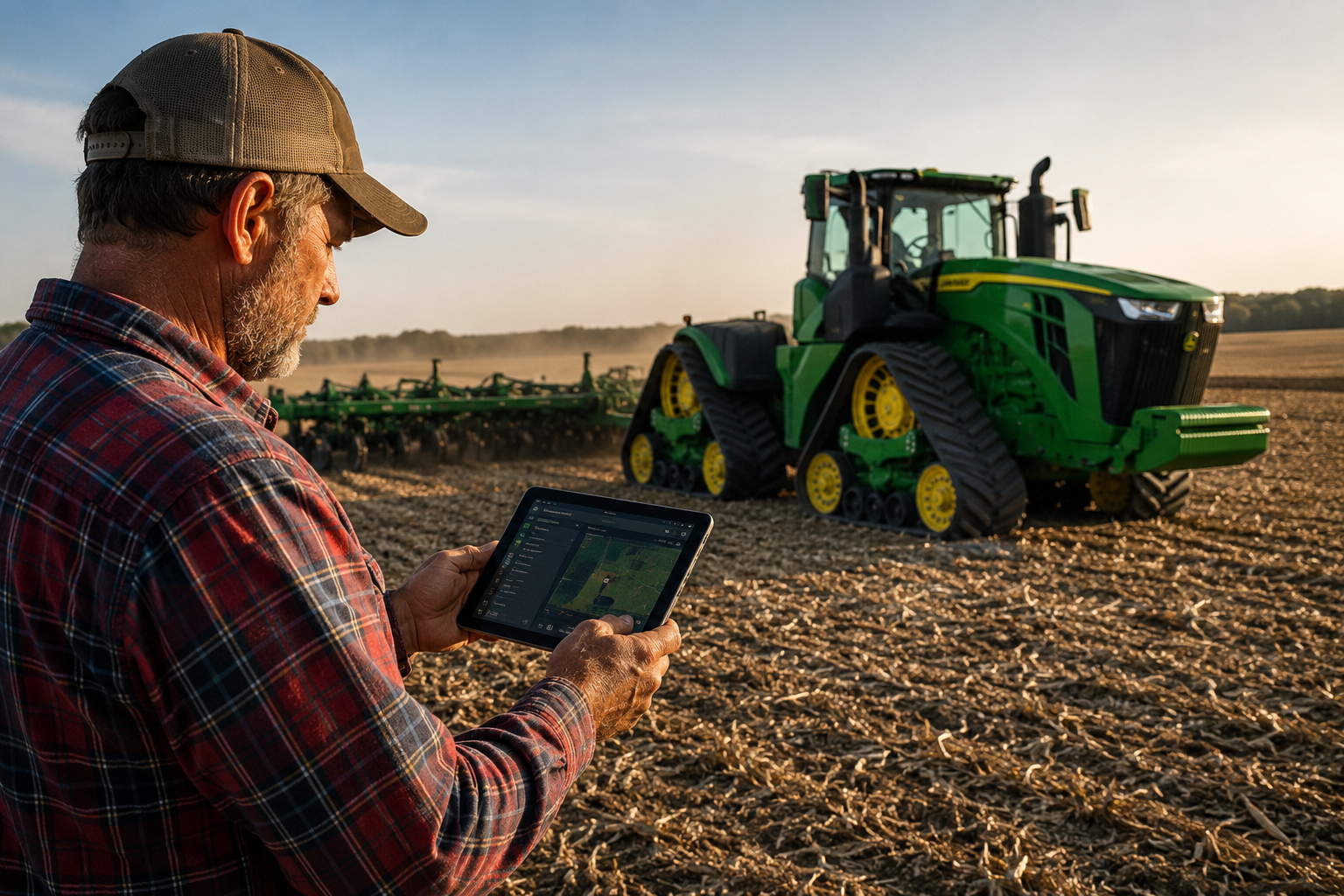
For years, farm equipment has been getting better at collecting data. John Deere now thinks artificial intelligence could make it much easier for farmers to actually use it.
Deere has introduced JD, a new AI assistant built into John Deere Operations Center that allows farmers to ask questions about their own field, machine and operational data using everyday language. The technology is initially being offered through an Early Access Program for select U.S. customers, with broader availability planned later this year.
Rather than digging through maps, reports and years of machine records, a farmer could ask JD how fuel consumption during tillage compared with previous seasons, how planter performance varied between fields or which machines and operators are covering acres most efficiently.
That gets at a longstanding challenge in precision agriculture. Farmers have spent years accumulating increasingly detailed information from connected equipment, but collecting data and turning it into a useful answer are two different things.
From Data Collection to Conversation
John Deere Operations Center already brings together information from fields, machines and operators. JD is designed to make that information easier to analyze without requiring farmers to manually sort through reports and compare records.
“Farmers have more data available to them than ever before, but the value comes from their ability to use it in the moments that matter,” John Deere Chief Technology Officer Jahmy Hindman said in announcing JD.
Hindman said the assistant changes the experience from “navigating through a sea of data to simply asking it a question.”
For example, a farmer trying to determine whether a newer tractor has reduced fuel consumption during tillage may already have the machine hours, acres covered and fuel-use records needed to find out. JD is designed to analyze that history and return an answer directly.
According to Deere, those answers are based on information from the individual farming operation. Jackson Baca, group product manager at John Deere, told Farm Progress that JD uses data contained within the farmer’s Operations Center account rather than scraping publicly available information.
That could make years of accumulated precision-ag data considerably more useful. Instead of looking at individual planting, spraying, tillage or harvest reports, farmers could use AI to look for patterns across fields, machines and seasons.
Deere Addresses the Data Question
Giving an AI assistant access to detailed farm records also raises an obvious question: Who controls the information?
Deere paired the introduction of JD with a renewed Farmer Data Commitment, outlining how it says agricultural data will be handled. The company says farmers control their farm data, Deere does not sell it, farmers decide which third parties can access it and they can stop that sharing at any time. Deere also says farm data will not be used for agricultural commodity trading or speculation.
Those assurances could become increasingly important as AI takes a larger role in farm management. The usefulness of a system like JD depends largely on the information it can analyze, potentially including years of detailed operational history.
What’s Next for JD?
Deere plans to expand JD beyond answering questions about historical farm data. Future capabilities are expected to include predictive analysis, machinery technical information and assistance creating work plans. The company also intends to eventually bring the technology into in-cab displays.
JD is still in its early stages, and farmers will ultimately determine how useful it is in day-to-day operations. But the concept points toward an interesting next step for precision agriculture.
GPS receivers, sensors, displays and connected machines have spent years creating an enormous stream of information about what happens on the farm. If AI can make that information easier to understand and act on, the next major advance in precision ag may come from making better use of the data farmers already have.


Leave a Reply