
Autonomous farm equipment is getting better at knowing where it is. The next challenge is understanding what is around it.
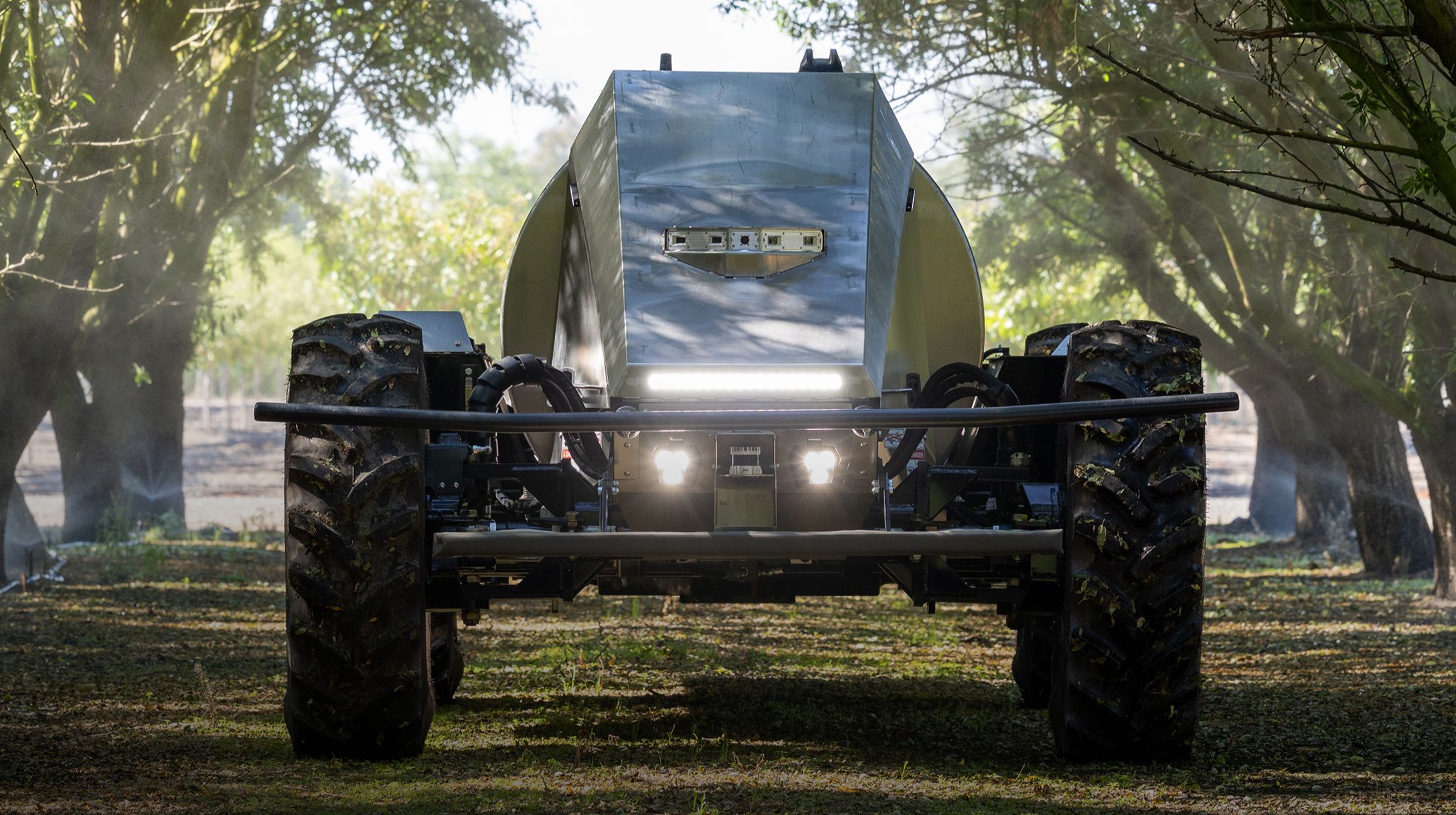
GUSS Automation, the John Deere-owned company known for its autonomous orchard sprayers, plans to incorporate Ouster’s new Rev8 OS0 digital lidar sensors into its next generation of machines. The technology will give them a more detailed three-dimensional view of trees, crop rows, terrain and obstacles, offering another glimpse at where agricultural autonomy is headed.
GPS and predetermined paths remain important, but increasingly autonomous machines will need to perceive and react to the physical world around them.
Why Orchards Are a Tough Test for Autonomy
Orchards present a much different environment than open corn or soybean fields. Trees create dense, repetitive surroundings, canopies can interfere with GPS reception, and machines encounter uneven ground, dust, spray, changing light conditions, workers and other obstacles. All of this happens in relatively tight spaces where drifting out of position can damage valuable crops.
GUSS machines already combine lidar, GPS, vehicle sensors and proprietary autonomy software to operate without a driver onboard. According to Ouster, its OS0 lidar provides an ultra-wide field of view capable of detecting tree trunks, rows, ground contours and obstacles around the sprayer. The next-generation Rev8 sensors are designed to take those capabilities further.
Giving Farm Equipment a 3D View
Lidar, short for light detection and ranging, sends out laser pulses and measures how long they take to return. Millions of those measurements can be assembled into a three-dimensional representation of the machine’s surroundings, allowing it to measure the shape and distance of objects rather than simply capturing an image.
Ouster says its Rev8 generation combines color information with 3D measurements directly at the sensor level and can offer as much as twice the range and resolution of the previous generation, depending on the sensor. The Rev8 OS0 planned for GUSS is also designed to operate in difficult conditions including dust, spray and dense vegetation.
For an autonomous orchard machine, those capabilities could help it recognize rows, understand ground contours, remain properly positioned and detect obstacles when the surrounding environment becomes difficult to navigate.
One Operator, Up to Eight Machines
Autonomy could allow one person to manage considerably more equipment.
GUSS says a single operator can monitor as many as eight autonomous machines simultaneously from a laptop. Instead of putting eight operators behind eight steering wheels, one person can oversee a fleet working multiple rows, an especially significant advantage in specialty crops where labor availability can be challenging and spraying often has to happen during narrow windows.
GUSS is also no longer a small experiment on the edge of Deere’s business. Deere acquired full ownership of the California company, and its autonomous machines are now sold and supported through the John Deere dealer network.
Ouster and GUSS say the same lidar-based approach could eventually extend beyond spraying to other jobs in orchards and vineyards. Once a machine can reliably perceive and navigate that environment, the autonomy platform isn’t necessarily limited to a single task.
The Next Step in Farm Autonomy
The announcement fits into a broader technological shift underway at John Deere. Much of the first generation of precision agriculture was about helping equipment know where it was, with GPS guidance, mapping and connectivity transforming how farmers moved through fields and recorded their work.
The emerging generation is increasingly about helping equipment understand what it sees. Deere’s See & Spray technology uses computer vision to distinguish plants and target applications, autonomous tractors use cameras and other sensors to detect obstacles, and GUSS is applying lidar to the particularly difficult environments found in orchards and vineyards.
At the same time, Deere is adding more artificial intelligence to the software side of agriculture, including tools designed to help farmers interact with machine and operational information. Together, these developments point toward farm machinery capable of gathering information about its surroundings, interpreting it and making more decisions while it works.
Fully autonomous farms aren’t arriving overnight. Agricultural environments are enormously variable, and equipment has to perform reliably in conditions that are far less predictable than a controlled demonstration. But GUSS provides a glimpse at how the technology is advancing.
The next generation of autonomous farm equipment will need both precise navigation and an increasingly detailed understanding of the world around it.

Leave a Reply